The zither is a fascinating and unique stringed instrument with a rich history that dates back to ancient times. Known for its distinctive sound and polyphony, this versatile instrument has evolved over time, featuring various forms and styles.
The zither is part of a larger family of instruments, including the concert zither, the Alpine zither, and the chord zither, each varying in size, shape, and the number of strings.

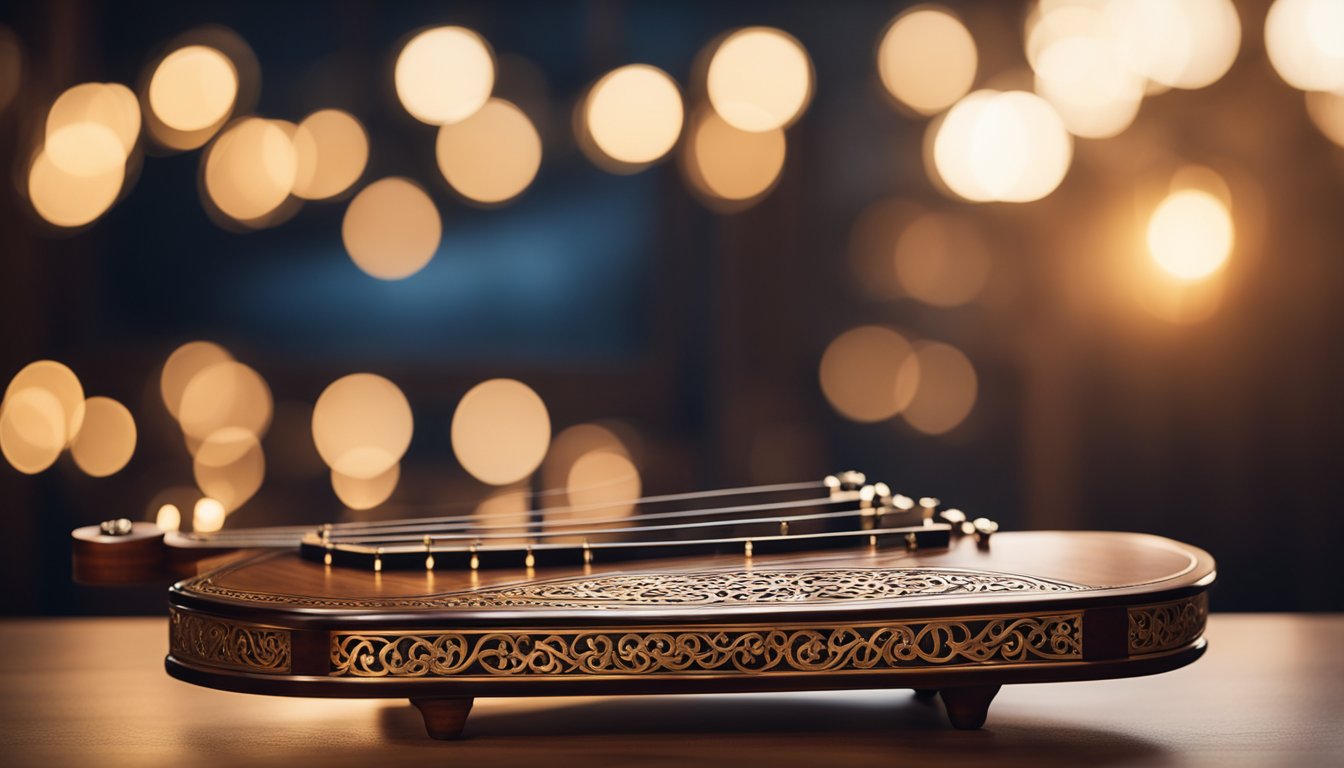
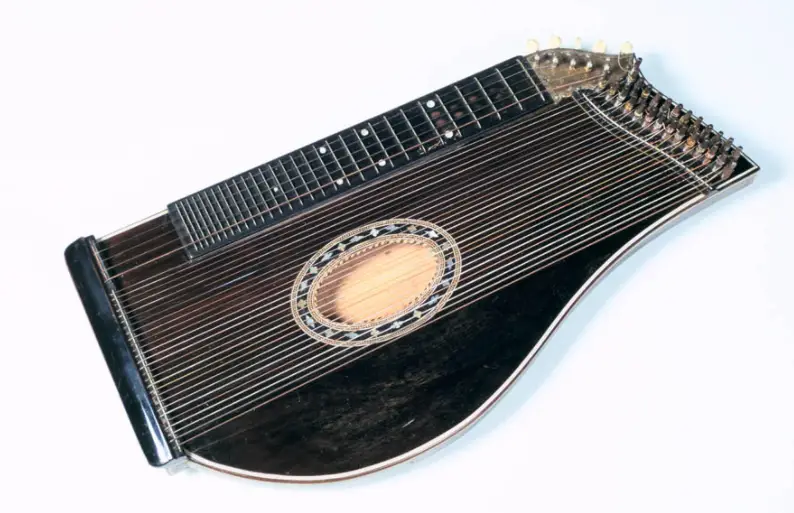
Constructed with a flat, shallow sound box and multiple gut or metal strings, the zither has been a prevalent musical instrument in European culture, particularly in Germany. While it may appear challenging to the untrained eye, the zither has been admired for the beautiful and complex music it can produce. As you delve into the world of zither, it is essential to understand its structure, components, variations, and cultural significance.


- Easy to play, made in the USA. This is a big instrument, 21.5 in. long.
- Made of Cherry with a book-matched Cherry top and book-matched sides.
- Includes bow, rosin, tuning wrench, fleece draw string bag, string chart
- Chromatic and comes tuned (may need a slight tuning after shipping)
Key Takeaways
- The zither is a diverse family of stringed instruments with a long history dating back to ancient times.
- Featuring a flat sound box and multiple strings, the zither is known for its versatility in both form and sound.
- There are various types and variations of the zither, making it a unique and culturally significant instrument in European music.
Zither: An Overview
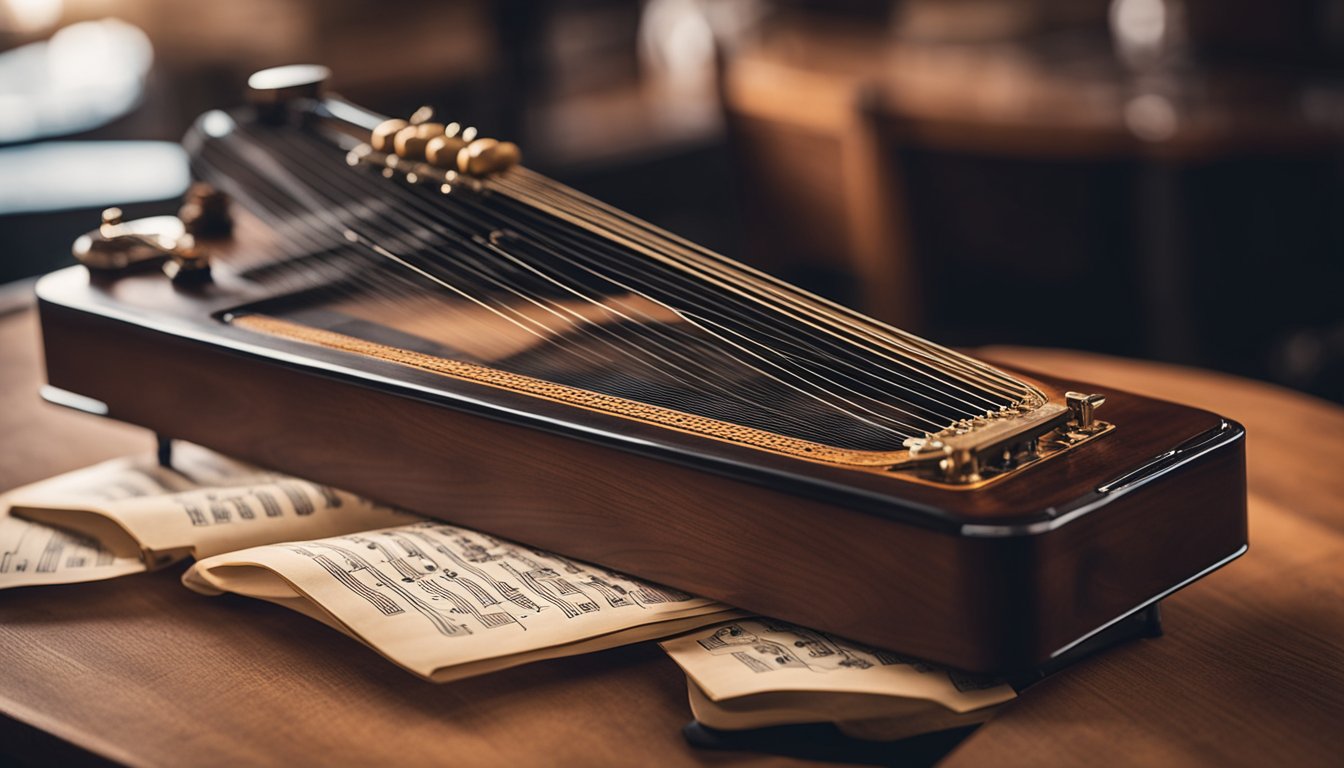
As a music enthusiast, I have always found the zither to be a fascinating stringed instrument with a rich history. The zither is a member of the psaltery family, and it’s played by plucking the strings with a plectrum or your fingers. The body of the zither serves as its resonating chamber, just like a guitar.
The number of strings on a zither can vary, usually ranging from 6 to 50 or more, depending on the maker of the instrument. The strings are typically the same length as the instrument’s soundboard, and they can be made of gut or metal. The European zither, for example, features a flat, shallow sound box with around 30 to 40 strings stretched across it.
What Does the Zither Sound Like?

The sound of the zither is unique and enchanting. Its tonal quality can be quite varied, depending on the construction of the instrument and the choice of strings. Overall, the zither produces a warm and resonant sound, somewhat similar to a harp or a dulcimer.
I also think it’s important to note that the zither’s musical versatility is quite impressive. It can be used to play a wide range of musical genres, from traditional German folk music to modern compositions. The zither’s rich and vibrant sound makes it a valuable and enchanting addition to any music lover’s collection.
In summary, the zither is a captivating stringed instrument with a wide range of tonal possibilities. Its warm and resonant sound adds a unique flavour to various musical genres. With its varied construction and versatile nature, the zither is truly a remarkable instrument that holds a special place within the world of music.
Structure and Components of a Zither

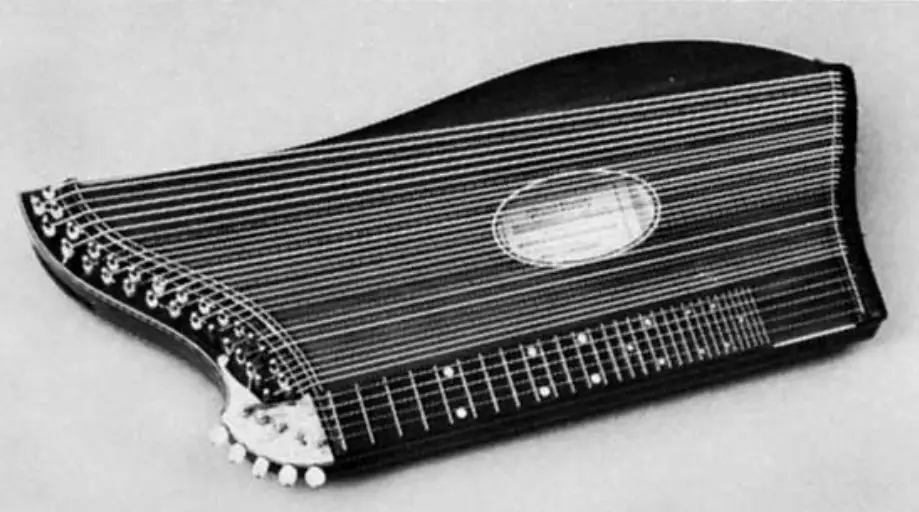
As an admirer of stringed instruments, I’ve always been fascinated by the various types and structures. One such interesting instrument is the zither. In my experience, the zither has a flat, rectangular sound box that serves as a resonating chamber, enhancing its sound quality. Some zithers come with a fretted fingerboard, similar to what you’d find on guitars and lutes, while others are fretless.
How Many Strings Does a Zither Have?
The number of strings on a zither can vary widely. It typically has at least 30 strings and can go up to 40 or more. There are different sections of strings, each serving a different function. The three main sections are accompaniment strings, bass strings, and contrabass strings. It’s worth noting that there are several types of zithers with varying numbers of strings, such as the chord zither and the concert zither.
What Types of Strings Are on Zithers?
The strings on a zither are typically made of metal, similar to those on a guitar. However, the types of metal can vary between steel, brass, or even bronze. These strings are grouped together based on their function:
- Accompaniment strings: These are situated on the left side of the instrument and are grouped in sets of three or four. They form different chords, allowing me to play harmony with my left hand while I’m performing.
- Bass strings: Found further to the right, these strings provide the lower register and support the melody played on the other strings. These are usually played with my right hand.
- Contrabass strings: These are the lowest-pitched strings on the zither and provide a solid foundation for the overall sound. They’re often used to create a rhythmic pattern for the piece being played.
The zither’s unique structure, combining elements of stringed keyboard instruments with its own distinct features, makes it an incredibly versatile and beautiful instrument. Its rich tonality and adaptability to various types of music make it an instrument worth exploring further.
Is the Zither Hard to Learn?

As an enthusiast who has explored various musical instruments, I’m often asked if the zither is difficult to learn. My answer is that, like any musical instrument, it takes dedication and patience to master the zither. Initially, you might find some unique challenges, but with consistent practice and commitment, you’ll eventually learn to play this beautiful instrument.
Techniques for Playing the Zither
When it comes to playing the zither, there are several techniques that you’ll need to familiarise yourself with. At first, it might seem daunting, but as you practice more, you’ll become more comfortable with these techniques.
- Fretboard: The chromatic fretboard, which has five strings, is where most of the melody is played. Developing proper finger placement on the fretboard is essential. I found it helpful to use my thumb and forefinger for plucking the strings, and my other fingers for muting or stopping the strings.
- Open Strings: Beyond the fretboard, there are additional open strings, typically ranging from 27 to 37, depending on your zither. Learning to play these strings simultaneously with the fretboard requires dexterity and coordination, which can be challenging at first. I recommend focusing on practising finger independence and accuracy.
- Right and Left Hand Techniques: Both hands play an integral role in playing the zither. I discovered that the left hand is primarily responsible for the fretboard, while the right hand plucks the open strings. Working on exercises that strengthen each hand’s skills separately can help smoothen the learning process.
How Do You Tune a Zither?
Tuning a zither is an essential aspect of playing this instrument, and getting it right requires practice. Here’s a quick rundown of the process I follow:
- Identify the Strings: The zither has many strings, so it’s important to know which ones you need to tune. Typically, the five fretboard strings are tuned like a viola, with the additional A string.
- Tuning Tools: For precise tuning, I recommend using a digital tuner that’s compatible with stringed instruments like zithers and violins. Although you can use a tuning fork or pitch pipe, they might not provide the same level of accuracy.
- Tune the Strings: Following the recommended tuning for your zither and using your digital tuner, adjust each string’s tension as needed to achieve the correct pitch. If you’re uncertain or need guidance, seeking assistance from an experienced zither player or instructor can be helpful.
Remember that learning the zither is an enjoyable journey, and with perseverance and practice, you’ll soon become more comfortable with this intriguing instrument.
Variations and Types of Zithers

As a zither enthusiast, I’m excited to share some knowledge about the various types and variations of zithers. It’s fascinating to see how this stringed instrument has evolved over time and across cultures.
What Is a Zither Banjo?

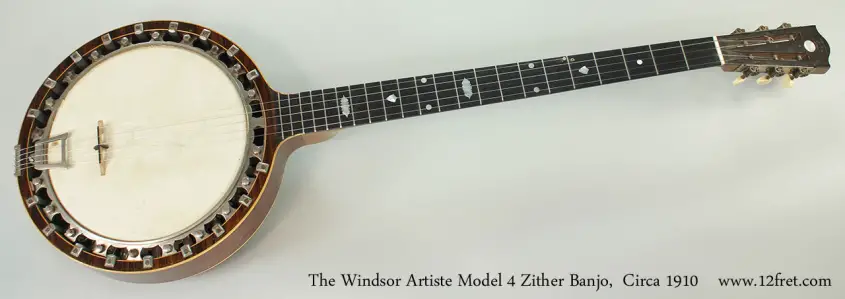
The zither banjo is an interesting hybrid instrument that combines features of both the zither and the banjo. It typically has a banjo-style body with a skin head, but the strings and tuning system are more similar to those of a zither. This unique combination creates a distinctive sound that has been enjoyed by many musicians.
Now, let’s explore some other notable variations of the zither family:
- Psaltery: An ancient type of zither, psalteries are usually triangular or trapezoidal and have a range of 6 to 50 or more strings.
- Concert zithers and Alpine zithers: These zithers are characterised by their fretted fingerboards and are popular in German-speaking countries. Alpine zithers have a more distinct hourglass-shaped body.
- Trapezoidal zither, board zither, and harp zither: These are general categories of zithers based on their shapes and construction. Board zithers have a long, flat body, while harp zithers have a curved body like a small harp.
- Cittern: A Renaissance-era stringed instrument similar to a lute, often used for dance music and as a solo instrument.
- Koto: A traditional Japanese zither with 13 strings, played with finger picks.
- Santur: A Persian hammered zither, played with wooden mallets.
- Cimbalom: A concert hammered dulcimer found in Eastern European countries, played with padded mallets.
- Appalachian dulcimer: A fretted zither native to the Appalachian region of the United States, played on the lap with a small stick or pick.
- Valiha: A tube zither from Madagascar, made from a bamboo tube with strings around its circumference.
- Qānūn: A traditional Middle Eastern zither with a trapezoidal body and a range of around 26 strings, played with finger picks.
- Salzburg zither and Mittenwald zither: These are regional variations of the Alpine zither, named after their respective areas of origin in Austria and Germany.
Overall, there is a rich diversity within the zither family, spanning countless variations and adaptations. Each type carries its unique history, cultural significance, and musical possibilities, making the world of zithers an incredibly fascinating topic to explore.
Origin and Spread of the Zither
The fascinating history of the zither can be traced back to ancient times. I discovered that the instrument’s name comes from the Greek word “kithara,” which was a stringed instrument resembling a lyre. The zither we know today has evolved significantly over time, taking different shapes and forms across various cultures in Europe and Asia.
During my research, I came across the “dulcimer” which is an important precursor of the zither. This stringed instrument became popular in medieval Europe and shares many similarities with the zither, such as its resonating body and strings played with the fingers or a plectrum. In the 17th century, Michael Praetorius, a German music theorist and composer, documented the first descriptions of the “scheitholt” and “hummel,” two early zither-like instruments from Germany.
It’s fascinating to learn that the zither’s popularity particularly burgeoned in Austria and Germany, where it became known as a “Volkszither.” Skilled musicians, like Johann Petzmayer, played a significant role in introducing this instrument to a broader audience, and it soon became an integral part of local folk music.
But the zither’s influence extends far beyond Europe. In my exploration, I found evidence of various zither-like instruments in Africa, China, Korea, and Southeast Asia. The African zithers, for example, can be played in diverse forms, including as a musical bow with flexible sticks or even with a rigid bar. The Japanese “koto,” on the other hand, is an ancient stringed instrument that shares many features with the zither, boasting a resonator and strings stretched across a wooden frame.
In summary, the zither has truly traversed a remarkable journey, from its ancient origins to its modern-day variations. Whether it’s in Europe, Africa, or Asia, this versatile instrument has captured the hearts of musicians and listeners alike, leaving a lasting impression on the world of music.
The Zither in Contemporary Music
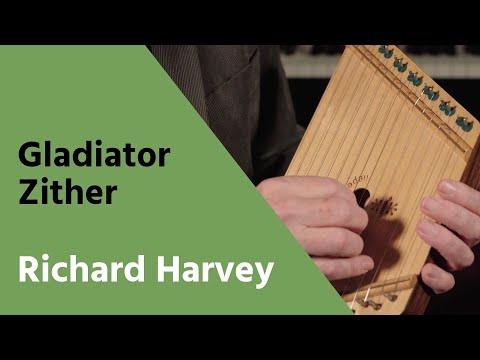
As a lover of unique musical instruments, I’ve come across the zither, a fascinating stringed instrument that continues to find its place in contemporary music. The zither originates from the cittern family, and it is believed to have developed from the musical bow. One distinguishing characteristic of this instrument is its flat soundboard, as the strings are the same length as the soundboard. It comes in many shapes, most notably the rectangular, trapezoidal, and even a traditional piano-style design.
Now let me tell you about some of the different types of zithers popular in different parts of the world. There is the European zither, which features 30 to 40 gut or metal strings stretched across a shallow soundbox. The Alpine zither, or Alpine scheitholt, is another variant that uses a fretted fingerboard and is quite popular in Alpine regions. I’ve also come across the Austrian zither and Japanese zithers, each with their unique construction, tonal qualities, and cultural significance.
Although the zither has deep historical roots in Europe, it has a notable presence in various countries, such as North-western Croatia, Slovenia, Hungary, France, and the southern regions of Germany. Today, you’ll still hear zither music in European folk music and even some contemporary compositions.
Here are some intriguing ways the zither has been used in contemporary music:

- Film scores: Zithers have been featured in film scores, such as the classic 1949 film “The Third Man,” composed and performed by Anton Karas.
- Experimental music: Some musicians have adopted the zither as part of their experimental sound, incorporating unconventional playing techniques and electronic manipulation.
- Pop and rock music: A few pop and rock musicians have included the zither, either for a unique texture or a nod to their cultural heritage.
I find the zither to be a versatile musical instrument that adds a distinctive touch to any composition. Its rich history, diverse regional styles, and continued relevance in contemporary music make it a fascinating topic to explore. So, next time you encounter a zither in a recording or live performance, take a moment to appreciate the unique qualities it brings to the musical landscape.
Frequently Asked Questions
How did the zither originate?
It evolved from the cithara, a Greek musical instrument, and over time, its design and playing techniques have been adapted by various cultures.
Which instruments belong to the zither family?
There are several variations of zithers, such as the concert zither and the autoharp.
These instruments share a common characteristic: many strings stretched across a thin, flat body.
Where can I buy a zither?
Additionally, you may find zithers at local music shops that specialise in stringed instruments or traditional folk instruments.
What does zither music sound like?
With a varying number of strings (from 6 to 50 or more), zither music can range from simple, soothing melodies to intricate, multi-layered compositions.
How to properly pronounce ‘zither’?
Are zithers and lap harps the same?
The key difference is that lap harps have a smaller number of strings and a curved body, while zithers have a flat body with more strings. The playing techniques for both instruments may also vary.
Author Profile


-
Daniel Johnstone is an English writer with a love for stringed instruments from around the world.
He shares his love for these instruments through his writing for folkstrings.com, a website dedicated to all things related to folk string music.
Daniel's passion for music started at a young age, and he has since become an accomplished musician, playing guitar, cavaco, and recently, the harp.
His dedication to learning and sharing his knowledge of stringed instruments is evident in his insightful and engaging blog posts. Whether you're a seasoned musician or a beginner, Daniel's writing is sure to inspire and entertain you.
When he's not playing music or writing, you can find Daniel exploring new instruments and seeking out new sounds to share with his readers.
Latest entries