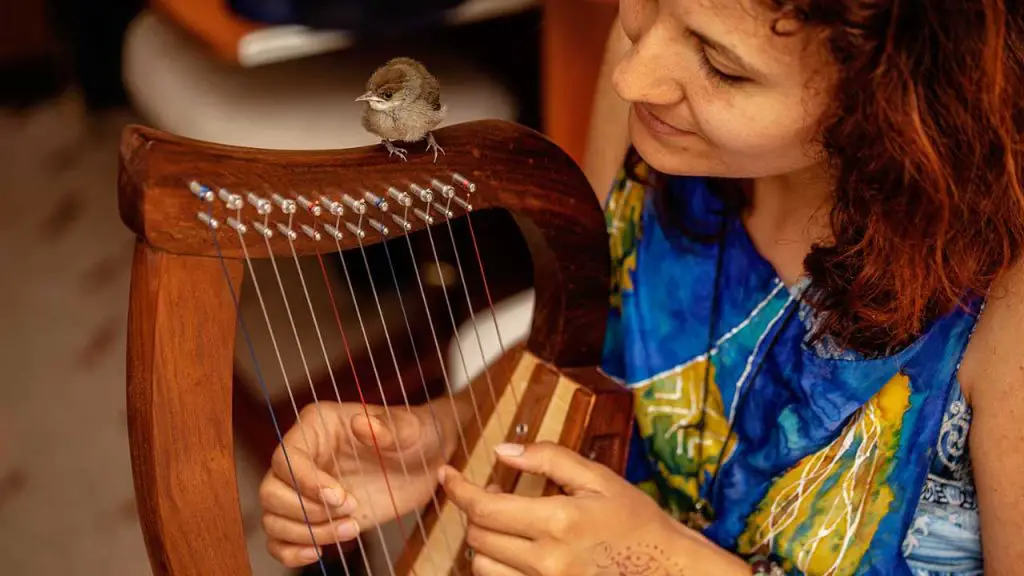
I’ve always been fascinated by the delicate sounds of the harp, an instrument that boasts a rich historical and cultural lineage. Small harps, in particular, are a captivating family within the broader harp category, often praised for their portability and suitability for beginners.
These petite stringed instruments, commonly referred to as lap harps due to their size allowing them to be played on the player’s lap, come in various types each offering a unique charm and sound.

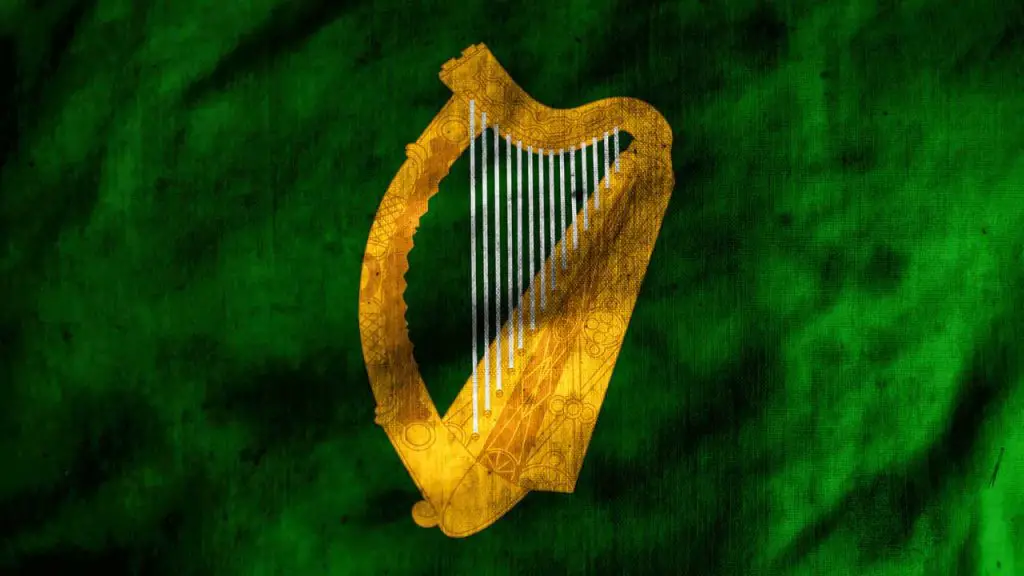
Exploring the realm of small harps, I’ve come to appreciate their diversity, from the traditional Irish harp with its deep connections to Celtic culture, to the more contemporary lever harps that feature levers at the top of the strings for quick key changes.
Whether you’re a novice seeking your first instrument or a seasoned musician looking to expand your repertoire, small harps offer an accessible and enjoyable entry point into the world of stringed instruments.
Key Points
- Small harps, also known as lap harps, are diverse and portable, making them ideal for beginners.
- The types of small harps include the historical Irish harp and the versatile lever harp.
- Their ease of learning and cultural significance make small harps a rewarding choice for musicians.

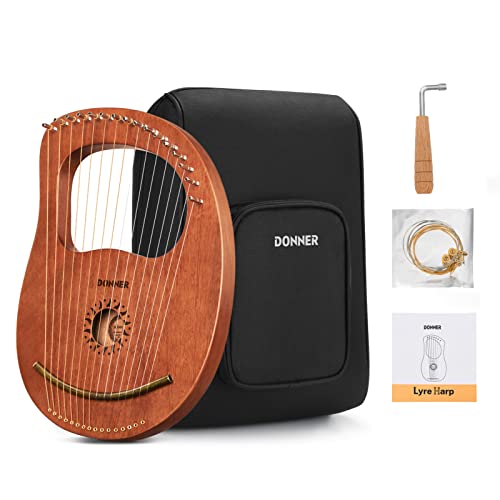
- The Donner 16-string lyre harp is crafted from solid mahogany and carbon steel keys, ensuring a clear and gentle sound.
- The package comes complete with the harp, spare string set, gig bag, tuning wrench, instruction book, polishing cloth, and 2 picks
- Tuning the harp is made easier thanks to the wrapped strings and the included tuning wrench and manual. You can even use a small hammer for fine-tuning.
- With 16 strings, spanning from G3 to A5 in the C major scale, this harp offers a wide range of tones, eliminating the need for frequent retuning.
- Its elegant design, made from high-quality Mahogany, makes it a great gift for beginners and kids.
What Are The Different Types of Small Harps?
When it comes to small harps, most instruments fall into a few main categories, I also provide my top pick for beginners under each if you need one!
Lap Harps:

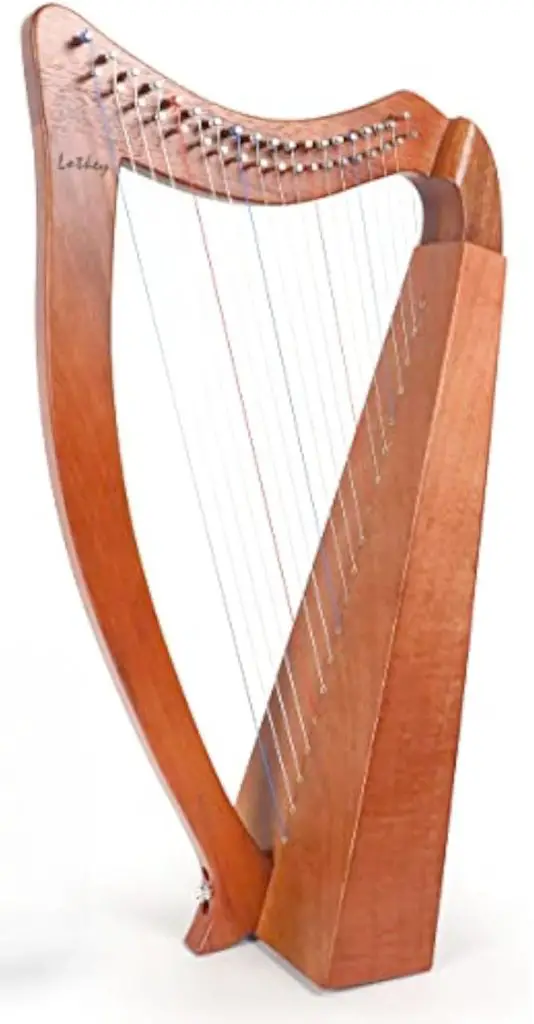
These compact harps are designed to rest on your lap, making them lightweight and highly portable. They’re ideal for beginners, children, or anyone looking for a travel-friendly instrument.
My top pick.
Celtic (Lever) Harps:

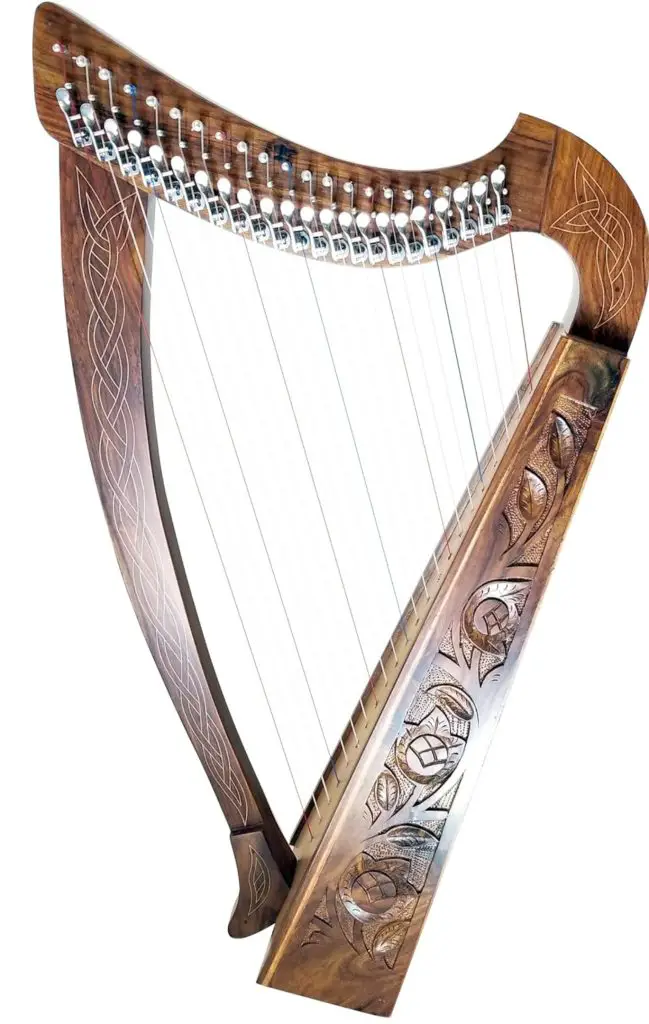
The most popular type of small harp, Celtic harps typically have 22–34 strings and feature levers that let you easily change keys. They’re versatile and commonly used in folk and classical music.
My top pick: 22 inch Irish Celtic Rosewood Harp
Wire-Strung Harps:

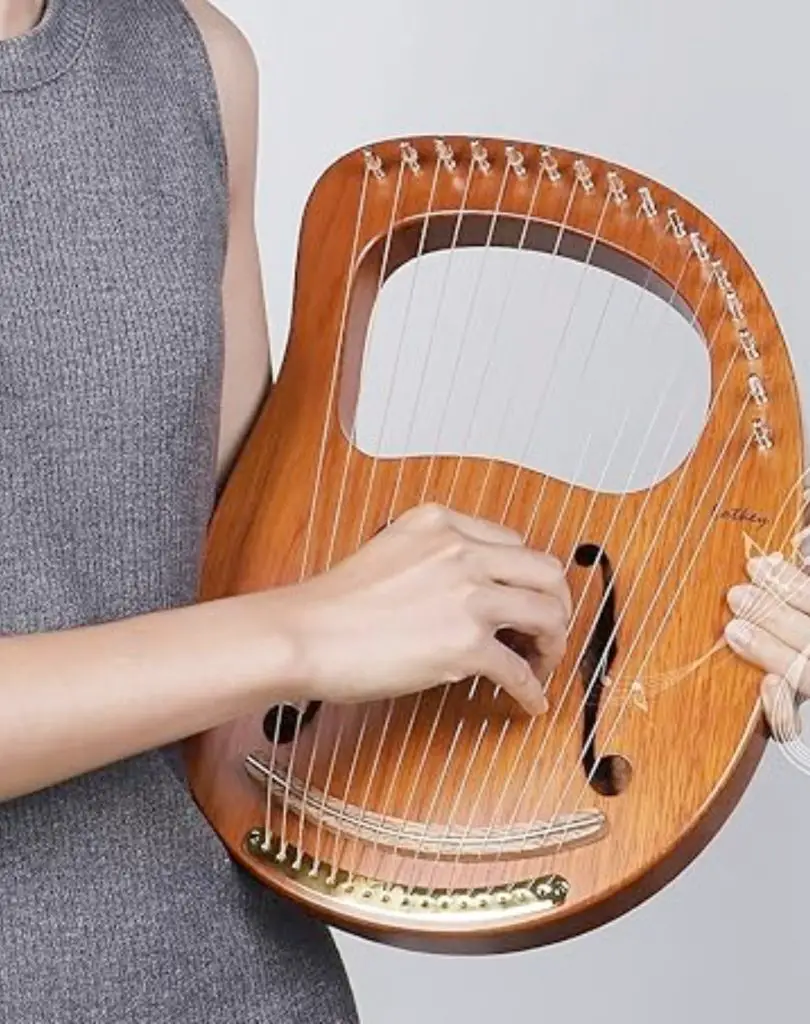
These harps use metal strings, producing a clear, bell-like tone. They’re often inspired by historical designs and are favored by players interested in traditional Celtic or early music.
My top pick: Metal String Lyre
Electric Harps:
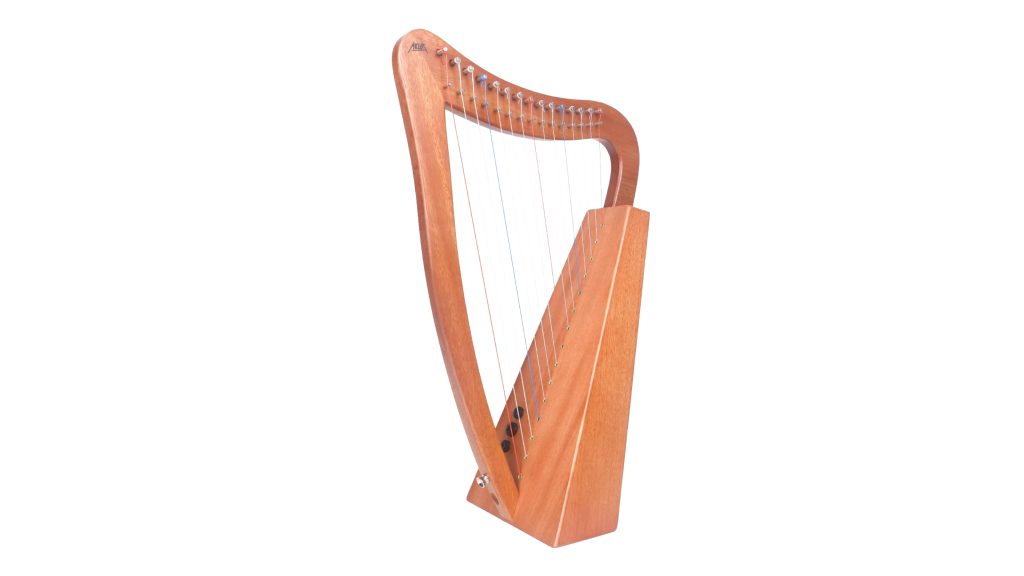
Small electric harps come equipped with pickups for amplification, making them great for performing in modern music settings or with bands.
My top pick: Electric Mahogany Harp
Note: Instruments like lyres or Aeolian harps are sometimes called “mini harps,” but they are technically distinct from true harps and less common for most players.
Buying Guide for Small Harps
When I bought my first harp, I focused on several key factors that helped me find the right balance between quality and price. Here’s what to consider as you shop for your own small harp:
Scale and Range
The number of strings determines what music you can play:
- 15-19 strings: Very limited range, best for simple melodies
- 22-26 strings: Good for beginners, allows for most folk music
- 29-34 strings: More versatile for intermediate players
I started with a 26-string harp, which gave me enough range without overwhelming me as a beginner.
Types and Price Ranges
- Lever Harps: $500-$2,000, suitable for beginners to intermediate players
- Lap Harps: $300-$800, more affordable but with limited range
- Lyre Harps: $100-$300, the most affordable option (though technically a different instrument)
Setting my budget beforehand helped me narrow down choices without getting overwhelmed.
Weight and Portability
If you plan to transport your harp regularly, weight matters:
- Under 10 pounds: Ideal for frequent travel and younger players
- 10-20 pounds: Good balance between portability and sound quality
I chose a 12-pound harp that I could easily carry to lessons but still had decent sound projection.
Quality and Materials
Look for these quality indicators:
- Solid wood soundboard: Produces better resonance than laminated wood
- Sturdy tuning pins: Should turn smoothly but hold tension well
- Even string spacing: Indicates careful craftsmanship
While professional harpists invest in high-end models, I found many affordable harps that don’t compromise on sound quality. Reading reviews from other beginners helped me identify good-value instruments.
Is Harp a Good Beginner Instrument?

Choosing an instrument to start learning music can be a delightful yet challenging decision. I’ve found that the harp, with its soothing tones and elegant presence, is often considered an intriguing option for beginners.
Can You Self-Teach Harp?
In my experience, self-teaching harp is possible, especially if you have a strong sense of discipline and access to quality learning resources.
While self-teaching may come with a steep learning curve, the following points can help guide your journey:
- Starter Instrument: A smaller lap harp can be an ideal starting point due to its affordability and portability.
- Online Resources: There’s a wealth of tutorials and lessons available online that cater to harp beginners.
- Practice Schedule: Consistent and focused practice is key. Even 15-30 minutes a day can yield progress.
- Finger Placement: It’s crucial to begin with proper hand technique to avoid forming bad habits that are hard to break later on.
- Simple Repertoire: Start with simple songs. This helps you to gradually build up your skills and confidence.
Is Small Harp Easier to Learn than the Regular Sized Harp? My Experience
Learning on a smaller harp, such as a lever harp, can indeed be a bit more accessible than starting with a full-sized pedal harp. There are a few reasons why this might be the case:
- Size and Portability: Smaller harps are easier to handle, especially for beginners who might find the size and weight of a pedal harp intimidating. Their portability also makes it easier for you to find a comfortable place to practice.

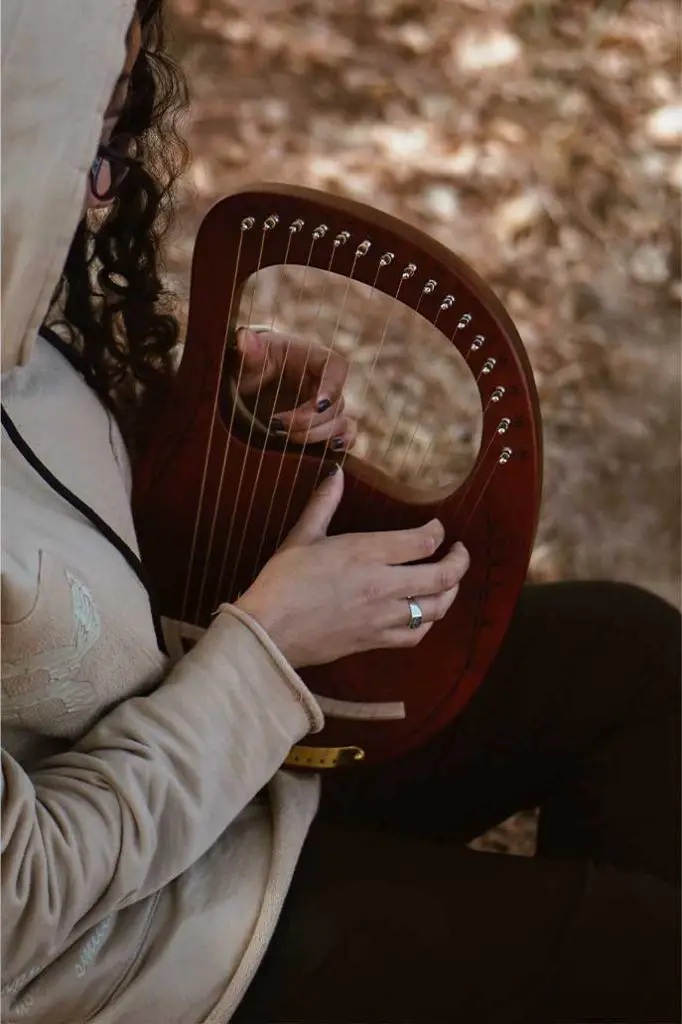
- Number of Strings: Smaller harps typically have fewer strings than concert grand harps, which can have 47 strings or more. Fewer strings mean there’s less to manage as you’re getting used to where the notes are, which can make the initial learning process feel less overwhelming.
- Complexity of Music: The repertoire for smaller harps is often less complex than that for pedal harps. This allows beginners to focus on the basics of hand position, plucking technique, and simple melodies before tackling more complicated pieces.
- Pedal Mechanism: One of the main differences between lever and pedal harps is the mechanism used to change keys. Lever harps have levers at the top of each string that can be manually flipped to raise the pitch by a half step. Pedal harps, on the other hand, use a sophisticated pedal system to change the pitch of the strings. This system can be quite complex and takes time to master. Starting on a lever harp means you can delay learning this aspect until you have a solid foundation in other areas of harp playing.
- Cost: Smaller harps are generally less expensive than pedal harps. This makes them a more affordable option for beginners who aren’t yet ready to make a significant financial investment in a larger instrument.
That said, the principles of playing the harp are similar regardless of the size of the instrument.
Good technique, hand position, and practice habits are important on both small and large harps.
Some students might even start on a pedal harp if they are certain they want to pursue classical harp repertoire or if they have previous musical experience that makes the transition easier.
In my experience, starting with a smaller harp was a great way to ease into the world of harp playing. It allowed me to build confidence and skill without feeling too overwhelmed by the instrument.
Just enjoy the process, and let your love for the instrument and its music drive your learning journey. Whether on a small lever harp or a grand pedal harp, it’s gonna be a rewarding experience for you.
Frequently Asked Questions
In this section, I’ll address some common queries about small harps that are well-suited for beginners, such as different types available, where to find them, and their characteristics.
What are the different kinds of small harps suitable for beginners?
Can you recommend some beginner-friendly lap harps?
Where can I find a lever harp to purchase, especially for new learners?
How many strings do typical small harps have?
What is the name of the small harp often used in Celtic music?
Are there alternate names for lap harps that I should know about?
Author Profile


-
Daniel Johnstone is an English writer with a love for stringed instruments from around the world.
He shares his love for these instruments through his writing for folkstrings.com, a website dedicated to all things related to folk string music.
Daniel's passion for music started at a young age, and he has since become an accomplished musician, playing guitar, cavaco, and recently, the harp.
His dedication to learning and sharing his knowledge of stringed instruments is evident in his insightful and engaging blog posts. Whether you're a seasoned musician or a beginner, Daniel's writing is sure to inspire and entertain you.
When he's not playing music or writing, you can find Daniel exploring new instruments and seeking out new sounds to share with his readers.
Latest entries