Folkstrings.com is reader-supported. When you buy through links on our site, we may earn a small commission.
Learning to play the harp doesn’t require spending thousands of dollars on a professional instrument.
For beginners who want to explore this beautiful musical tradition, lyre harps offer an accessible entry point.
These smaller instruments provide a chance to develop basic skills and discover if the harp is the right instrument before making a larger investment.
Quality beginner lyre harps are available for under $100, making them an affordable option for new players.
Several brands now produce budget-friendly instruments that deliver decent sound quality and playability.
These entry-level harps help beginners understand string spacing, tension, and basic technique without the financial pressure of expensive equipment.
Choosing the right beginner harp involves understanding what features matter most and what to realistically expect from a budget instrument.
Proper care and maintenance can extend the life of an affordable harp and keep it sounding its best during the learning process.
Table of Contents
- How to Choose Your First Lyre Harp
- 1. Donner DLH-003 Lyre Harp (Best Overall)
- 2. AKLOT 16-String Lyre Harp (Best Value)
- 3. LIEKE 16-String Lyre Harp (Most Complete)
- 4. INKNOTE Lyre Harp (Best for Kids)
- 5. Rayzm Lyre Harp (Premium Budget)
- What to Expect from Budget Harps
- Care and Maintenance for Affordable Harps
- Frequently Asked Questions
- What are the recommended harp models for beginners on a budget?
- How many strings are ideal for a beginner’s harp?
- What should I look for when purchasing a beginner harp as an adult?
- Is it feasible to learn the harp on my own, and if so, what resources are best?
- Are there any trusted brands that offer quality harps for beginners at an affordable price?
- What are the key factors to consider when buying a lever harp for a novice player?
- Final Thoughts
How to Choose Your First Lyre Harp
A lyre harp is a compact string instrument with a simple design.
It works well for new players because it’s smaller than other harps and easier to learn.
Number of Strings
Lyre harps come with different string counts.
Most beginner models have between 7 and 19 strings.
Fewer strings make the instrument simpler to learn, while more strings offer a wider range of notes.
Materials and Build Quality
The body material affects both sound and price.
Wood lyre harps produce warm, rich tones.
Mahogany and spruce are common choices that balance quality and cost.
String Color Coding
Many lyre harps use colored strings to help players identify notes.
Red and blue strings mark specific notes, which makes reading music easier for beginners.
Weight and Size
Lighter harps are easier to hold during practice sessions.
A portable lyre harp lets players practice in different locations without hassle.
Sound Quality
Players should listen to the instrument before buying when possible.
Each lyre harp produces a unique tone.
Some have bright, clear sounds while others create softer, mellower notes.
Key Features to Compare:
- String material (metal or nylon)
- Tuning stability
- Included accessories (tuning key, case, extra strings)
- Ease of string replacement
The right lyre harp matches a player’s skill level and musical goals.
Beginners should start with a basic model that has good build quality and clear sound.
1. Donner DLH-003 Lyre Harp (Best Overall)
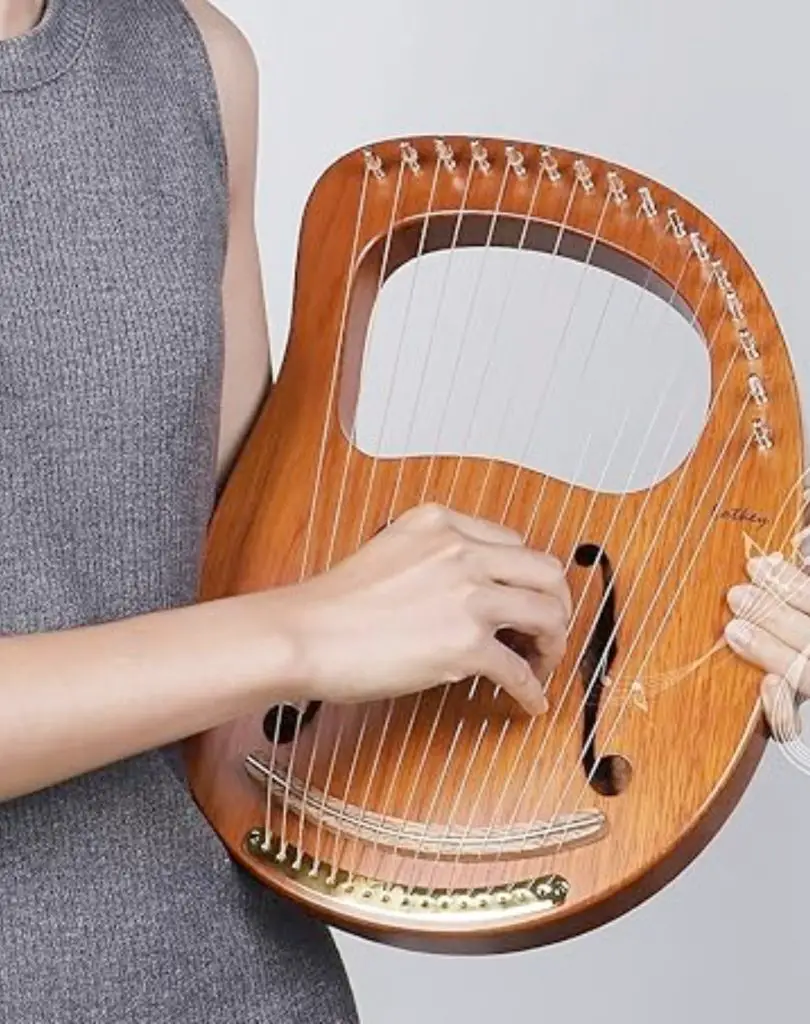
The Donner DLH-003 stands out as the best overall choice for beginners looking for a quality instrument under $100.
This 16 string harp features a solid mahogany body that produces clear, gentle tones.
The copper saddle helps transmit vibrations properly and prevents strings from digging into the wood.
This lyre harp uses an Ancient Greece style design that looks elegant while remaining practical.
The carbon steel strings are tuned to C major scale, ranging from G3 to A5.
Having 16 strings means beginners can play more songs without constantly retuning.
The package includes everything a beginner needs: a tuning wrench, spare strings, gig bag, instruction manual, polishing cloth, and picks.
The price typically ranges from $70 to $80.
Pros:
- Complete accessory kit included
- Durable mahogany construction
- More strings than basic models
- Easy to tune with provided tools
Cons:
- May require frequent tuning initially
- Slightly heavier than smaller lyres
2. AKLOT 16-String Lyre Harp (Best Value)
The AKLOT 16-String Lyre Harp stands out as the best value option for beginners looking for quality construction.
This harp costs between $70 and $90, which makes it slightly more expensive than basic models.
The mahogany body produces warm, clear tones that sound better than cheaper alternatives.
The maple saddle is an important upgrade that helps transmit string vibrations more clearly.
The loop end design keeps the 16 metal strings stable and holds tuning better than basic designs.
Carved note symbols on the wood help beginners learn which strings to play.
The package includes a tuning wrench, extra strings, and a carrying bag.
Pros:
- Upgraded maple saddle for better sound
- Sturdy loop end string design
- Clear tone from mahogany construction
- Helpful carved note markings
Cons:
- Costs more than basic models
- Heavier than cheaper plastic alternatives
3. LIEKE 16-String Lyre Harp (Most Complete)
The LIEKE 16-String Lyre Harp stands out for its complete package and quality build. This instrument features a mahogany body with a copper saddle that helps produce clear, warm tones.
The 16 string harp comes tuned to C major scale, making it easy for new players to start right away.
Metal strings provide bright sound quality that works well for both practice and performance.
Carved note symbols on each string help beginners learn faster without getting confused.
The complete accessories include 16 extra strings, three picks, a tuning wrench, a carrying bag, and a beginner guide.
This package gives players everything needed to start their musical awakening without buying extras separately.
The instrument works well for beginner to intermediate players who want room to grow.
Pros:
- Complete kit with all needed accessories
- Professional lyre harp quality at budget price
- Carved symbols help with learning
- Durable mahogany construction
Cons:
- Heavier than some other models
- Takes time to stay in tune initially
Priced between $70-90, this represents strong value for the quality and included items.
4. INKNOTE Lyre Harp (Best for Kids)
The INKNOTE Lyre Harp stands out as a top budget pick for kids and first-time players. Priced between $60 and $80, this 16 string harp offers great value without cutting corners on quality.
The instrument features flexible steel strings that are gentle on small hands. This makes it less painful for beginners who are still building up finger strength.
The strings also produce a clear, pleasant sound that encourages practice.
One of the best features is the carved phonetic symbols on each string. These markings help new players identify notes quickly without needing to memorize positions.
The harp is made from mahogany peach blossom wood, giving it a nice look and solid construction.
It’s lightweight and portable, fitting easily into the included gig bag. Kids can take it to lessons or practice at different locations.
Pros:
- Kid-friendly design with easy-to-read note markers
- Gentle on fingers during practice
- Includes tuning wrench and spare strings
- Portable with carrying bag
Cons:
- May need frequent tuning at first
- Basic sound compared to pricier models
5. Rayzm Lyre Harp (Premium Budget)
The Rayzm Lyre Harp offers solid construction with its 16 string harp design. This instrument uses thick solid mahogany wood rather than layered material.
The wood body includes a sound hole that helps create fuller tones.
The metal strings connect to steel tuning pins that keep them secure. A metal saddle sits on the bridge to transfer sound vibrations and prevent wear over time.
The strings produce clear notes with good sustain when played.
This portable design works well for players at different skill levels from beginner to advanced.
The harp comes with helpful items including a tuning lever, extra strings, a carrying bag, and a digital note sticker.
The compact size makes it easy to transport.
The quality craftsmanship shows in the smooth finish and carved details on the wood surface.
A metal plate at the base helps hold the string tension without damaging the top.
What to Expect from Budget Harps
Budget harps under $100 typically feature basic materials like plywood or laminate wood. They produce a limited sound range with simpler tone quality and offer straightforward designs that help new players learn fundamental techniques without overwhelming features.
Material and Build Quality
Most harps under $100 use plywood, laminate, or basic hardwoods instead of premium solid woods. These materials keep costs down but still provide adequate durability for learning purposes.
The strings are usually made of metal or nylon, with metal strings being more common in this price range.
Budget harps often have simpler construction methods. The joints may use glue and screws rather than traditional woodworking techniques.
This affects longevity but doesn’t prevent the instrument from functioning well for beginners.
Common materials in budget harps:
- Plywood body
- Metal or nylon strings
- Basic hardware for tuning pegs
- Simple finish or stain
The build quality is functional rather than refined. Beginners should expect some rough edges or less polished surfaces.
The tuning pegs may require more frequent adjustment compared to expensive models.
Sound Range and Tone
Budget harps typically offer 16 to 27 strings. This provides enough range for learning basic songs and techniques.
Lyre-style harps with fewer strings work well for absolute beginners and younger players.
The tone from budget instruments sounds thinner and less resonant than professional harps. The strings produce clear notes but lack the rich overtones and sustain of high-end models.
Volume output is moderate. These harps work fine for personal practice and small room performances.
Ease of Playing for Beginners
Budget harps feature lightweight designs that make them easy to hold and position. Most models weigh between 2 to 5 pounds.
This portability helps beginners practice in different locations.
The string spacing and tension suit new players well.
The strings sit close enough together for small hands but provide adequate space to avoid accidental plucking.
Tuning stability varies, with some models requiring daily adjustments as strings settle.
Simple designs mean fewer parts to understand or maintain.
Most budget harps lack levers or pedals, which removes complexity for first-time learners.
Players can focus on basic plucking techniques and reading music without managing key changes.

Care and Maintenance for Affordable Harps
Budget harps need regular attention to stay playable and sound good. Simple daily habits like proper storage and gentle cleaning protect the instrument from damage, while knowing when to change strings keeps the sound quality consistent.
Storage Tips
Harps under $100 should stay in a stable environment away from extreme temperatures.
The ideal room temperature ranges from 65-75°F with humidity levels between 40-50%.
Direct sunlight damages wood finishes and warps the soundboard over time. Windows and heating vents create temperature swings that harm the instrument.
A harp stand or wall mount keeps the instrument secure when not in use.
Key storage locations to avoid:
- Attics or basements with humidity fluctuations
- Near air conditioning units or radiators
- Against exterior walls in unheated rooms
- Inside cars or unventilated closets
A protective cover shields the harp from dust between practice sessions.
Soft cloth covers work better than plastic, which can trap moisture against the wood.
Cleaning Practices
Dust accumulates on strings and the soundboard quickly. A soft microfiber cloth removes surface dust without scratching the finish.
Wipe down the frame and column after each playing session to remove hand oils and fingerprints.
The strings need gentle care. Run a clean, dry cloth along each string from top to bottom to remove rosin buildup and skin oils.
Never use furniture polish or chemical cleaners on the wood or strings.
For stubborn dirt on the frame, slightly dampen the cloth with water only. Dry the area immediately with a separate cloth.
The soundboard requires extra caution since excessive moisture damages the thin wood and affects tone quality.
String Replacement Guidance
Broken strings need immediate replacement to maintain proper tension across the soundboard.
Most affordable harps use nylon strings that cost $1-3 each. Purchase replacement strings that match the gauge and material of the original strings.
Tune new strings gradually over several days. They stretch significantly during the first week and require frequent retuning.
Mark the string position on the soundboard before removing a broken string to ensure correct placement.
Replace strings one at a time rather than all at once. This approach maintains consistent tension on the soundboard and preserves the instrument’s structural integrity.
A string winder speeds up the process and creates even tension around the tuning pins.
Frequently Asked Questions
Budget-conscious beginners often wonder about string counts, trusted brands, and whether self-teaching is possible.
Most quality beginner harps under $100 feature 16 strings and come from brands that focus on lyre-style instruments.
What are the recommended harp models for beginners on a budget?
The Donner DLH-003 Lyre Harp offers metal strings and solid construction at an entry-level price point.
The AKLOT 16-String Lyre Harp provides reliable tuning stability and clear tone quality.
The LIEKE 16-String Lyre Harp delivers good sound for its price range.
The INKNOTE Lyre Harp and Rayzm Lyre Harp round out the top choices with balanced string tension and playable designs.
How many strings are ideal for a beginner’s harp?
A 16-string harp works well for most beginners learning basic melodies and techniques.
This string count covers two full octaves, which allows players to practice simple songs and scales.
Some beginners may encounter 22-string or 26-string lap harps, which offer extended range.
However, 16 strings provide enough notes to build foundational skills without overwhelming new players.
What should I look for when purchasing a beginner harp as an adult?
Adults should look for harps with standard string spacing that accommodates larger hands.
The instrument needs even string tension across all strings for consistent sound quality.
A resonant voice matters for maintaining interest in practice sessions.
The harp should stay in tune reasonably well between tuning sessions.
Build quality affects longevity, so buyers should check for solid wood construction and secure string attachments.
Is it feasible to learn the harp on my own, and if so, what resources are best?
Self-teaching the harp is possible with structured online courses and video tutorials.
Many lyre harp makers include basic instruction sheets or access to online lesson libraries with their instruments.
YouTube channels dedicated to harp instruction offer free lessons for beginners.
Some manufacturers partner with teaching programs that provide step-by-step guidance for new players.
Practice requires consistency, but motivated learners can develop basic skills within a few months.
Are there any trusted brands that offer quality harps for beginners at an affordable price?
Donner produces reliable entry-level lyre harps with metal strings.
AKLOT has built a reputation for instruments that maintain tuning and deliver clear sound.
LIEKE, INKNOTE, and Rayzm all manufacture budget-friendly lyre harps suitable for beginners.
These brands focus on the under-$100 market segment where most new players start their harp journey.
What are the key factors to consider when buying a lever harp for a novice player?
Lever harps typically start at higher price points than lyre harps, often exceeding the $100 budget range.
A 26-string lever harp represents one of the smallest professional-style options for beginners.
String spacing and tension affect playability for new players.
Medium string tension works well for building finger strength without causing fatigue.
Buyers should consider whether they want Celtic styling or a standard design.
The instrument should produce a pleasant, resonant tone that encourages regular practice.
Final Thoughts
Finding a quality harp under $100 is possible for beginners who want to explore this instrument.
Small lap harps and lyre harps fit within this budget and offer a good starting point for learning basic techniques.
Beginners should focus on key features when shopping in this price range.
String quality matters because it affects sound and tuning stability.
The number of strings typically ranges from 12 to 26 for budget models.
More strings provide greater range but may be harder to learn initially.
Important considerations include:
- Tuning tools and extra strings (often included)
- Portability and size for practice space
- String tension suitable for beginner fingers
- Build quality that prevents constant retuning
New players don’t need expensive pedal harps to start their musical journey.
A simple lap harp lets them learn finger placement, develop rhythm, and understand basic music theory.
Many musicians begin with affordable models before investing in larger instruments.
The harps in this price range work well for casual playing and determining long-term interest in the instrument.
They suit children, teens, and adults who want to try something new without major financial commitment.
Buyers should read recent reviews before purchasing.
Some budget harps struggle with tuning stability or arrive with manufacturing defects.
Checking return policies protects against these issues.
Author Profile