Autoharp for Beginners –Where Do I Start as a Beginner?
Folkstrings.com is reader-supported. When you buy through links on our site, we may earn a small commission.
Last Updated on June 21, 2026 by folkstrings
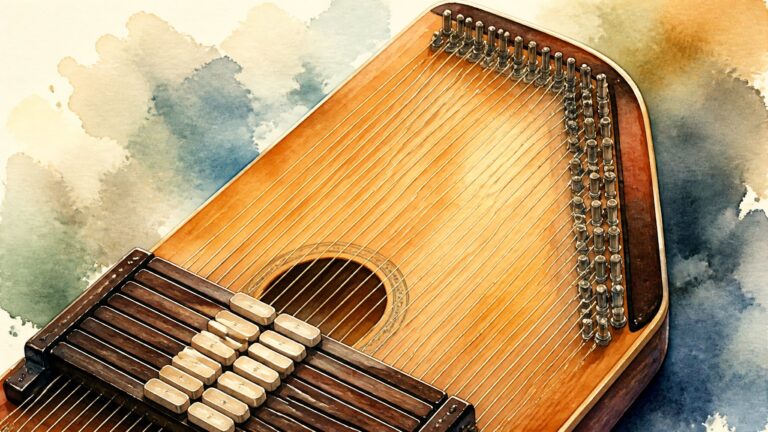
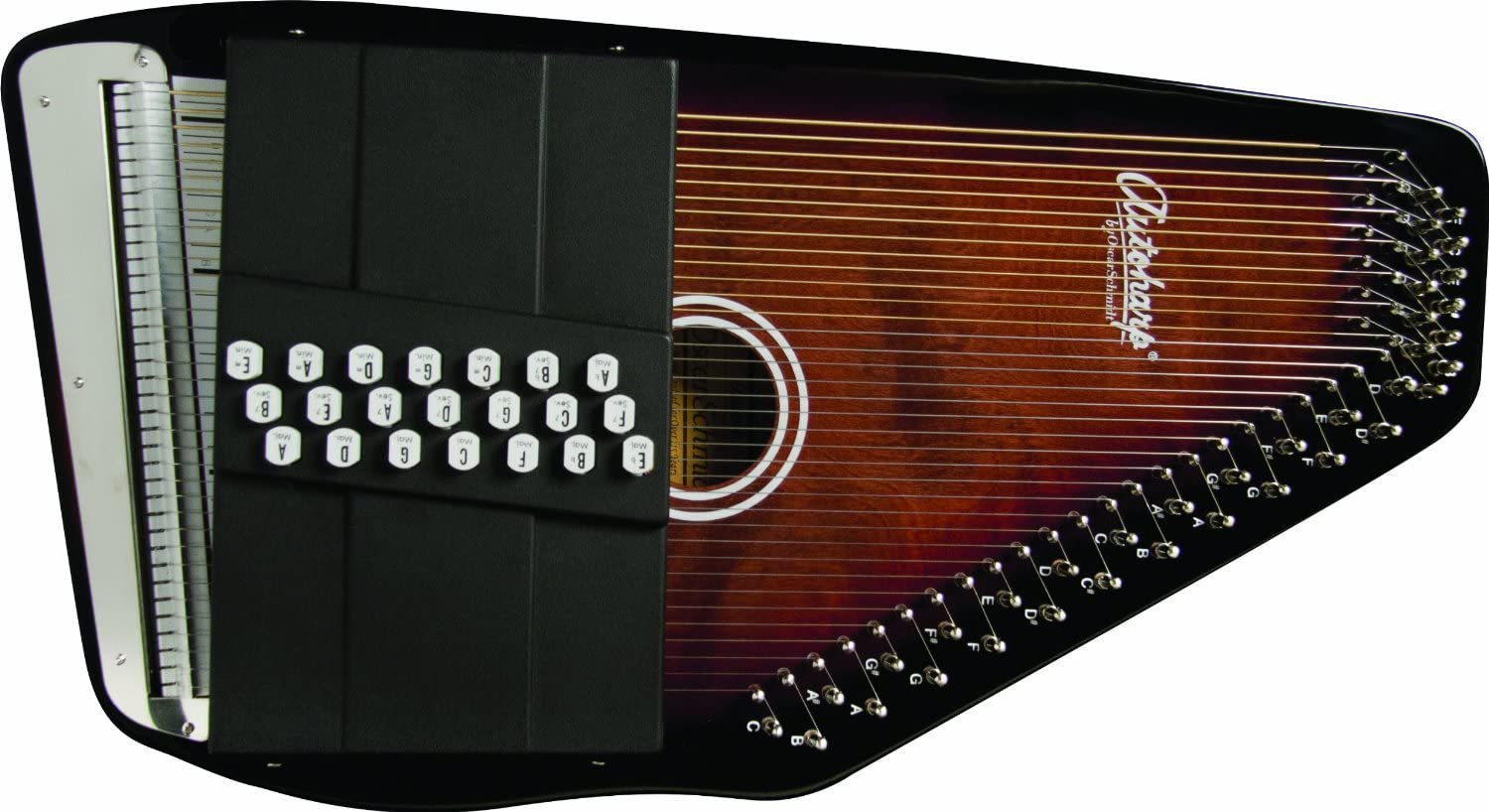
The autoharp is a unique musical instrument that is in the zither family. The autoharp features a sequence of chord bars that are attached to dampers.
When the chord bars are pressed, the dampers press against the strings, muting the sound, so only the desired strings are played.
Table of Contents
- What Is The Best Autoharp for Beginners?
- My Autoharp Picks for Beginners
- What Are The Origins of The Autoharp
- Is the Autoharp Easy to Play? Is It Easy to Learn?
- How Much Does an Autoharp Cost?
- How to Choose an Autoharp?
- How To Buy An Autoharp?
- What to Look For When Buying An Autoharp
- Autoharp Vs. Harpsichord: What’s the Difference?
- What Autoharp Accessories Do I Need?
- Conclusion – Learning The Autoharp for Beginners
What Is The Best Autoharp for Beginners?
There are many good autoharps on the market, but some are better suited for beginners than others. Rather than picking favourites here, I’ve put my actual verified recommendations — checked against current stock and real reviews — into one dedicated guide below.
My Full Autoharp Buying Guide
This article is about getting started — for the actual models I’d recommend, verified against current stock and reviews, I’ve put everything into one dedicated guide rather than splitting picks across multiple pages.
See My 7 Best Autoharp Picks →What Are The Origins of The Autoharp
There is quite a lot of debate over where this instrument came from. The earliest mention of an autoharp was in 1882 when a German immigrant by the name of Charles F. Zimmermann was awarded a patent for a stringed instrument that offered muting options. He called it the autoharp.
Another German, Karl August Gütter, got a British patent around 1884. His instrument was called the Volkszither, and it most closely resembles the instrument we know today as the autoharp.
Is the Autoharp Easy to Play? Is It Easy to Learn?
While this instrument looks complex and intimidating to some, it is one of the easiest instruments to play.
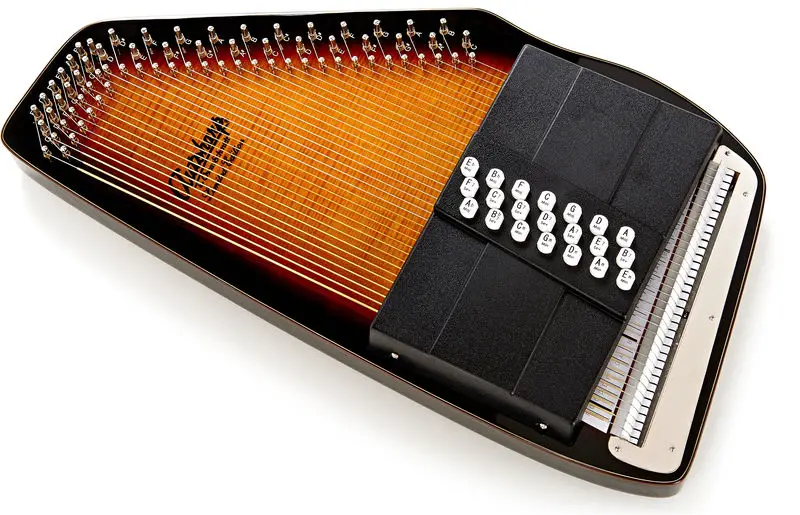
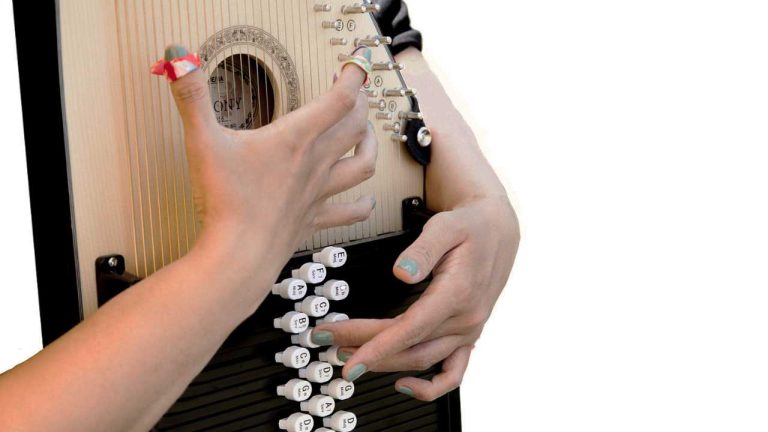
This fretless stringed instrument has chord buttons that feature small felt pads. When you press the buttons, the strings are muted, allowing only the strings that are a part of the chord to ring out.
The autoharp was invented as an instrument just about anyone could play. It was meant to be straightforward and simple. Even though it is a fairly easy instrument, it produces a beautiful sound that surprises many people when they hear it for the first time.
To play simple and beautiful melodies, you only need to learn a few chords and start strumming. This will produce delightful music, but if you want to delve deeper, there is so much more to the autoharp than meets the eye.
Playing the autoharp well takes practice. This does not mean you need to grind for hours every day. A few minutes a day will have you well on your way towards mastering this unique instrument. Ideally, you should plan on practicing at least fifteen minutes each day.
How Much Does an Autoharp Cost?
The price of autoharps, as with most instruments, varies. Basic autoharps cost typically start around $200. You will find custom autoharps can be up to ten times that amount.
The price does not always equate to the best quality. Before purchasing an autoharp, you need to research the maker and determine if they offer the best instrument for the price.
Many musicians first start by purchasing a used autoharp so they can save money. You can find a good deal on used autoharps, but make sure to check them carefully for any signs of damage.
How to Choose an Autoharp?
The main difference in autoharps is the number of chords. You will typically see these instruments with either 15 or 21 chords. There are also small autoharps that only have 6 chords.
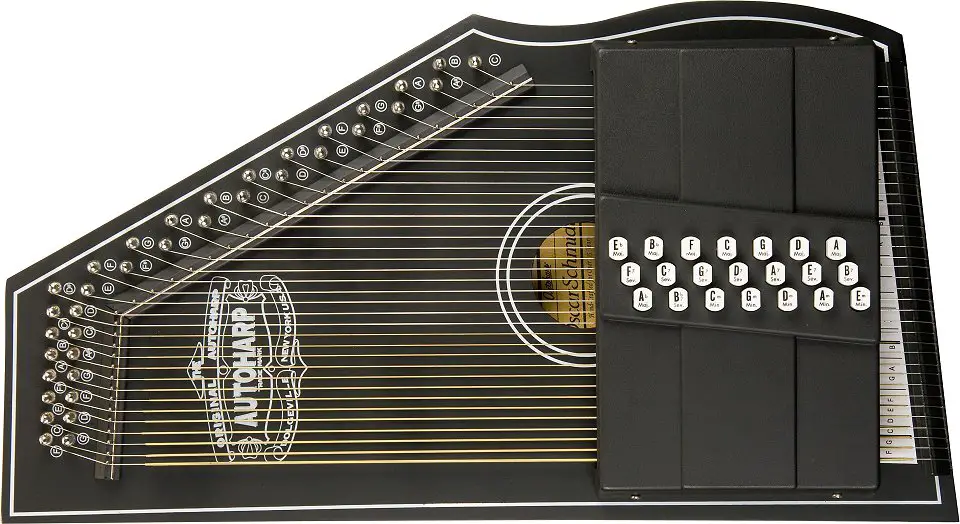
If you are on a budget and unsure whether you will stick with this instrument, it may be tempting to purchase the 15-chord model, since it is less expensive.
Unfortunately, if you plan on playing mainstream music, this is going to limit your playing ability because you will not have access to the chords other people are playing.
How To Buy An Autoharp?
What to Look For When Buying An Autoharp
Most standard autoharps are chromatic.
A 21-chord model will have three rows of buttons. The 6-chord or 15-chord model is ideal for beginners, but if you plan on playing varied music and sticking with this instrument, you will likely end up needing an upgrade because the 6-chord or 15-chord model will not suffice.
Consider the following when purchasing a new autoharp.
· If you are a beginner and are unsure of whether you will continue with the instrument for a long time, it may be wise to purchase the 15-chord. The benefits of the 15-chord are there are fewer chords to learn, the buttons are larger, and the construction is often more durable, making this instrument better suited for novices who may not know how to handle it with care. If you plan on playing for years, the 21-chord will be your best bet.
· You will also have the option of purchasing an acoustic only, acoustic/electric, or an electric-only. Acoustics are popular in folk music. Those who want to hook up to an amp and create a louder sound will want an electric autoharp.
· Next, you will have to choose the wood. Spruce is the standard wood used in most autoharp construction. You will also see other woods like Birdseye maple and mahogany. Although there are some slight sound differences in woods, this is mostly about appearance preferences.
· You will also need to choose the finish. Satin finishes produce a bit of a richer sound because they have a thinner coating of protection. Gloss finishes have thicker coatings and offer a higher level of protection.
· Finally, you will also need to choose between fine-tuning and standard tuning. With a standard tuned autoharp, you make all adjustments with the pegs at the top. With a fine-tuned instrument, you will make your primary adjustments at the top of the instrument and your secondary ones at the bottom. These adjustments are done with an Allen wrench.
Autoharp Vs. Harpsichord: What’s the Difference?
Although there are undoubtedly some similarities between autoharps and harpsichords, they are also quite distinct from one another.
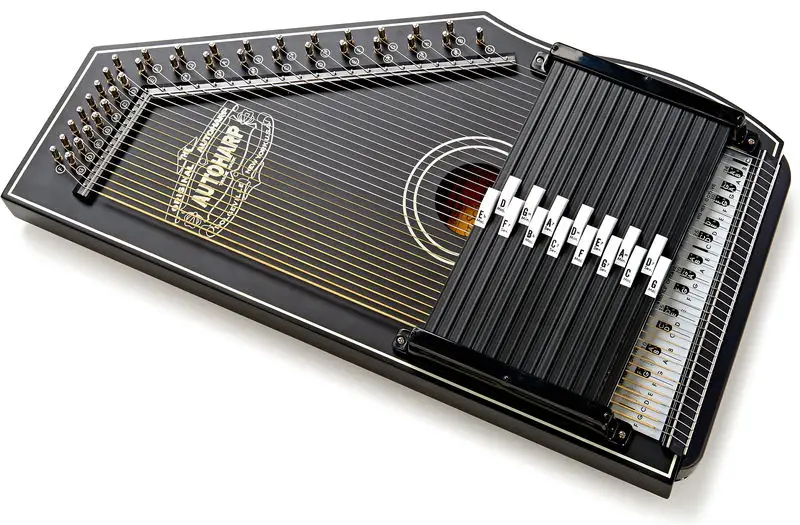
The autoharp is smaller and can be positioned on a table or in the lap of the musician while playing.
Harpsichords are played much like a piano. They are much larger, therefore not portable like the autoharp. Harpsichords require pressing the keys of a keyboard, which triggers the plucking of the strings.
Although they produce similar sounds, they are also quite different. Autoharps have a higher pitch with a crystalline sound. Harpsichords have a percussive sound with a bit of a twang.
What Autoharp Accessories Do I Need?
In the beginning, you will not need a lot of accessories. However, having these on hand will make playing and storage easier.
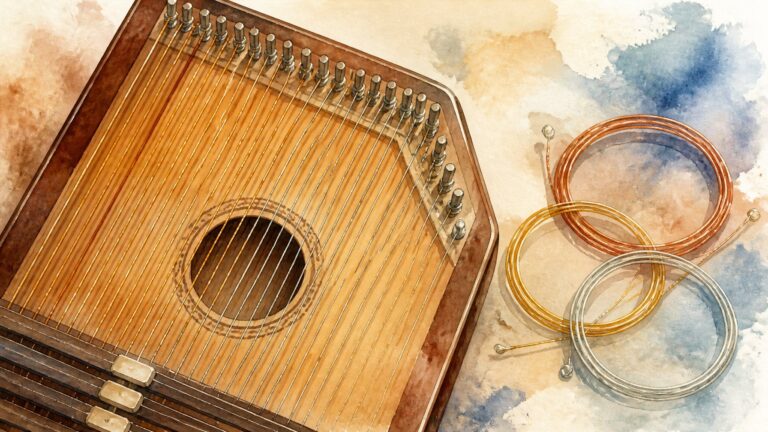
· Backup strings
· Tuner and tuner microphone
· Carrying case
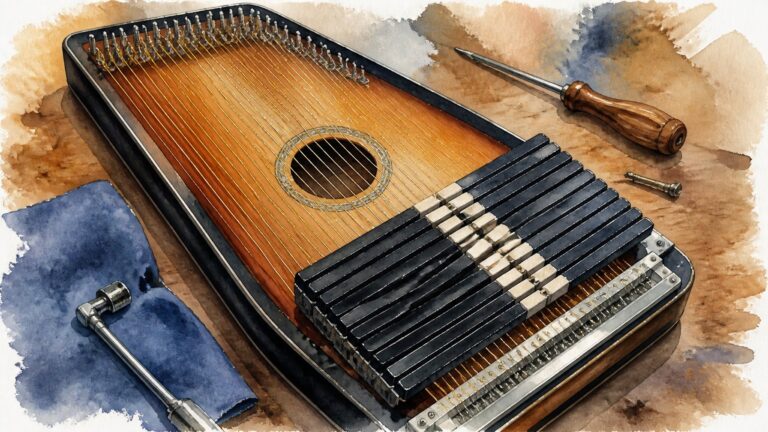
· Tuning hammer wrench
· Finger picks
· Felts
Browse Amazon for autoharp accessories to get an idea of what you will need to get started.
Once you have your instrument and accessories, finding a good source of instruction will be helpful. Although the autoharp is a straightforward instrument, it never hurts to seek expert help.
Conclusion – Learning The Autoharp for Beginners
While some people in the music industry scoff at the autoharp because of its ease of play, it is becoming more and more accepted. With varying playing and tuning styles, musicians can make the autoharp their own.
Playing an autoharp is fun, and it is a perfect instrument for those with little musical experience. You will find this instrument to be very forgiving, which is ideal for beginners.
With the autoharp, you can create lovely music within your first hour of growing accustomed to the instrument. Once you learn a few basic chords and gain a better understanding of how to strum, you can begin experimenting with more complex chords and music styles.
The autoharp is beautiful to look at and creates stunning music, without a lot of difficult steps to remember. With the push of the chords, you isolate the strings and create amazing sounds.
Author Profile

- Daniel Johnstone — Dániel to his friends back in Miskolc — is a Hungarian folk musician and writer who has been playing stringed instruments for over twenty years. Growing up in northeastern Hungary with a family steeped in folk music, he developed an early obsession with Celtic and Appalachian styles that eventually brought him to the UK. He worked his way through tenor banjo, 5-string banjo, autoharp, mountain dulcimer, mandolin, ukulele, harp and kalimba — most of them acquired through trial, error and more money than he'd like to admit. He founded Folkstrings.com to cut through the noise: practical, experience-based guides to instruments, strings, gear and accessories for folk players at every level.