Hammered Dulcimer Tuning Guide For Beginners
Folkstrings.com is reader-supported. When you buy through links on our site, we may earn a small commission.
Last Updated on June 19, 2026 by Daniel Johnstone
Tuning a hammered dulcimer for the first time can feel overwhelming—like staring at a wall of strings and not knowing where to start. I remember sitting down with my first instrument, chart in hand, feeling genuinely unsure which pin went with which string.
The good news? Once you understand the basic layout and follow a clear sequence, things get much more manageable.
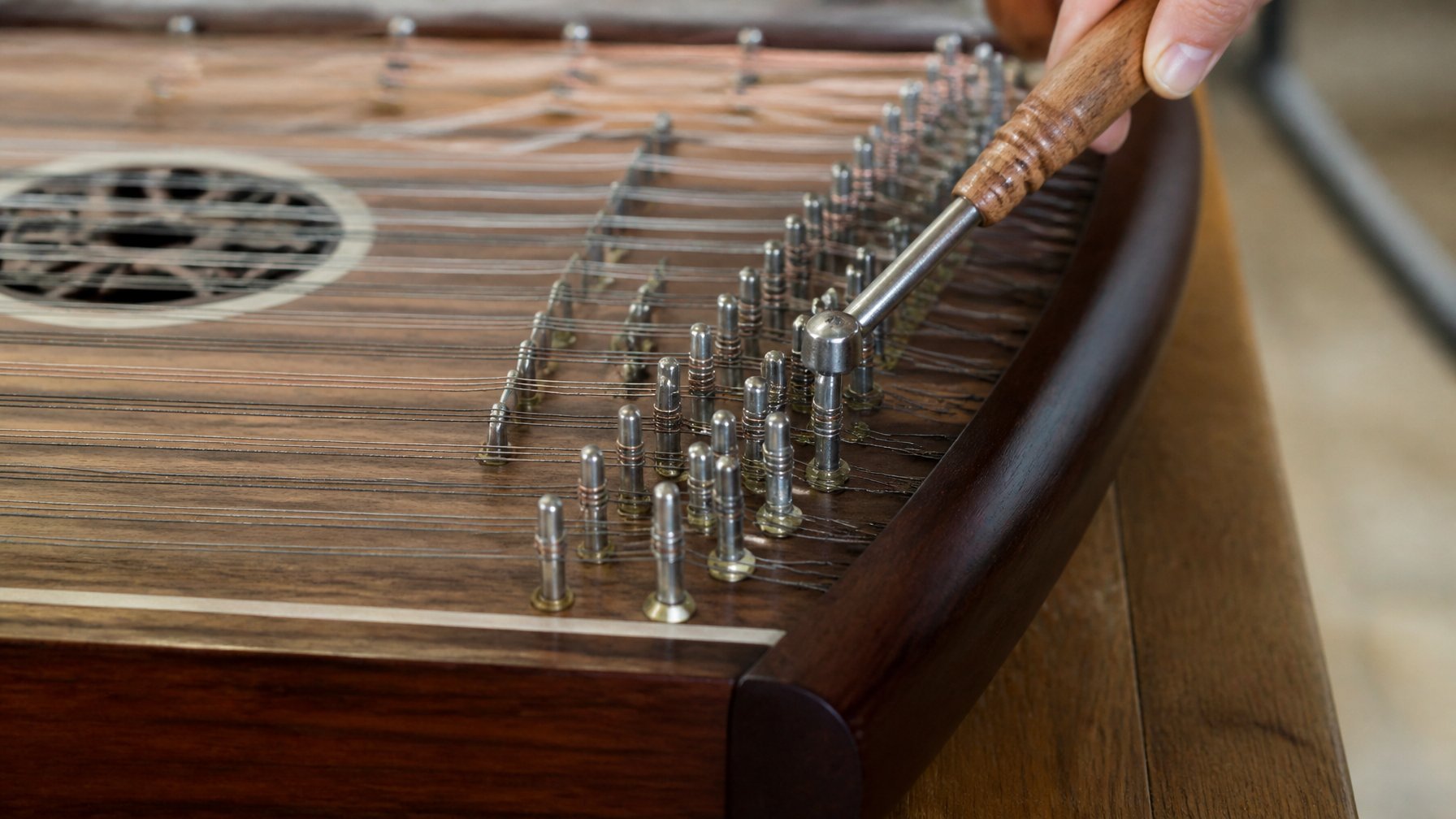
The core goal of hammered dulcimer tuning is simple: match the pitch of each string to the note it’s supposed to produce, using a tuning wrench to tighten or loosen the pins.
What makes it feel complicated is the number of strings, the two-sided bridge layout, and the fact that different instruments use different charts. Work through it methodically and it stops feeling overwhelming quickly.
This guide is for beginners and early-intermediate players who own builder-specific models and might not know terms like treble bridge, course, or diatonic layout. I’ll walk through setup, layout, tuning sequence, common trouble spots, and how to keep your instrument stable between sessions.
Key Takeaways
- Having the correct tuning chart for your instrument is just as important as having the right tools.
- Tuning follows a physical sequence, starting at the treble bridge and moving methodically to the bass side.
- Most beginner tuning problems come from a misread chart, a wrong string, or a string that just needs more time to settle.
What You Need Before You Tune
Having the right materials before you start saves a lot of frustration mid-session. You’ll need a tuning wrench that fits your pins, an electronic tuner that can hear individual strings, and a tuning diagram that matches your specific instrument model.
Choose The Right Tuning Chart Or Diagram
A tuning diagram shows which note each string should be set to. Charts are specific to each builder and model, so a chart for one dulcimer won’t reliably work for another.
If your instrument came from a builder like Songbird Dulcimers, look for the diagram that matches your model. Some builders list tuning charts by model name on their websites, and many include instructional materials with the instrument at purchase.
If you bought a used dulcimer and don’t have a chart, reach out to the original builder with your model name. Using the wrong diagram is one of the most common reasons a beginner’s tuning session goes sideways.
Set Up Your Tuning Wrench And Electronic Tuner
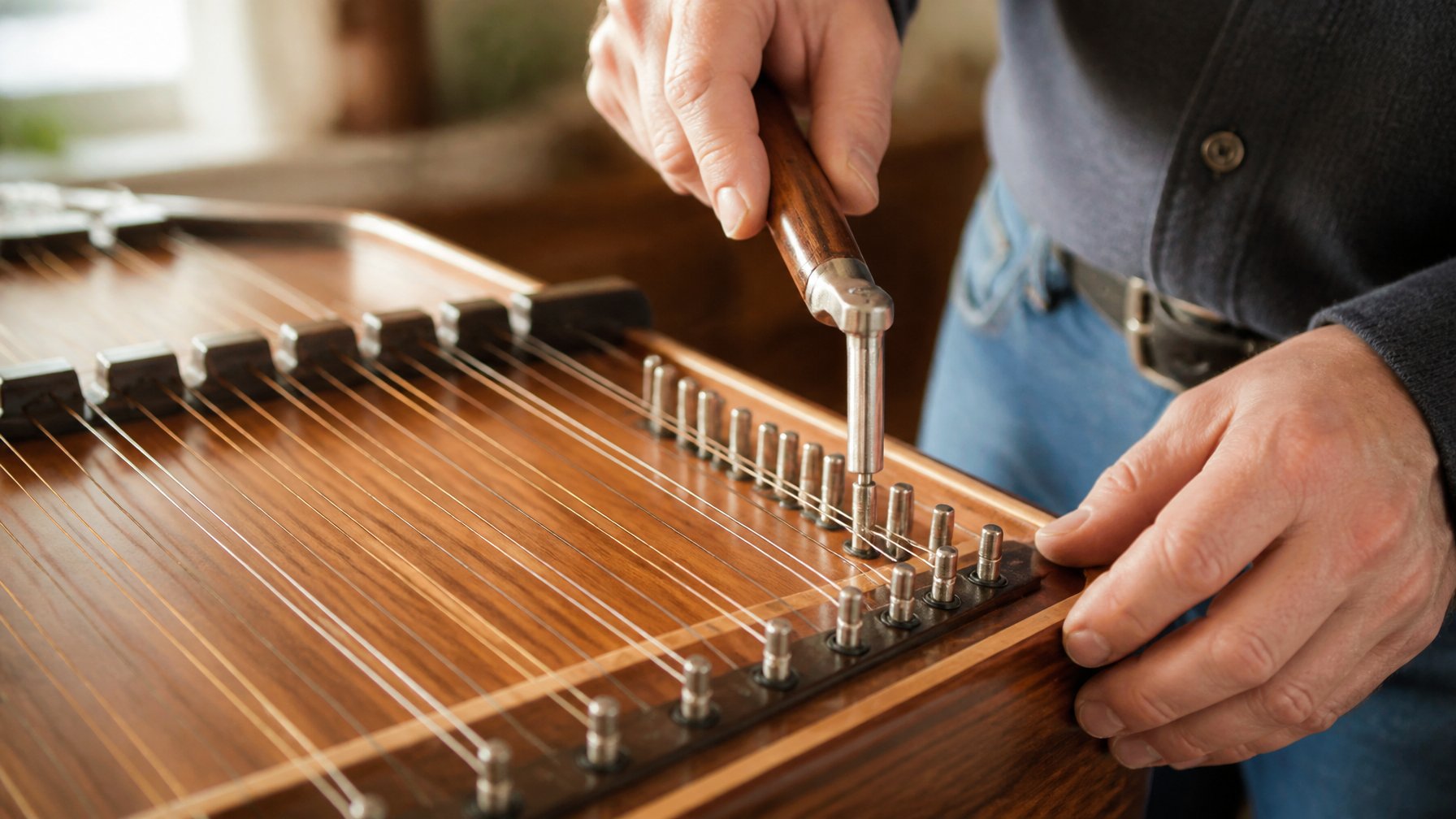
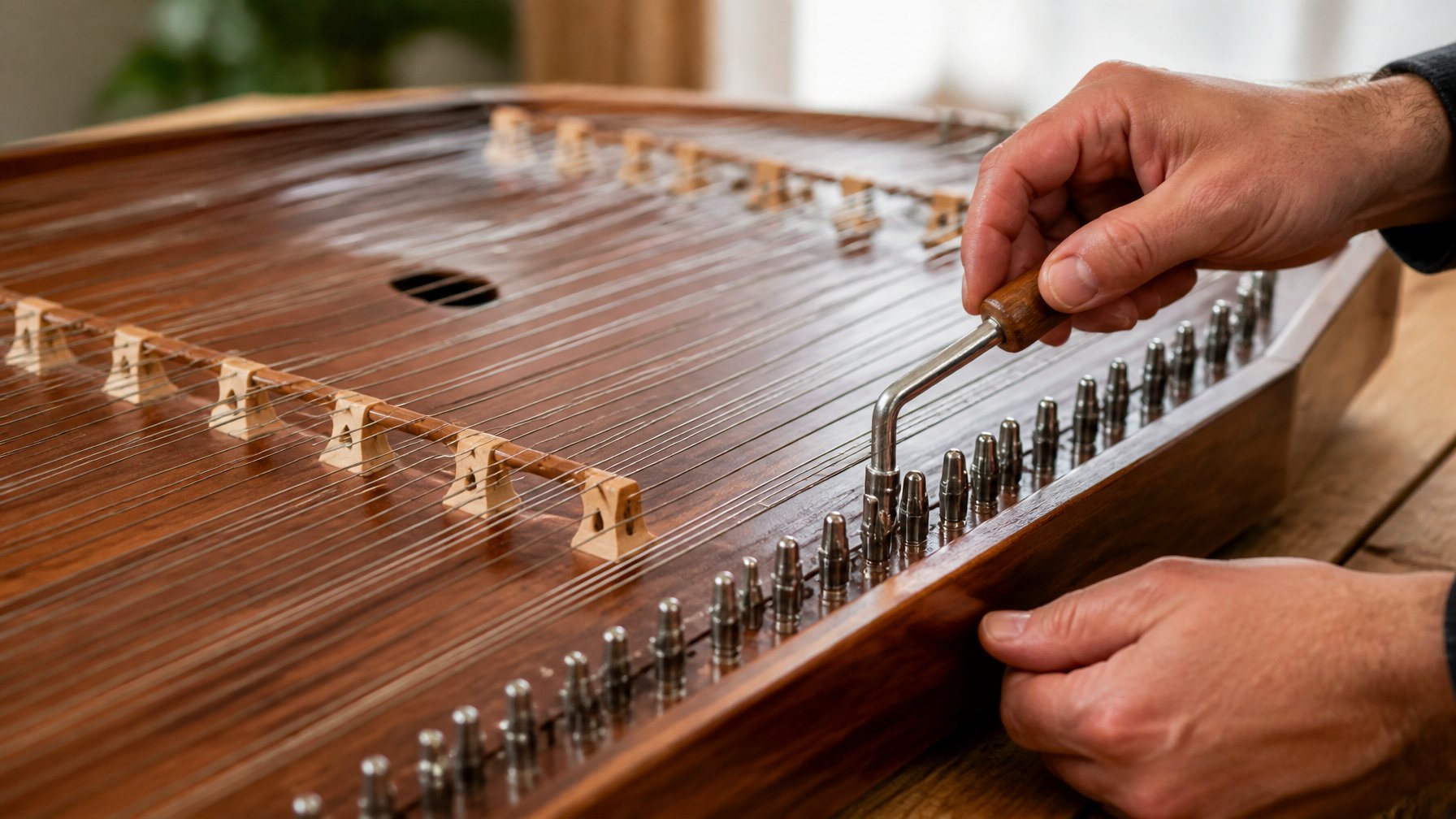
A T-handle tuning wrench with a star tip gives you better grip and more control than a simple hex wrench. I like it because it lets me make small, precise turns without overshooting.
A chromatic electronic tuner works well because it identifies whatever note it hears, not just a fixed set. Clip-on tuners attached to the treble bridge are reliable and don’t need constant repositioning.
Create A Quiet And Stable Tuning Space
Ambient noise messes with what an electronic tuner picks up. I always tune in a quiet room with the instrument on a solid surface at a comfortable height.
A dulcimer stand or sturdy table works. The surface needs to be stable enough that the instrument doesn’t shift while you’re adjusting pins.
Read The Layout Of Your Instrument First
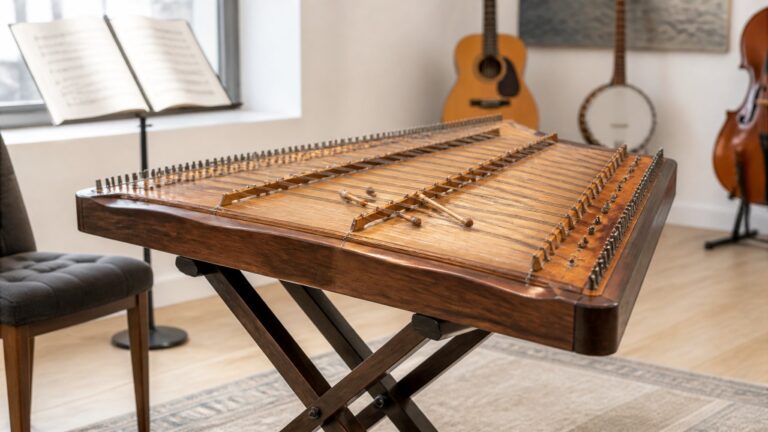
Before you touch a tuning wrench, spend a few minutes tracing the physical layout of your dulcimer. Knowing where the treble bridge and bass bridge sit, how courses are organized, and where your note strips are placed will make every tuning step feel grounded.
Find The Treble Bridge And Bass Bridge
The treble bridge runs roughly through the center of the instrument and is usually the taller of the two bridges. The bass bridge sits closer to the left side of the playing surface.
On most hammered dulcimers, each bridge divides its strings into two playable sides. A single string can produce two different notes depending on which side you pluck.
Knowing this from the start saves a lot of confusion when reading your diagram.
Understand Courses Notes And Repeated Strings
A course on a hammered dulcimer is a pair of strings tuned to the same note, played together. Most dulcimers have courses of two strings, and they need to match each other in pitch as closely as possible.
Some notes also appear in more than one location on the instrument, which is intentional and gives you flexibility. Your tuning diagram will show you which note belongs to which string, so cross-reference as you go.
Use Note Strips And Visual Markers To Stay Oriented
Many hammered dulcimers come with note strips—paper or laminated labels near the bridges that identify each string’s note. These are genuinely helpful when you’re new.
I leaned on them heavily during my first few months of tuning. If your instrument didn’t come with note strips, some builders offer printable versions. Keep your diagram nearby as a backup.
Tune The Strings In A Clear Working Order
Working through dulcimer tuning in a consistent order prevents skipped strings and keeps the instrument’s tension balanced. Start at the treble bridge and work string by string, then move to the bass side using the same steady approach.
Start On The Treble Side
Begin at the bottom of the treble bridge with the string closest to you. Follow that string to the tuning pin on the right side and place your wrench on it.
Check your hammered dulcimer tuning diagram to confirm what note that string should produce. Pluck the string on the right side of the bridge while gently damping it on the left side with a finger. This isolates the note so your electronic tuner reads it cleanly.
Move Methodically Across The Bass Side
After you finish the treble side, move to the bass bridge and repeat. Work from one end to the other without jumping around.
Adjusting one string can subtly affect nearby strings, so a consistent direction cuts down on the need to re-check earlier work.
Match Pitch Without Overtightening
Turn the tuning pin slowly and keep plucking the string as you go. Watch the tuner and stop when it centers on the correct note.
Small turns move the pitch more than you’d expect, especially on thinner strings. If you overshoot and go sharp, back the tension off and approach the note from below. Never crank a pin if the tuner reading isn’t moving; that usually means you’re on the wrong pin.
Handle Different Tuning Systems And Models
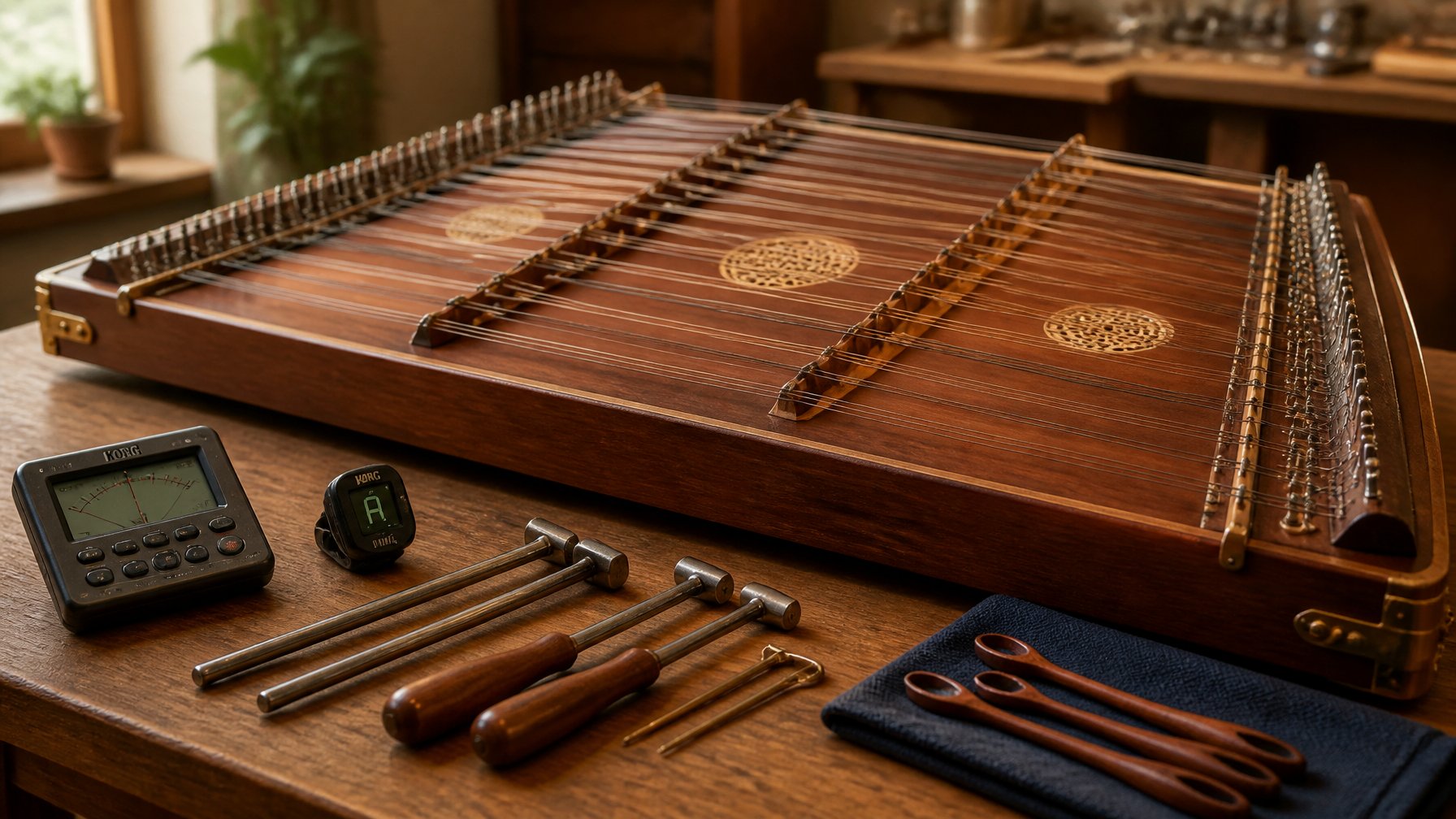
Not all hammered dulcimers are set up the same way. The tuning process shifts depending on whether your instrument is diatonic, chromatic, or built to a builder-specific layout.
Knowing which category your dulcimer falls into helps you find the right chart and avoid tuning to the wrong note system entirely.
Standard Diatonic Setups
Most beginner hammered dulcimers use a diatonic layout, which means the strings are arranged to cover the notes of specific major scales, usually centered around D and G. These instruments don’t include every half step, so they sound natural in a handful of keys but are limited in others.
A standard diatonic hammered dulcimer usually runs well in D major, G major, and related modes, which covers a lot of folk and traditional music.
What Changes On A Chromatic Dulcimer
A chromatic dulcimer includes extra strings that cover the sharps and flats missing from a diatonic layout. This gives you access to all twelve notes in an octave and makes playing in more keys much easier.
The tuning diagram for a chromatic model looks noticeably more complex, and the bridge layout often includes a third smaller bridge. If you own a chromatic model, make sure your chart is specifically labeled for that configuration.
Why Builder-Specific Charts Matter
Mountain dulcimers and hammered dulcimers built by different makers often use slightly different string gauges, scale lengths, and note placements. A chart designed for one builder’s instrument may place a note in a position that doesn’t match yours.
Builders like Songbird Dulcimers provide model-specific diagrams for this reason. Always use the chart that matches your exact model, not a generic one from a search result.
Fix The Problems That Trip Up Beginners
Even with the right tools and diagram, specific situations can stall a tuning session fast. A tuner reading the wrong note, a string that refuses to hold pitch, or a dulcimer tuning chart that doesn’t match what you see on the instrument—these are the three most common obstacles I ran into as a beginner.
When The Tuner Reads The Wrong Note
If the tuner shows a note that’s far off from what the string should be, first check that you’re plucking the correct side of the bridge. Each side produces a different note, and it’s an easy mistake to mix them up.
Also make sure you’re damping the opposite side while plucking, so the tuner isn’t picking up both at once. If the reading still seems wrong, verify that your tuner is set to chromatic mode, not guitar or bass mode.
When A String Will Not Settle
New strings stretch, and older strings that have been slack for a while will also resist holding a pitch. If a string keeps drifting flat after you tune it, tune it slightly sharp and let it settle over several plucks.
Repeat this a few times. On a new instrument, it can take a few full tuning sessions before strings hold reliably. Don’t assume the pin is broken if the pitch drifts early on.
When The Diagram Does Not Match The Instrument
If your hammered dulcimer tuning diagram shows a note in a position that doesn’t match your instrument, your chart might be for a different model. Compare the number of courses on your instrument with what the diagram shows.
If they don’t match, contact the builder directly and ask for the correct diagram. Don’t try to adapt a mismatched chart by guessing.
Keep The Instrument Stable Between Tuning Sessions
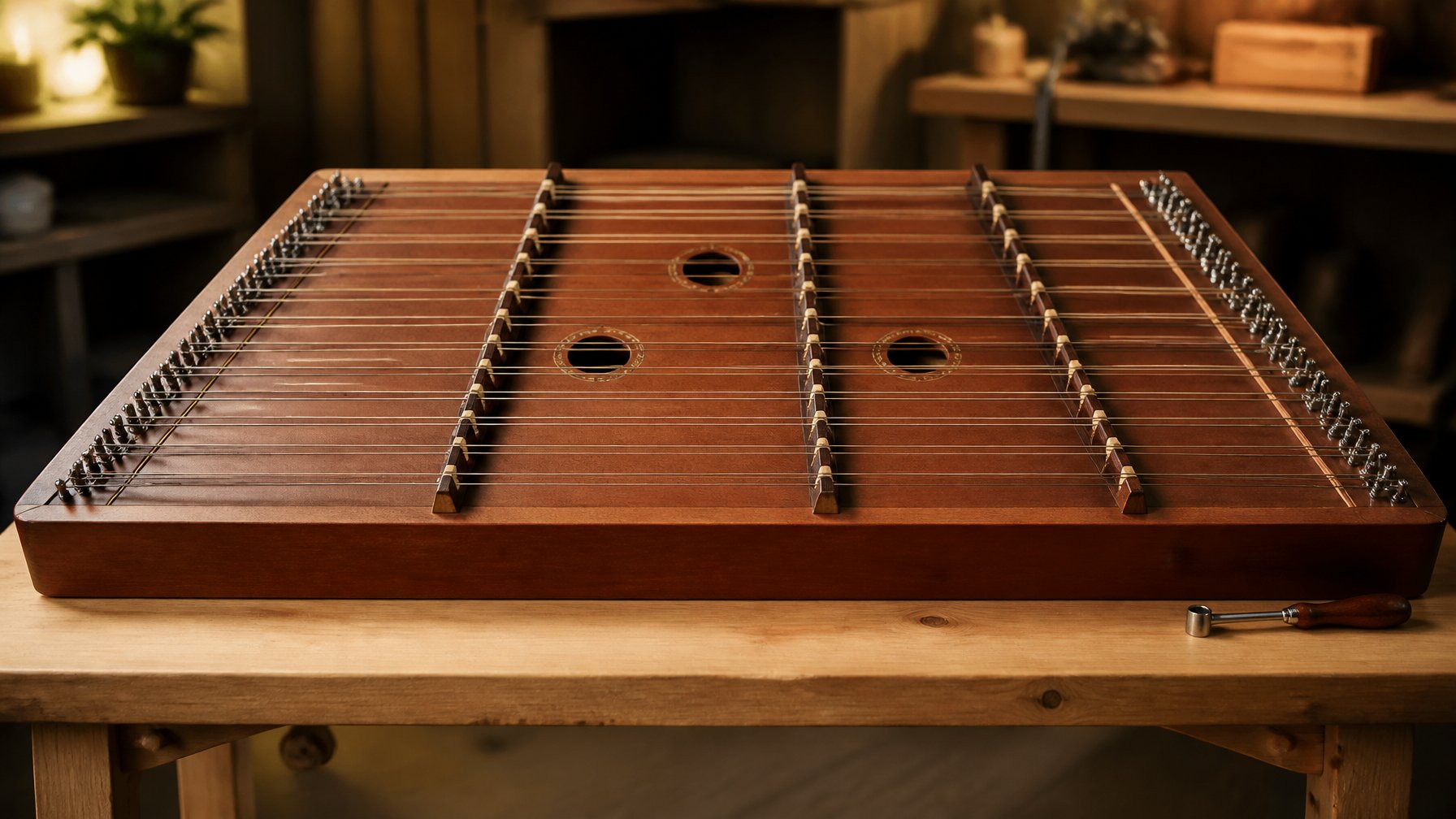
A well-tuned hammered dulcimer will drift out of tune over time, especially with temperature changes, humidity shifts, or regular playing. Staying ahead of that drift is much easier than correcting a heavily out-of-tune instrument from scratch.
How Often To Check Pitch
I check my instrument’s pitch before every playing session. For most folks, tuning every one to three days is about right if you’re playing regularly.
If your dulcimer sits in a dry place or the temperature swings a lot, you might need to tune even more often. When it’s been left unplayed for weeks, plan on a longer tuning session when you finally pick it up again.
Strings that have been slack tend to drift out of tune more than you’d expect. It’s just one of those things that happens over time.
When To Replace Strings Or Recheck Bridges
If a string just won’t hold its pitch no matter how many times you tune it, it’s probably worn out or fatigued. Broken strings should get swapped out right away.
Your tuning diagram usually lists the string gauge next to each note, which makes finding the right replacement a lot easier. If you notice a whole set of strings reading sharp or flat on one side, check if the treble bridge has shifted a bit.
A small nudge to the bridge might solve what looks like a tuning issue. It’s worth a try before you start replacing strings unnecessarily.
Use Videos And Guides For Ongoing Practice
How-to videos really help, especially if you’re the kind of person who learns best by watching someone else do it. Songbird Dulcimers and a few other builders put out both video and written guides for their hammered dulcimers.
Even after you feel pretty confident, going back to those resources every so often can help you spot little habits you didn’t know you had. Honestly, the fastest way to get better at tuning is just to do it, over and over, week after week.
Frequently Asked Questions
How do I tune a hammered dulcimer as a complete beginner?
Start by finding the right tuning chart for your dulcimer model. Clip a chromatic tuner onto the treble bridge and work one string at a time from the bottom of the treble bridge outward.
Pluck each string, check the tuner, and turn the pin slowly with your tuning wrench. Once you’ve finished the treble side, repeat the process for the bass side.
What is the standard tuning for a hammered dulcimer?
Most diatonic hammered dulcimers are set up for D major and G major as their main keys. The treble bridge holds the higher strings, and the bass bridge handles the lower ones.
Note assignments change depending on the model and builder, so using your instrument’s specific tuning diagram really does matter. Don’t just follow a generic chart.
What key is a hammered dulcimer usually in?
Standard diatonic hammered dulcimers play most easily in D and G, and you can get into related modes like A minor. Chromatic models let you reach more keys by adding strings for sharps and flats.
The keys your dulcimer favors depend on how the maker designed the note layout. It’s pretty individual from one instrument to the next.
Where can I find a printable tuning chart (PDF) for my hammered dulcimer?
Check your builder’s website first—most well-known makers post downloadable tuning charts for each model. Songbird Dulcimers, for example, organizes their diagrams by instrument type.
If your dulcimer came from a small shop or independent builder, just reach out and ask for the chart that matches your setup. They’ll usually be happy to help.
How do I read and use a hammered dulcimer tuning chart?
A tuning diagram shows a top-down view, with note names next to each string spot on both sides of the bridges. Match the string you’re about to tune to its spot on the diagram, check what note it should be, and use your tuner to bring it up (or down) to pitch.
Some diagrams also show string gauges next to the notes, which is super handy if you ever need to replace a string later on.
What tools do I need to tune a hammered dulcimer accurately?
You’ll want a tuning wrench that fits your dulcimer’s pins. Most folks prefer a T-handle wrench with a star tip since it gives better control for those tiny adjustments.
Grab a chromatic electronic tuner or a solid tuning app, and make sure you’ve got the correct tuning diagram for your specific model. Trust me, that diagram saves a lot of headaches.
Find a quiet room and set your dulcimer on a stable surface. That way, your tuner can actually pick up the strings without any weird interference.
Author Profile
- Daniel Johnstone is an English writer and folk musician who has been playing stringed instruments for over twenty years. He started on guitar as a teenager before working his way through cavaco, tenor guitar, autoharp, mountain dulcimer, and harp. He founded Folkstrings.com to provide practical, experience-based buying advice for folk instrument players at every level — the kind of guidance he always wished had existed when he was finding his feet.
Latest entries
 AsianJune 21, 2026What Is the Sarod Instrument?
 ViolinJune 21, 2026How Hard Is It to Learn the Violin?
 ViolinJune 21, 2026Is Violin Harder Than Guitar?
 OudJune 21, 2026How Hard Is It to Play the Oud?