Is the Dulcimer Easy to Learn? A Beginner’s Honest Guide
Folkstrings.com is reader-supported. When you buy through links on our site, we may earn a small commission.
Last Updated on June 16, 2026 by folkstrings
Disclosure: Some links in this article are affiliate links. If you buy through them I earn a small commission at no extra cost to you.
I get asked this a lot. Someone picks up a dulcimer at a folk festival, has a go, and immediately wants to know whether they could actually learn to play it properly. My honest answer: yes, and more easily than most instruments. But “easy” depends on which dulcimer you mean, and what you want to do with it.
I’ve played folk string instruments for most of my adult life — guitar, cavaco, harp — and the mountain dulcimer is genuinely one of the friendlier instruments I’ve encountered. The hammered dulcimer is a different story. Let me break both down properly.
Key Points
- The mountain dulcimer is one of the easiest folk instruments to learn — beginners can play simple tunes in a single sitting
- The hammered dulcimer has a steeper learning curve due to mallet technique and layout complexity
- Neither requires music theory knowledge to get started
- Both reward regular short practice sessions more than occasional long ones
- Choosing the right strings and accessories makes a significant difference to how playable a dulcimer feels
The Mountain Dulcimer: Genuinely Beginner-Friendly
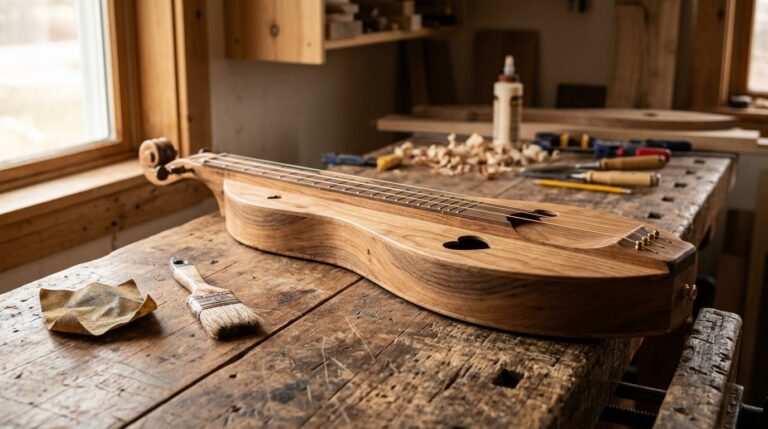
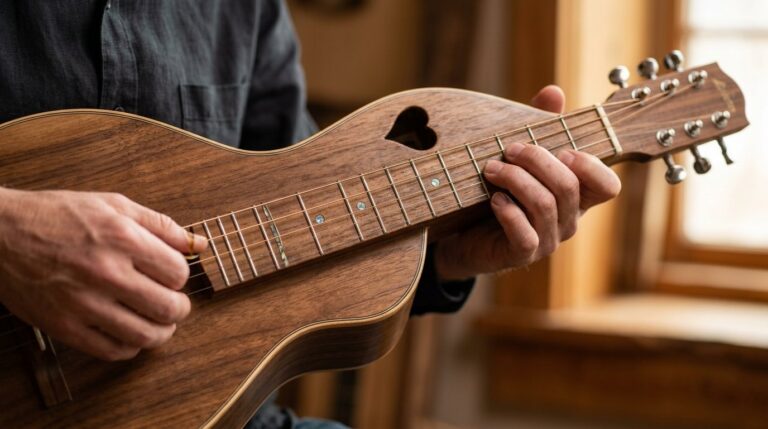
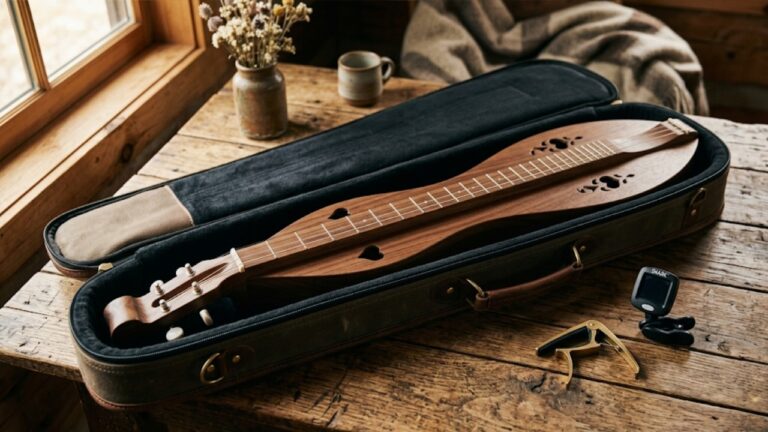
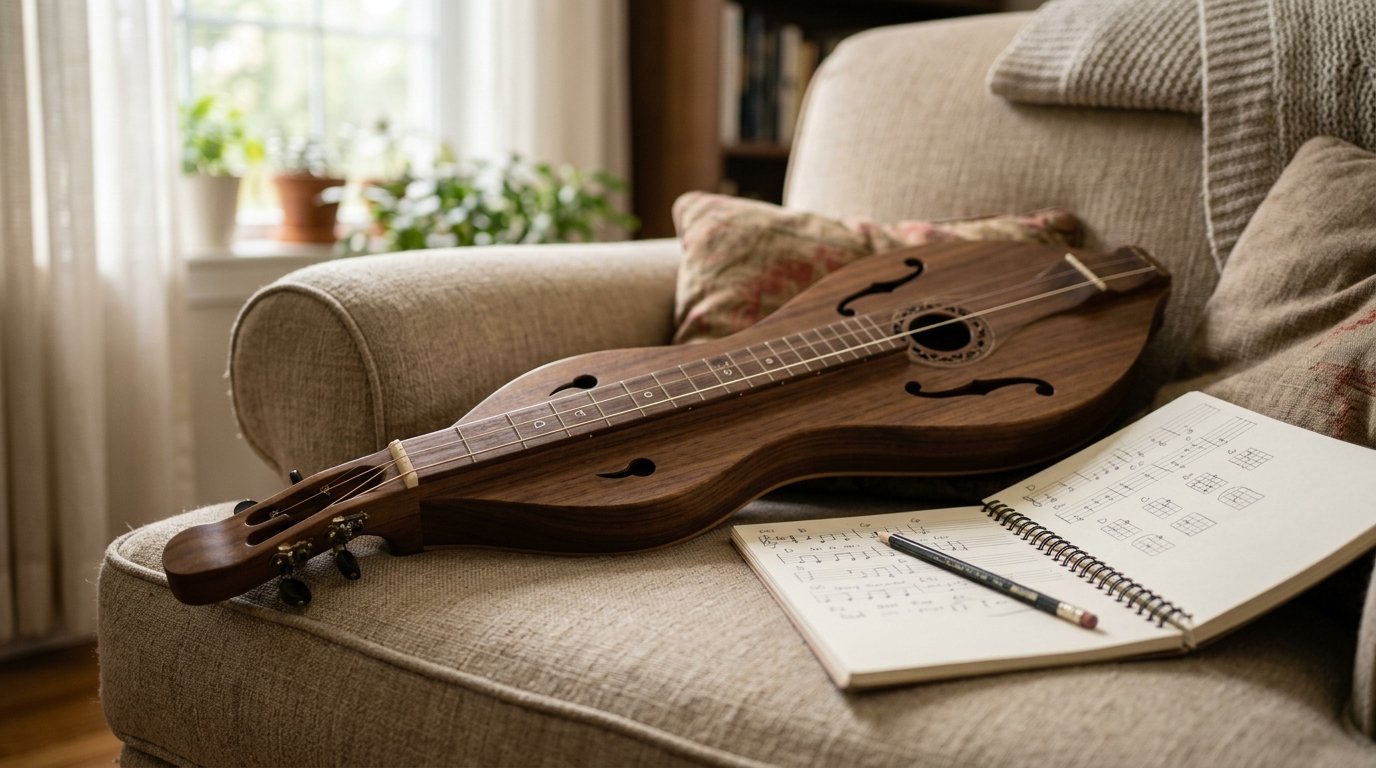
The mountain dulcimer (also called the Appalachian dulcimer) is played on your lap, fretted with one hand and strummed or plucked with the other. What makes it approachable is the diatonic fret layout — you’re working within a scale rather than a full chromatic range, which means far fewer wrong note possibilities than a guitar or fiddle.
In the traditional noter-and-drone style, you only fret the melody string while the others ring open. Most beginners can play a recognisable tune within an hour. That’s not an exaggeration — it’s one of the things that makes dulcimer festivals such lively places, because absolute newcomers are up and playing alongside experienced players by the end of the first workshop.
That said, there’s real depth here if you want it. Chord-melody playing, fingerpicking, and chromatic playing using the 6½ fret all take time to develop. The instrument scales with you.
How Hard is it to Learn Mountain Dulcimer?
For basic traditional playing: low difficulty. You can be making music quickly, which is motivating. For intermediate fingerstyle or more complex arrangements: moderate difficulty, comparable to intermediate guitar. The physical demands are light — no awkward chord shapes, no sharp fret edges on soft fingers.
One thing that makes a genuine difference is having good strings on your instrument. Worn or cheap strings kill the tone and make intonation harder to hear, which frustrates beginners unnecessarily. I’ve written about the best mountain dulcimer strings if you want guidance on that. The right mountain dulcimer accessories — a decent tuner, a capo, a comfortable strap — also help more than people expect.
The Hammered Dulcimer: More Challenging, But Worth It
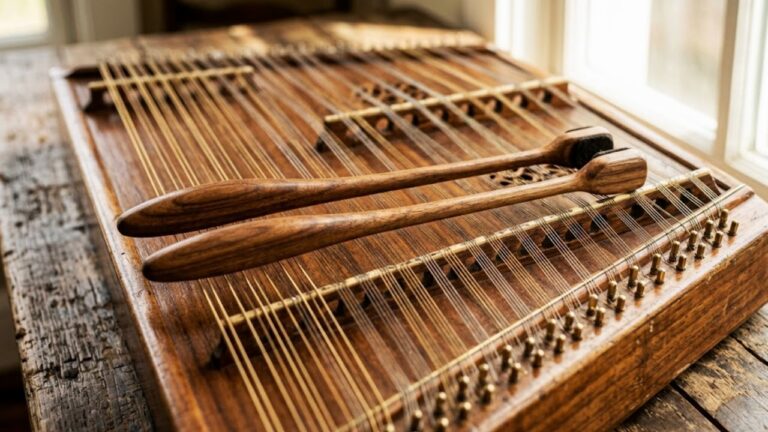
The hammered dulcimer is a different instrument in almost every way. Instead of fretting strings, you strike them with small mallets called hammers across a trapezoidal soundboard. The layout is chromatic, with strings arranged in a pattern that takes time to internalise.
Is hammered dulcimer hard to learn? Harder than the mountain dulcimer, yes. You need to develop bilateral coordination — both hands striking independently — while also mapping out where notes live on an unfamiliar layout. The first few weeks tend to involve a lot of stopping to look, then playing, then stopping again.
But the payoff is substantial. A hammered dulcimer fills a room in a way few acoustic instruments can. The sustain, the overtones, the shimmer — it’s a genuinely beautiful sound that rewards patience. Most players I know who stuck with it for three months were completely hooked.
The quality of your hammers matters enormously. Stiff, heavy hammers are exhausting to play and limit your dynamics. I’ve covered hammered dulcimer hammers in detail — including what hammer materials do to tone — which is worth reading before you buy.
Practical Tips for Learning Either Dulcimer
- Play daily, even briefly. Ten minutes every day builds muscle memory faster than two hours on weekends.
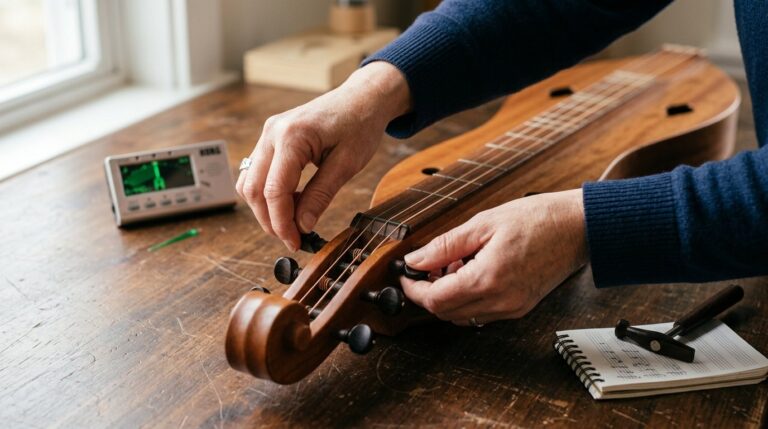
- Tune every single time. Playing an out-of-tune instrument trains your ear in the wrong direction.
- Learn a tune, not scales. Both dulcimers respond well to tune-based learning rather than abstract exercise patterns.
- Find recordings you love. For mountain dulcimer, Sam Edelston and Bing Futch are great starting points. For hammered dulcimer, David Schnaufer and Malcolm Dalglish.
- Get to a workshop or festival if you can. The dulcimer community is remarkably welcoming to beginners.
So — Is Learning the Dulcimer a Good Idea?
Yes. For the mountain dulcimer especially, it’s one of the better decisions a folk music enthusiast can make. The barrier to entry is low, the music is rich, and the community surrounding it is warm and accessible. If you’ve been on the fence, I’d say go for it.
For the hammered dulcimer, I’d say the same — but go in with realistic expectations about the first month. It takes a little longer to feel fluent, but you’ll get there.
If you’ve decided the dulcimer is for you, I’d recommend starting with a mountain dulcimer — they’re the most beginner-friendly version of the instrument. See my guide to the best mountain dulcimer kits for specific recommendations.
Frequently Asked Questions
How long does it take to learn the dulcimer?
For the mountain dulcimer, you can play simple tunes within your first session. Playing a range of tunes confidently typically takes one to three months of regular practice. For the hammered dulcimer, expect three to six months before you feel genuinely comfortable navigating the layout.
Can I learn dulcimer without reading music?
Absolutely. Most dulcimer traditions use tablature rather than standard notation, and a huge amount of the repertoire is passed on by ear. You don’t need to read music to learn either instrument.
Is the mountain dulcimer or hammered dulcimer easier?
The mountain dulcimer is significantly easier to pick up, particularly in the first few weeks. The hammered dulcimer requires more physical coordination and layout memorisation. Both are learnable by adults with no prior musical experience.
What age can you start learning dulcimer?
Children from around seven or eight can manage a mountain dulcimer comfortably, especially on a smaller instrument. The hammered dulcimer is generally better suited to ten and up due to the coordination required. Adults of any age can learn both.
Author Profile
- Daniel Johnstone is an English writer and folk musician who has been playing stringed instruments for over twenty years. He started on guitar as a teenager before working his way through cavaco, tenor guitar, autoharp, mountain dulcimer, and harp. He founded Folkstrings.com to provide practical, experience-based buying advice for folk instrument players at every level — the kind of guidance he always wished had existed when he was finding his feet.
Latest entries
 AsianJune 21, 2026What Is the Sarod Instrument?
 ViolinJune 21, 2026How Hard Is It to Learn the Violin?
 ViolinJune 21, 2026Is Violin Harder Than Guitar?
 OudJune 21, 2026How Hard Is It to Play the Oud?