Best Mountain Dulcimer: My Top Picks for Beginners and Beyond
Folkstrings.com is reader-supported. When you buy through links on our site, we may earn a small commission.
Last Updated on June 18, 2026 by folkstrings
As an Amazon Associate I earn from qualifying purchases at no extra cost to you.
The honest answer about buying a mountain dulcimer is that the instruments the dulcimer community consistently recommends — McSpadden and Folkcraft — are rarely found on Amazon. If your budget stretches to $400 or more and you are serious about the instrument from day one, go directly to McSpadden or Folkcraft Instruments. Those two makers set the standard.
For everyone else — first-time buyers, people unsure whether the dulcimer will stick, or players looking for something solid to learn on before upgrading — the options on Amazon are more than adequate. I have played folk string instruments for years and have handled enough dulcimers to know what separates a good beginner instrument from a frustrating one. The picks below are chosen on that basis: action, nut width, fret setup, and whether the all-important 6.5 fret is present.
Quick Comparison
| Applecreek ACD100 | Seagull Merlin SG ★ Best Overall |
Roosebeck Grace | Applecreek Bundle | |
|---|---|---|---|---|
| Best for | Budget beginners | Best overall pick | Traditional sound | Complete starter pack |
| Size | Full (31″) | Travel (30″) | Full (40″) | 3/4 size |
| 6.5 fret | ✓ | ✓ | — | ✓ |
| Top wood | Lam. spruce | Solid spruce | Spruce | Spruce |
| Reviews | 287 (4.5★) | 230 (4.6★) | 108 (4.4★) | 22 (4.4★) |
| Check Price | Check Price | Check Price | Check Price |
My Top Pick: Seagull Merlin SG
The Seagull Merlin is the dulcimer I would hand to a complete beginner without hesitation. Seagull is a serious instrument brand — they build quality acoustic guitars — and the Merlin reflects that pedigree at every level. The nut width is 1.280 inches, which is narrower than many traditional dulcimers and makes chord shapes significantly easier for players with no prior instrument experience.
The solid spruce top and maple back give it a clear, balanced tone that projects well without being harsh. The Graph Tech compensated bridge and Tusq nut mean intonation is reliable straight out of the box — something that cannot be said for all folk instruments at this price. It comes set up and ready to play in DAD tuning.
Worth checking Reverb before you buy. Mountain dulcimers have an active secondhand market and you can sometimes find a significantly better instrument — a McSpadden or a Folkcraft, say — for the same money as a new entry-level model. Reverb tends to have a solid spread from private sellers and small makers.
Browse on Reverb →The honest caveat: it is a travel or mini size instrument at 30 inches. Players with larger hands may feel slightly cramped, and the body feel differs from a traditional full-size dulcimer. For learning purposes it is outstanding, and most beginners adapt immediately. It has 230 reviews at 4.6 stars and Amazon’s Choice badge — that track record matters.
Best Budget Pick: Applecreek ACD100
The Applecreek ACD100 has more Amazon reviews than any other dulcimer on the platform — 287 at 4.5 stars — and it has held that rating over many years. That is a meaningful signal when you are buying an instrument you cannot try in person. This is a full-size instrument at 31 inches with a laminated spruce top, back, and sides, and a maple neck and fingerboard.
What matters most for a beginner is that it includes the 6.5 fret. Without that extra fret, you cannot play a complete major scale on the melody string in DAD tuning — a real limitation for anyone who wants to move beyond simple drone melodies. Its presence here at under $170 is the main reason this instrument earns the budget pick over cheaper alternatives.
The laminated construction keeps the cost down and it means the tone will not open up and improve with age the way a solid-top instrument would. But for a first instrument where you are not yet certain how much you will play, it is entirely sufficient.
Best for Traditional Sound: Roosebeck Grace F-Holes
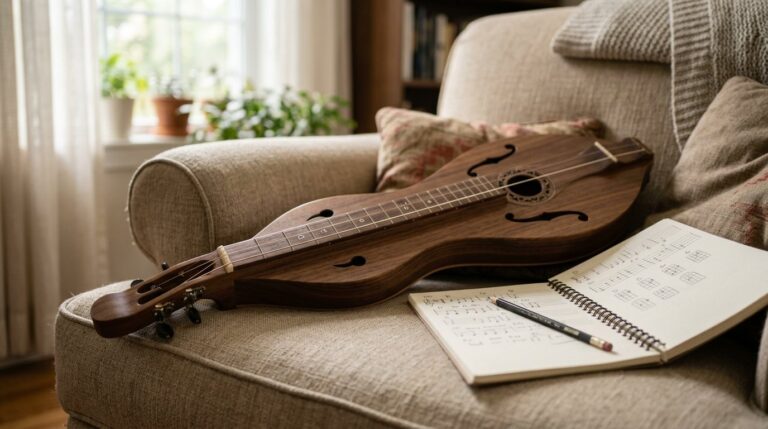
The Roosebeck Grace is the most traditionally shaped instrument on this list. The hourglass body with f-holes gives it an appearance closer to what you would have found in Appalachian homes a century ago, and the full-size body produces a warmer, fuller tone than the travel-format Seagull.
The nut width is 1.25 inches and the scale length is 25.5 inches — comfortable for most adult hands. The spruce top is paired with a basswood back and sides, which is a practical choice for a mid-range instrument rather than the maple you find on higher-end builds. It carries 108 reviews at 4.4 stars and an Amazon’s Choice badge, making it one of the better-proven options in this price range.
If you are drawn to the mountain dulcimer specifically for its Appalachian heritage and want an instrument that looks the part as well as plays well, this is the one to consider.
Best Starter Bundle: Applecreek ACD100K
The ACD100K packages the Applecreek dulcimer with everything a new player needs from day one: a gig bag, the Hal Leonard Dulcimer Method book, D’Addario J64 strings, a clip-on tuner, and picks. Buying those accessories separately would add $40 to $60 to the cost of a plain dulcimer, so the bundle pricing makes genuine sense for a complete beginner.
The instrument itself is 3/4 size rather than full, which suits younger players or adults who prefer a more compact feel. The spruce top and maple back give it a cleaner tone than the basswood builds, and it is made in Romania to reasonable quality standards for the price. It carries Amazon’s Choice status with 22 reviews at 4.4 stars.
The meaningful downside is that at 3/4 size the playing feel differs noticeably from a full-size instrument. If you plan to upgrade eventually you will need to readjust to a longer scale. For a younger player or someone specifically wanting a compact dulcimer, that is not a concern.
What to Look For When Buying a Mountain Dulcimer
The 6.5 fret
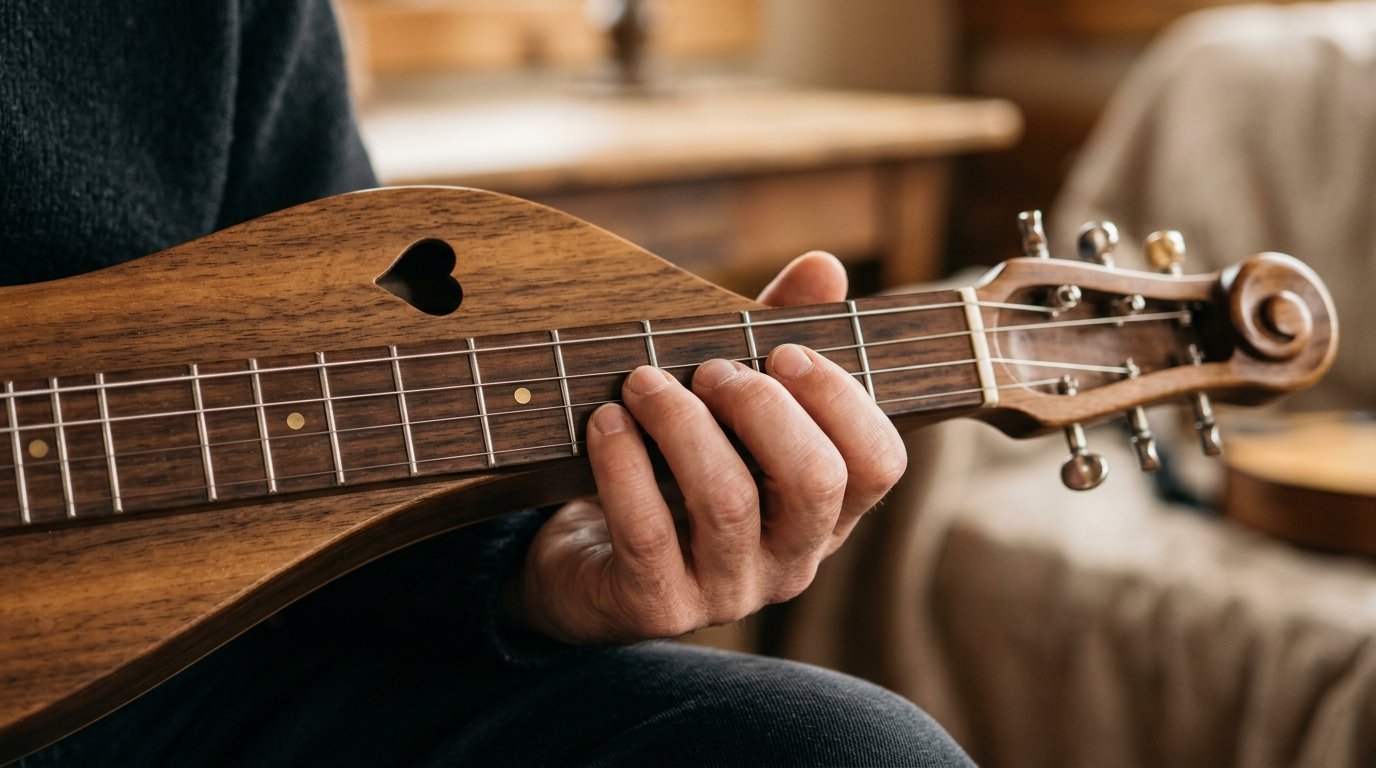
Most mountain dulcimers are diatonic — they cover the notes of a major scale but not the chromatic notes in between. In standard DAD tuning, a dulcimer without a 6.5 fret cannot play a complete major scale on the melody string because the sixth fret produces a flattened seventh rather than the major seventh you need. The 6.5 fret adds that missing note. It is a small but significant detail, and I would not buy a beginner dulcimer without it.
Nut width and playing style
Dulcimer players broadly fall into two approaches: noter-drone, where you press only the melody string with a wooden noter while the other strings drone freely, and chord style, where you fret two or three strings simultaneously. Nut width matters more for chord-style playing. A wider nut of 1.25 inches or more gives more space between strings and suits traditional chord shapes. A narrower nut like the Seagull’s 1.280 inches suits smaller hands and a more guitar-influenced approach. For a full breakdown of chord shapes in DAD tuning, see our mountain dulcimer chords guide.
Solid vs laminated wood
Solid-top instruments produce richer tone and improve acoustically over time as the wood vibrates and settles. Laminated instruments are more stable in changing humidity and less expensive to manufacture, but the tone does not develop with age. For a first instrument, laminated is fine. For a keeper instrument you intend to play for years, a solid top is worth the extra cost.
What about McSpadden and Folkcraft?
McSpadden has been making dulcimers in Mountain View, Arkansas since 1962 and their instruments are the benchmark for traditional Appalachian tone and playability. Folkcraft Instruments builds handmade dulcimers in the USA from entry-level poplar models to fully customisable builds. The dulcimer community consistently recommends both above anything available on Amazon. Neither is readily stocked on the platform in any meaningful way. If you are ready to invest in a serious instrument, contact them directly — you will not regret it.
Frequently Asked Questions
What is the best mountain dulcimer for a complete beginner?
The Seagull Merlin is the most consistently recommended beginner dulcimer available on Amazon. Its nut width, intonation setup, and build quality make it easier to learn on than cheaper alternatives. The Applecreek ACD100 is the better choice if budget is the primary consideration.
Do I need a 6.5 fret on a mountain dulcimer?
Yes, for most modern playing styles. Without the 6.5 fret you cannot play a complete major scale on the melody string in DAD tuning, which limits the songs you can access significantly. All four instruments in this guide include the 6.5 fret.
What is the difference between a mountain dulcimer and a hammered dulcimer?
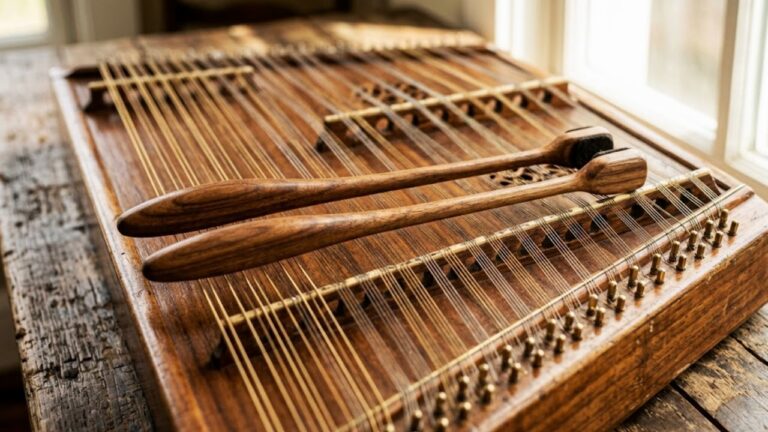
They share a name but are entirely different instruments. The mountain dulcimer is a fretted lap instrument with three or four strings that you pluck or strum. The hammered dulcimer is a large trapezoidal instrument with dozens of strings struck with wooden mallets. For more on the hammered version, see our guide to learning the hammered dulcimer.
What tuning does a mountain dulcimer use?
DAD is the standard starting tuning — bass string to D, middle string to A, melody string to D. DAA is another common traditional tuning. For a full step-by-step guide to getting your instrument in tune, see our mountain dulcimer tuning guide.
Final Thoughts
If you want the best instrument available on Amazon today, get the Seagull Merlin. If you want to spend less while still getting a properly set-up full-size dulcimer with the right frets, the Applecreek ACD100 has earned its reputation over years and hundreds of verified reviews. Once you know the dulcimer is an instrument you will stick with, the step up to a McSpadden or Folkcraft is worth every penny.
For everything you need once your instrument arrives, take a look at our guides to mountain dulcimer chords, mountain dulcimer tuning, and mountain dulcimer accessories.
Author Profile

- Daniel Johnstone is an English writer and folk musician who has been playing stringed instruments for over twenty years. He started on guitar as a teenager before working his way through cavaco, tenor guitar, autoharp, mountain dulcimer, and harp. He founded Folkstrings.com to provide practical, experience-based buying advice for folk instrument players at every level — the kind of guidance he always wished had existed when he was finding his feet.
Latest entries
 Useful ToolsJuly 11, 2026Tin Whistle Fingering Chart — All Notes in Both Octaves (D and C Whistle)
 Useful ToolsJuly 11, 2026Banjo String Gauges — Complete Guide for 5-String, Tenor and Irish Tenor
 Useful ToolsJuly 11, 2026Harp String Chart — How to Identify and Replace Any Harp String
 Useful ToolsJuly 11, 2026Mountain Dulcimer Chord Chart — Key of D in DAD Tuning