Best Mountain Dulcimer Kit: Build Your Own Folk Instrument
Folkstrings.com is reader-supported. When you buy through links on our site, we may earn a small commission.
Last Updated on June 30, 2026 by folkstrings
This post contains affiliate links. If you buy through a link on this page, I may earn a small commission at no extra cost to you.
Building a dulcimer from a kit is a different experience to buying a finished instrument. You end up with something you made yourself, a better understanding of how the instrument works, and — at under $100 — a fraction of the cost of a comparable ready-to-play mountain dulcimer.
These two kits are made by the same brand and priced identically at $96.95. The difference is the wood combination. Here’s what to know about each.
Who Are These Kits For?
Dulcimer kits suit a few different types of buyer: people who enjoy woodworking and want a hands-on project, beginners who want to understand the instrument before they start playing it, and gift-buyers looking for something more personal than an off-the-shelf instrument.
They’re not the right choice if you want to start playing immediately — you’ll need time to assemble and finish the instrument before it’s playable. The skill level required is modest — these aren’t advanced luthiery projects — but you will need patience, basic woodworking tools, and a few clamps.
Build-it-Yourself Kit — Cherry Neck
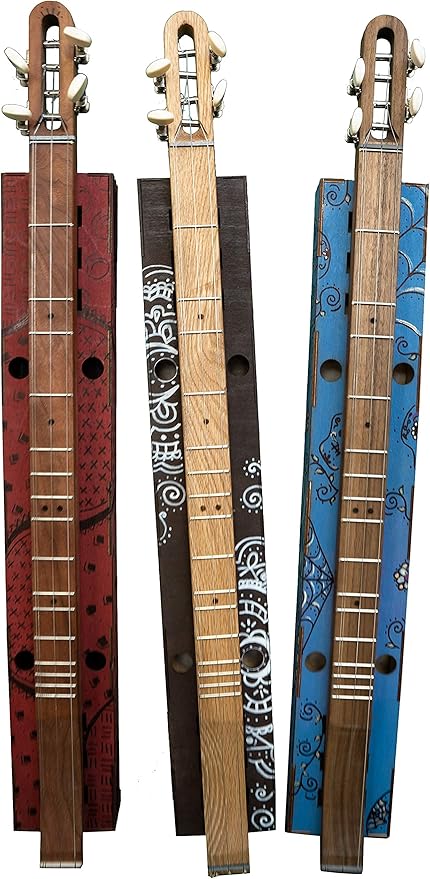
Cherry Neck Kit
- 4.4 stars across 27 reviews — the more-reviewed of the two kits
- Cherry neck against the body gives a distinctive two-tone look
- Mid-range tonewood — brighter than walnut, warmer than maple. $96.96
Price: $96.95 | Rating: 4.4★ (27 reviews)
This version pairs a cherry neck with the instrument body. Cherry is a mid-range tonewood — brighter than walnut, warmer than maple — and the visual contrast between neck and body gives the finished instrument a distinctive two-tone look. At 27 reviews and 4.4★ it’s the more-reviewed of the two kits, which gives a slightly firmer basis for the rating. A solid all-round choice for most builders.
Build-it-Yourself Kit — All Wood

All Wood Kit
- 4.8 stars across 14 reviews — worth noting the smaller sample size
- Consistent wood throughout for a traditional, uniform look
- Slightly warmer, more even tone than the mixed-wood version. $96.96
Price: $96.95 | Rating: 4.8★ (14 reviews)
The all-wood version uses a consistent wood combination throughout the instrument. This gives a more traditional folk instrument appearance — uniform colour and grain from headstock to tailpiece — and typically produces a slightly warmer, more even tone without the tonal contrast of mixed woods.
The 4.8★ rating is higher than the cherry neck version, though with only 14 reviews it’s a smaller sample. The rating is encouraging but worth bearing in mind when comparing.
What’s Included and What You’ll Need
Both kits include the pre-cut wood components, hardware (tuning pegs, frets, strings), and basic assembly instructions. You’ll need wood glue, sandpaper, clamps, and a finish of your choice — most builders use a simple oil finish or wipe-on poly to protect the wood without affecting the tone. Plan on a weekend-plus build time: the assembly itself isn’t complex, but you’ll need drying time between stages.
Once It’s Built
When your dulcimer is ready to play, you may want to upgrade the strings that came with the kit — take a look at the mountain dulcimer strings guide for what to replace them with. The mountain dulcimer accessories page covers cases, stands, and capos if you’re also thinking about protecting or transporting the instrument once it’s finished.
Author Profile

- Daniel Johnstone — Dániel to his friends back in Miskolc — is a Hungarian folk musician and writer who has been playing stringed instruments for over twenty years. Growing up in northeastern Hungary with a family steeped in folk music, he developed an early obsession with Celtic and Appalachian styles that eventually brought him to the UK. He worked his way through tenor banjo, 5-string banjo, autoharp, mountain dulcimer, mandolin, ukulele, harp and kalimba — most of them acquired through trial, error and more money than he'd like to admit. He founded Folkstrings.com to cut through the noise: practical, experience-based guides to instruments, strings, gear and accessories for folk players at every level.
Latest entries
 BanjoJuly 14, 2026Is Banjo Hard to Learn? Here’s What Nobody Tells You
 MandolinJuly 14, 2026Online Mandolin Lessons — What YouTube Can’t Teach You (And What Can)
 Useful ToolsJuly 13, 2026Recorder Fingering Chart — Complete Guide for Soprano Recorder (Baroque and German)
 UkuleleJuly 12, 2026Gifts For Ukulele Players: 10 Best Picks