Best Hammered Dulcimer Hammers: What the Material Actually Does to Your Tone
Folkstrings.com is reader-supported. When you buy through links on our site, we may earn a small commission.
Last Updated on June 9, 2026 by folkstrings
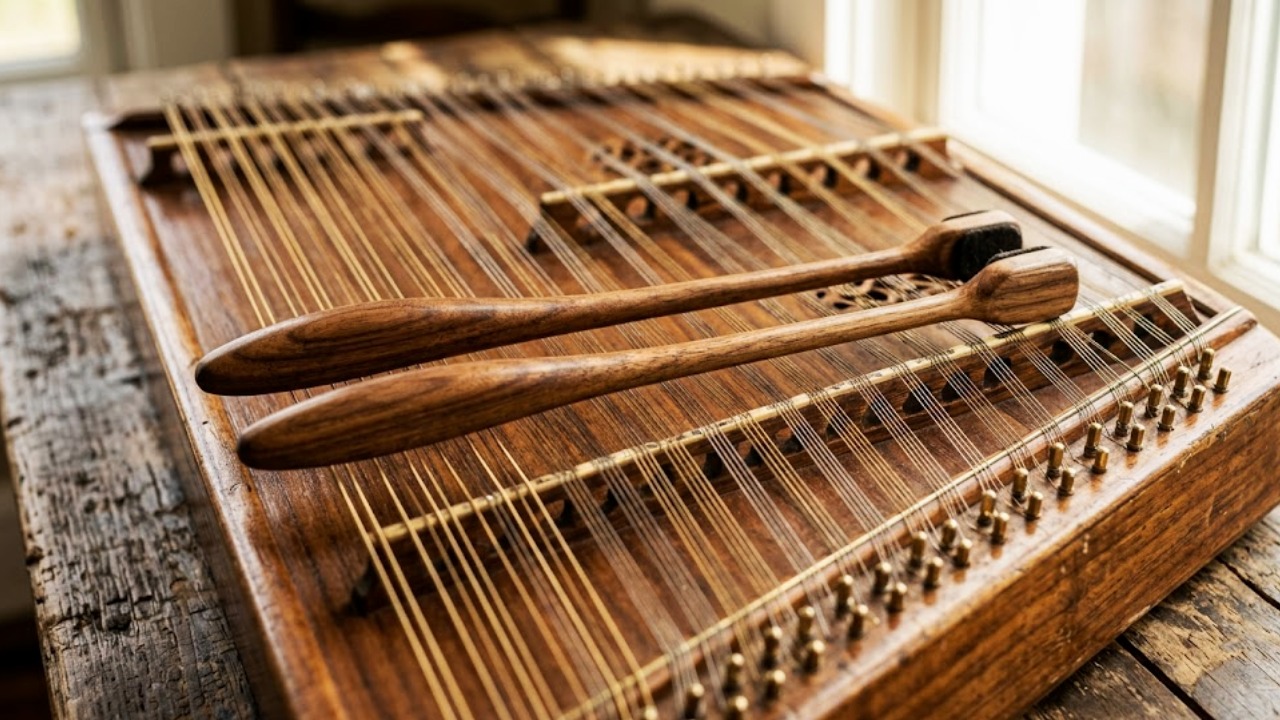
If you’ve been playing hammered dulcimer for any length of time, you already know the hammers matter. But most players don’t realise quite how much until they try a different pair. The same instrument — same tuning, same strings, same room — can sound noticeably warmer, brighter, more percussive, or more mellow depending entirely on what you’re striking the strings with. Choosing hammers isn’t an afterthought. It’s one of the most direct ways you have to shape your sound.
I came to this instrument from a background in guitar, cavaco, and harp — instruments where the relationship between touch and tone is everything. On the hammered dulcimer, that relationship runs through the hammer. Understanding what the material does to your tone, and what the weight and shape do to your technique, gives you real control over how the instrument sounds rather than just accepting whatever came in the box.
All four pairs below are made by Roosebeck, who dominate this particular market. What varies meaningfully between them is material — rosewood, lacewood, leather, plain sheesham — and that material difference is what drives the tonal character of each pair.
Quick Comparison
| Rosewood Hearts ★ Best All-Round |
Lacewood Hearts | Leather Pair | Plain Sheesham | |
|---|---|---|---|---|
| Head material | Rosewood | Lacewood | Leather | Sheesham |
| Tone character | Warm, balanced | Clear, versatile | Soft, mellow | Bright, precise |
| Best for | All styles | Variety of music | Folk & slow music | Fast / intricate playing |
| Reviews | 97 (4.4★) | 51 (4.4★) | 22 (4.6★) | 20 (4.6★) |
| Check Price | Check Price | Check Price | Check Price |
Dulcimer Hammers, Hearts, Rosewood — Best All-Round Pair
Rosewood is a dense, close-grained hardwood with natural oils that give it a smooth feel in the hand and a warm resonance when it contacts the strings. The tone you get from rosewood hammers sits in a useful middle ground — clear enough to articulate individual notes cleanly, warm enough not to sound harsh on the upper register. It’s the most forgiving material in this lineup, which is part of why it’s the most popular.
The heart shape of the head is more useful than it looks. The wider surface area means small inconsistencies in your strike angle are less likely to produce an off-centre hit, which matters when you’re playing fast passages or crossing strings quickly. As your technique develops, that forgiveness becomes less necessary — but it’s never a disadvantage, and experienced players use heart-shaped hammers by preference, not just by default.
At 97 reviews and Amazon’s Choice, this is the pair most players end up with for good reason. If you’re buying your first proper set of hammers or replacing a worn-out pair, start here.
Check price — Roosebeck Dulcimer Hammers, Hearts, Rosewood on Amazon
Dulcimer Hammers, Hearts, Lacewood — Best for Versatility
Lacewood — also called silky oak — is lighter than rosewood and has a slightly looser grain structure, which produces a marginally brighter tone with a more defined attack. The tonal difference from rosewood is subtle; most beginners wouldn’t hear it in isolation. But players who have used both often describe lacewood as having a slightly more “present” sound, where individual notes cut through a little more clearly.
What makes this pair stand out is the leather pad on one face of each hammer head. That single feature effectively gives you two pairs of hammers in one: strike with the wood side for the brighter lacewood tone, flip the hammer to the leather side for a softer, rounder attack with much less transient. In practice this means you can adjust your tone mid-session without switching hammers — useful if you move between slow airs and faster dance tunes, or between solo playing and sessions where you need to sit under a melody instrument rather than over it.
The 8.5-inch length and dual-sided design make this the most flexible pair in the lineup. If you want one pair that can cover a wide range of playing contexts, this is the one I’d choose.
Check price — Roosebeck Dulcimer Hammers, Hearts, Lacewood on Amazon
American Dulcimer Hammers, Leather — Best for a Warm, Soft Tone
Fully leather-wrapped hammer heads are the most tonally distinct option in this group. Leather absorbs impact rather than rebounding from it, which means the attack is softened significantly — you lose the percussive crack of wood-on-string and gain a rounder, more sustained onset to each note. The effect on the instrument’s overall character is substantial: the dulcimer sounds less like a percussion instrument and more like a bowed string instrument, with notes that bloom rather than snap.
This isn’t better or worse than wooden hammers — it’s a different tool for a different purpose. If you play slow, meditative music, use the dulcimer in sound healing or relaxation contexts, or simply find the standard tone too bright for your taste, leather-headed hammers are worth trying. They’re also worth having alongside a wooden pair for players who move between different genres or settings.
The leather handles on this pair change the grip feel noticeably compared to wooden-handled hammers — softer, with slightly more give. Whether that suits you is personal. The 4.6-star rating across 22 reviews suggests players who have tried them are generally satisfied, though this pair has fewer reviews than the rosewood set so the sample is smaller.
Check price — American Dulcimer Hammers, Leather Pair on Amazon
Dulcimer Hammers Plain Sheesham — Brightest Tone, Most Precise
Sheesham — Indian rosewood — is a dense hardwood with a tight grain that produces the brightest, most percussive tone of any pair in this lineup. No leather padding, no decorative shaping: these are plain oval-headed hammers that prioritise clarity and attack over warmth. Each note has a clean, well-defined edge, which makes them particularly well-suited to faster playing where individual notes need to be distinct even at speed.
The trade-off is that bright, direct tone can become fatiguing over long sessions, particularly in the upper register of the dulcimer where steel strings are already prone to brightness. These are hammers I’d reach for when playing energetic dance music or pieces that require real rhythmic definition — not necessarily what I’d use for a quiet evening of slow airs.
One practical note worth flagging: this listing was showing very low stock at the time of writing. Worth checking availability before relying on it.
Check price — Roosebeck Dulcimer Hammers Plain Sheesham on Amazon
What to Think About When Choosing Hammered Dulcimer Hammers
Head material is the single biggest decision
The material the hammer head is made from drives tone more than any other variable. Dense hardwoods like sheesham produce the brightest, most percussive tone with the clearest attack. Medium-density woods like rosewood and lacewood sit in a warmer, more balanced middle ground. Leather padding softens the attack and rounds out the tone significantly. If you’re not sure where to start, rosewood is the most forgiving choice because it sits in the middle of the tonal spectrum — you can always add a leather pair later to extend your range in either direction.
Weight and length affect technique, not just comfort
Heavier hammers produce more volume with less effort — the mass does the work. But they’re harder to control for delicate ornamentation and tiring over long sessions. Lighter hammers require more active wrist and arm engagement but reward you with more precise control. Most Roosebeck hammers run between 8 and 9 inches; none of the pairs above are outliers in terms of weight, so this is less of a differentiating factor here than material.
Head shape affects accuracy and speed
Heart-shaped heads have a wider surface area that’s more forgiving of imprecise strikes — useful for beginners and for fast passage work where your hammer angle may vary slightly. Plain oval heads have a smaller, more defined contact point that rewards accurate technique and gives a slightly more focused tone. Neither is objectively better; it depends on your playing style and how developed your technique is.
Consider owning two pairs
Many experienced players keep a wooden pair and a leather pair and switch depending on what they’re playing. The cost difference is modest and the tonal flexibility is real. If that appeals to you, the rosewood pair and the leather pair together cover most of the range you’d want — bright and articulate at one end, warm and soft at the other.
Frequently Asked Questions
How do I know when my hammered dulcimer hammers need replacing?
Wooden hammers rarely need replacing unless physically damaged — cracking, splitting, or the head becoming loose on the handle. Leather-tipped hammers are more susceptible to wear: the leather compresses and hardens over time, which progressively reduces the softening effect and eventually produces a tone closer to bare wood. If your leather hammers are starting to sound harder and more percussive than they used to, the leather has likely worn enough to warrant replacement. For plain wooden hammers, an uneven or chipped striking surface will produce inconsistent tone and is a clear sign it’s time for a new pair.
Can the hammers that come with a dulcimer be upgraded?
Yes, and it’s often worth doing. Entry-level dulcimers frequently come with basic hammers that are functional but not particularly well-made. Upgrading to a quality pair like the Roosebeck rosewood set is one of the most cost-effective ways to improve how your instrument sounds without touching the instrument itself. The difference is most noticeable in tone consistency across the range — better hammers produce a more even sound from bass to treble strings.
Does hammer weight affect the dulcimer strings?
Over years of regular playing, yes. Heavier hammers put more stress on strings at the point of contact, which can accelerate wear slightly. This is rarely a significant concern for most players — string replacement is inexpensive and routine — but it’s worth knowing if you play daily and want to extend string life. Lighter hammers are also generally more suitable for older or more delicate instruments where you want to minimise impact stress on the soundboard.
Are hammered dulcimer hammers and mountain dulcimer hammers the same thing?
No. The mountain dulcimer is a fretted stringed instrument played with a noter or fingers — it doesn’t use hammers at all. The hammered dulcimer is a different instrument entirely, played by striking the strings with hand-held hammers. The two instruments share the dulcimer name but are otherwise unrelated in playing technique and construction.
What’s the correct way to hold hammered dulcimer hammers?
Most players hold the hammer loosely between the thumb and first two fingers, with the handle resting across the palm rather than being gripped tightly. The strike motion comes primarily from the wrist, not the arm — a relaxed wrist snap produces a clean rebound off the string, which is what gives the hammered dulcimer its characteristic tone. Gripping too tightly dampens the rebound and produces a thudding, muted sound regardless of how good your hammers are. If you’re new to the instrument, finding the lightest grip that still gives you control is one of the most useful early habits to develop.
Author Profile

- Daniel Johnstone is an English writer and folk musician who has been playing stringed instruments for over twenty years. He started on guitar as a teenager before working his way through cavaco, tenor guitar, autoharp, mountain dulcimer, and harp. He founded Folkstrings.com to provide practical, experience-based buying advice for folk instrument players at every level — the kind of guidance he always wished had existed when he was finding his feet.
Latest entries
 Useful ToolsJuly 11, 2026Tin Whistle Fingering Chart — All Notes in Both Octaves (D and C Whistle)
 Useful ToolsJuly 11, 2026Banjo String Gauges — Complete Guide for 5-String, Tenor and Irish Tenor
 Useful ToolsJuly 11, 2026Harp String Chart — How to Identify and Replace Any Harp String
 Useful ToolsJuly 11, 2026Mountain Dulcimer Chord Chart — Key of D in DAD Tuning