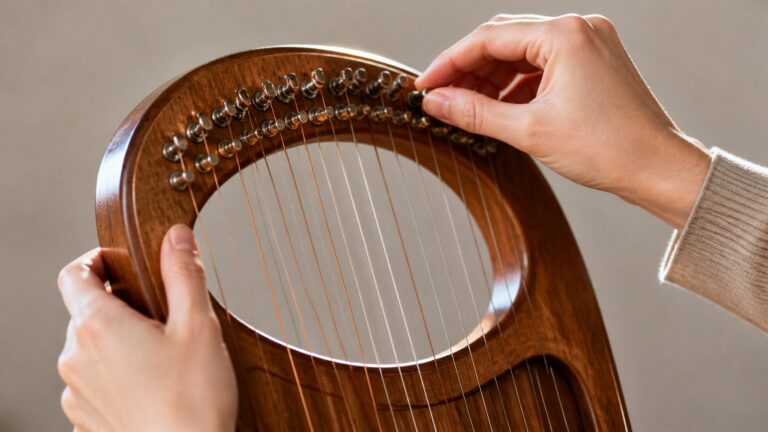
Hammered Dulcimer Stands: Buying Guide
Folkstrings.com is reader-supported. When you buy through links on our site, we may earn a small commission.
Last Updated on June 19, 2026 by Daniel Johnstone
Picking the right stand can make or break your experience with the hammered dulcimer. I learned that the hard way when I started out balancing my instrument on a stack of books, thinking any flat surface would do.
It didn’t take long before I realized a proper stand changes everything from posture to hammer control.
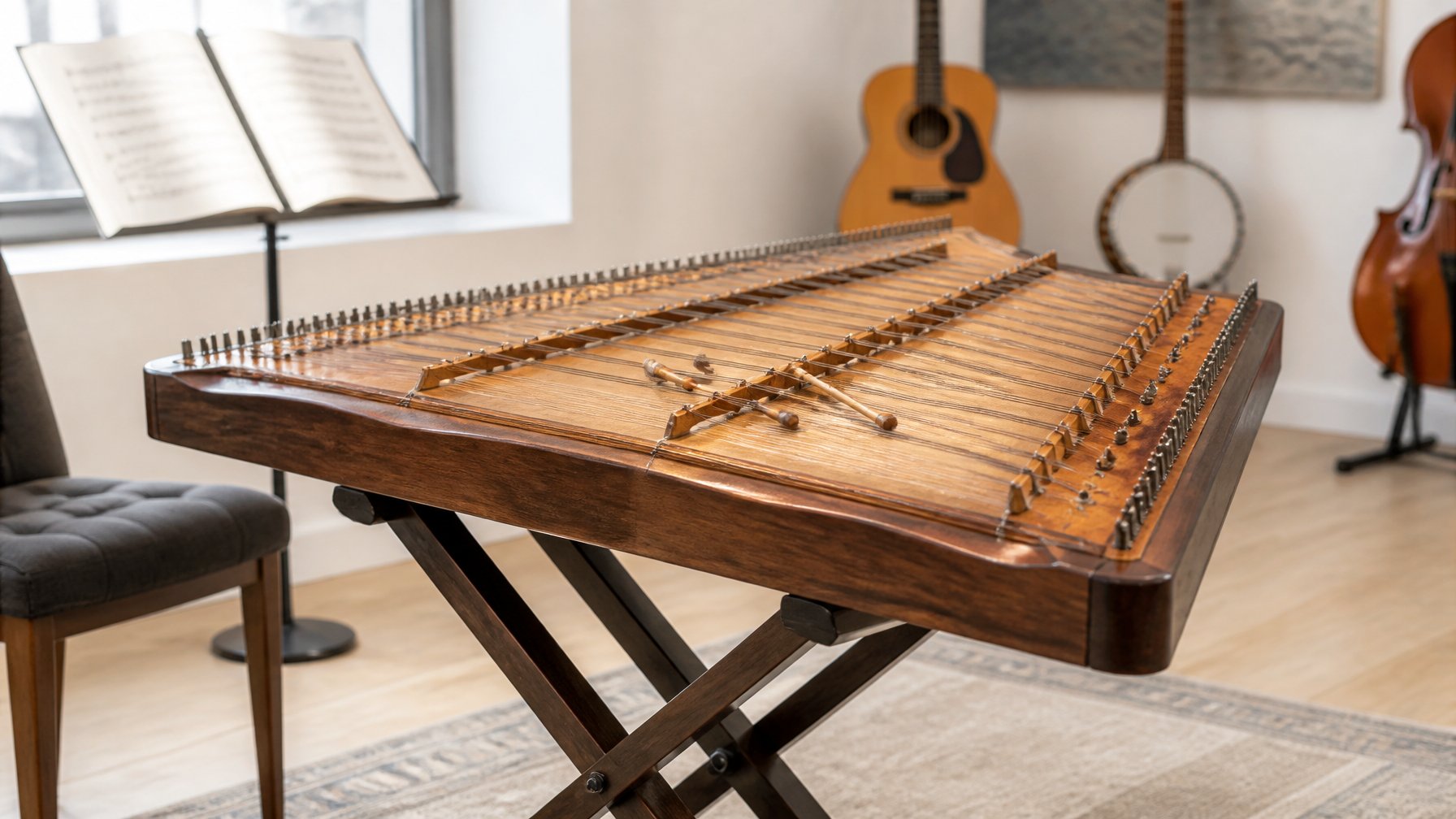
The stand you choose affects your playing angle, your comfort, your sound, and whether you walk away from a session with a stiff back or a smile. This guide walks through what actually matters before you spend money, so you can match a stand to how you play rather than just buying whatever ships fastest.
Whether you’re stepping up from a wobbly DIY setup or deciding between a portable folding stand and a fully adjustable bracket system, the differences between stand types are real and worth knowing.
I’ll cover fit, height range, stability, portability, price tradeoffs, and common mistakes I’ve seen players make.
Key Takeaways
- Match your stand to your playing position first, whether seated, standing, or both, before comparing price or materials.
- Stand types range from simple scissor designs to bracket-mounted systems, and each suits a different player and instrument size.
- Buying the wrong stand often comes down to ignoring transport needs or not measuring your dulcimer before ordering.
How To Choose The Right Stand First
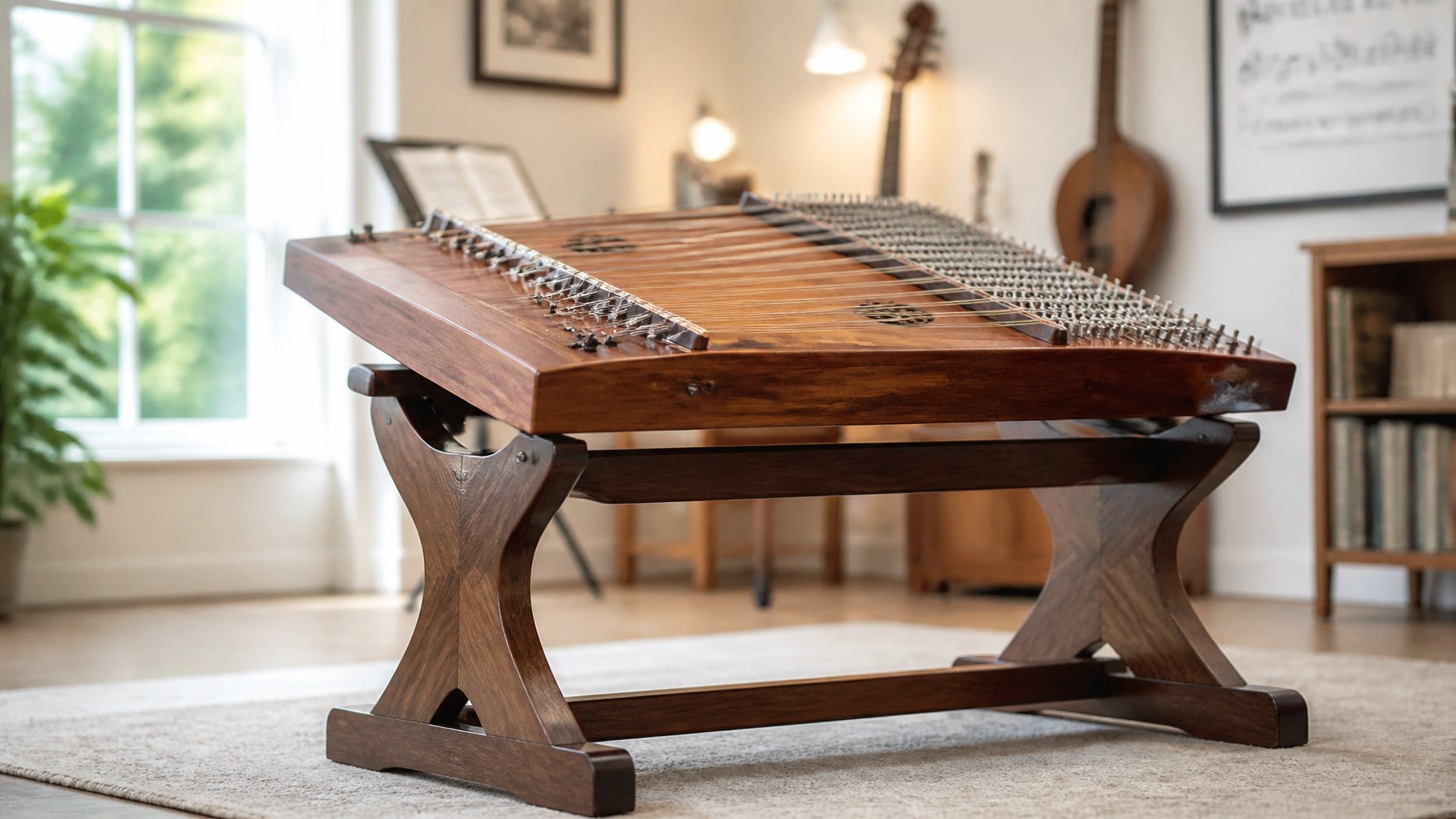
The best hammered dulcimer stand is the one that fits your instrument, your body, and how you actually play.
Before comparing brands or finishes, nail down four practical criteria: playing position, height and angle range, dulcimer dimensions, and how the stand handles real floors.
Match The Stand To Your Playing Position
Some players always sit. Others always stand.
Many do both depending on the setting. A dulcimer stand designed only for seated play typically holds the front edge of the instrument around 22 to 25 inches off the ground, which is too low if you want to stand comfortably.
If you play in both positions, look for a fully adjustable stand that spans a wide enough height range to cover both without swapping equipment.
I’ve found that stands accommodating players up to about 6 feet 2 inches give most adults plenty of room.
Check Height And Angle Adjustment Range
Height is only half the picture. The playing angle affects how your hammers strike the strings and how much reach you need across the instrument.
A stand with independent front and back leg adjustment lets you tilt the dulcimer toward you, which can dramatically reduce shoulder strain over a long session.
Watch out for stands with a lot of knobs and adjustment points. More knobs can mean more setup time and more things to slip mid-session.
Some well-designed stands use just six knobs across three adjustable legs and still cover a full range of positions.
Confirm Fit With Your Dulcimer’s Size And Shape
Not every dulcimer stand fits every dulcimer. Width and depth matter.
A stand that works perfectly for a 12/11 instrument may not safely support a larger 15/14 or 16/15 model. Always check the stand’s listed support dimensions against your dulcimer’s actual footprint before ordering.
Weight capacity is also worth confirming, especially with heavier hardwood instruments or models fitted with damper systems, which add both weight and bulk.
Think About Stability On Real-World Floors
Practice rooms have carpet. Festival stages have uneven plywood.
Outdoor venues have grass. A stand that sits perfectly level in a showroom can wobble or tip on a real gig floor.
Legs with rubber feet or individually adjustable contact points handle uneven surfaces far better than fixed-frame designs. I always give a loaded stand a gentle nudge test before I start playing at a new venue.
Main Stand Types And Who They Suit
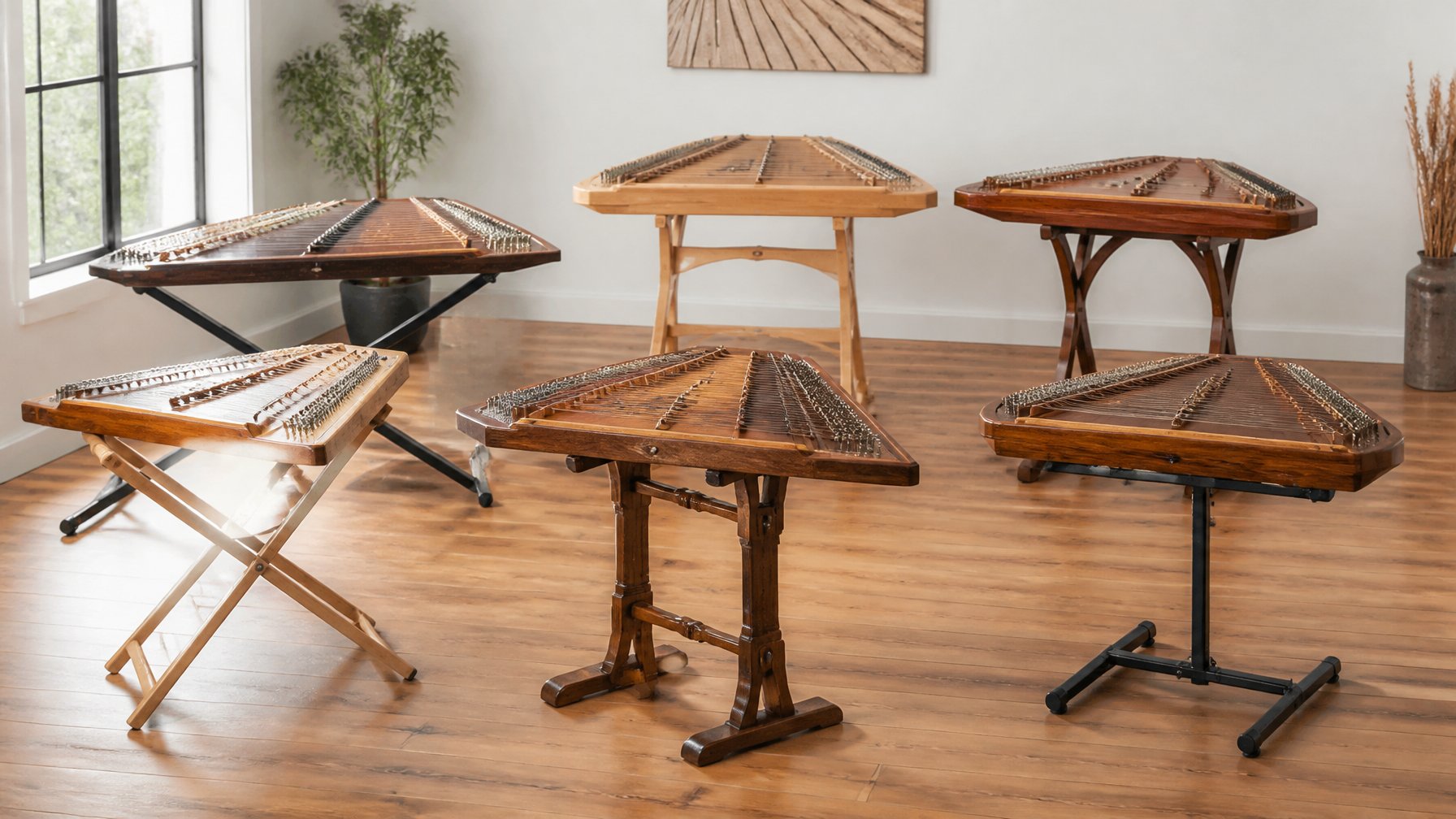
Stand designs fall into a few clear categories, and each one involves real tradeoffs between convenience, stability, and flexibility.
Knowing where a scissor stand, a tri-stander, or a tabletop option fits into your playing life makes the choice much more obvious.
Scissor And Folding Designs For Simplicity
Scissor and folding stands are the most common entry point. They fold flat, set up in seconds, and fit easily into a gig bag or car trunk alongside your case.
West Coast Harps, for example, offers folding stands in sit-down and stand-up fixed heights, holding the front instrument edge at roughly 25 or 33 inches respectively.
The tradeoff is flexibility. Fixed-height folding stands lock you into one playing position.
If you know you always sit or always stand, that’s fine. If your needs vary, you’ll feel limited quickly.
Bracket-Mounted Systems For Maximum Flexibility
Bracket-mounted systems like the Tri-Stander attach directly to the dulcimer itself rather than cradling it from below. Three legs screw into a bracket that stays on the instrument, giving you a very stable, low-profile support structure that travels with the dulcimer.
This design works especially well for larger instruments and those with damper systems, because the attachment is secure and doesn’t shift when you press damper pedals or lean across the instrument.
The bracket does stay on the dulcimer permanently, so it’s not the right choice if you want a completely detachable setup.
Tabletop And Lap Options For Limited Space
Tabletop stands raise a smaller dulcimer to a comfortable playing height on a desk or table surface. Lap mounts are even more compact, resting the instrument across the player’s thighs for informal playing.
Both options suit players in small apartments or those who practice while traveling, but neither handles gig situations well. They’re best as secondary setups, not primary performance stands.
Key Features That Affect Comfort And Setup
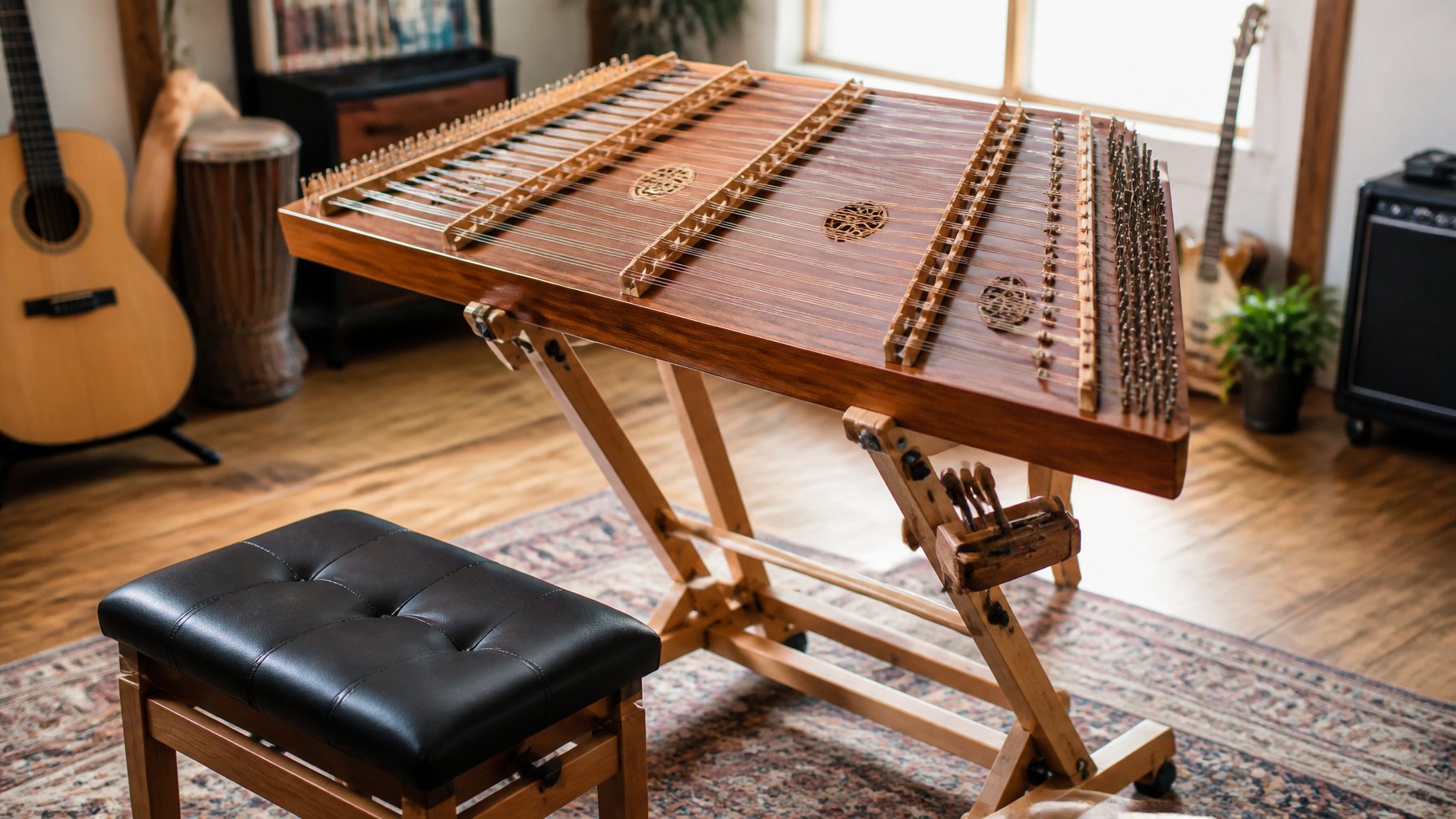
A stand’s spec sheet rarely tells you how it feels after two hours of playing or whether it collapses cleanly into your gig bag. Comfort and setup speed come down to four practical details that are easy to overlook when shopping online.
Seated Vs Standing Ergonomics
Playing seated puts the instrument at a different height and angle than playing standing. A stand that works beautifully while you’re on a bench can put your wrists at an awkward angle if you stand up.
I always check whether the stand’s full adjustment range covers both positions rather than just one end of the spectrum. For seated play, a front edge height around 22 to 25 inches is typical.
Standing comfortably usually requires the front edge somewhere around 33 inches. An adjustable stand covering that full range saves you from owning two separate stands.
Tilt, Reach, And Hammer Control
Tilt angle shapes how naturally your hammers fall on the strings. A slight lean toward the player reduces the reach across the far strings and keeps your strikes more controlled.
Stands that allow independent front and back leg height adjustment give you this control without requiring a separate wedge or shim. Even a few degrees of tilt makes a noticeable difference during long practice sessions.
It’s one of those features that sounds minor until you’ve played without it.
Weight, Foldability, And Case Storage
A stand that weighs five pounds and folds to 24 inches travels completely differently than one that weighs ten pounds and disassembles into several loose pieces. If you play at jams, festivals, or concerts, the stand’s packed size and weight matter just as much as its playing performance.
Some stands are designed to ride inside the dulcimer case. That’s genuinely convenient and worth checking before you buy.
Materials, Finish, And Long-Term Durability
Solid wood stands, typically poplar, maple, or walnut, are common and hold up well with normal use. Some arrive unfinished so you can stain them yourself.
Metal hardware at the adjustment points is a better long-term bet than plastic thumb screws, which can strip over time. Check whether joints are glued, screwed, or both.
A stand that comes in kit form may require assembly, which adds time but can also let you finish it to match your instrument.
Instrument Compatibility And Installation Details
Not every stand fits every dulcimer without some prep work, and some designs require permanent or semi-permanent changes to the instrument. Getting this right before ordering saves you from a frustrating return process.
When Brackets Need To Be Mounted
Bracket-mounted systems like the Tri-Stander require screwing a bracket into the dulcimer’s underside. This is a stable and effective solution, but it does mean drilling into your instrument.
For most players with a dedicated performing instrument, that’s an acceptable tradeoff for the added stability and compact footprint. If you’re hesitant to modify your instrument or if you share your dulcimer with others, a cradle-style stand that supports the instrument without attachment is the easier route.
What Larger Dulcimers And Dampers May Require
A larger dulcimer, say a 15/14 or 16/15 chromatic model, puts more stress on a stand’s support width and weight capacity. Not all stands are built to handle the extra span.
Some only safely accommodate instruments up to a certain width, so measuring your dulcimer’s footprint first is essential. Damper systems add both weight and mechanical activity to the instrument.
A stand that wobbles slightly without a damper can become noticeably unstable when you’re pressing pedals. Bracket-mounted systems tend to handle this better than simple cradle designs.
How To Measure Before You Order
Measure your dulcimer’s full width, depth, and weight before comparing stand specs. The front-to-back depth and the widest point across the instrument are the two dimensions most likely to cause a fitment problem.
Note the instrument’s weight too, especially if it has a hardwood case or a built-in damper system. Most stand listings include a supported instrument size range.
Match your measurements to those specs, and if you’re close to the upper limit, contact the maker directly before ordering.
Price Ranges And Value Tradeoffs
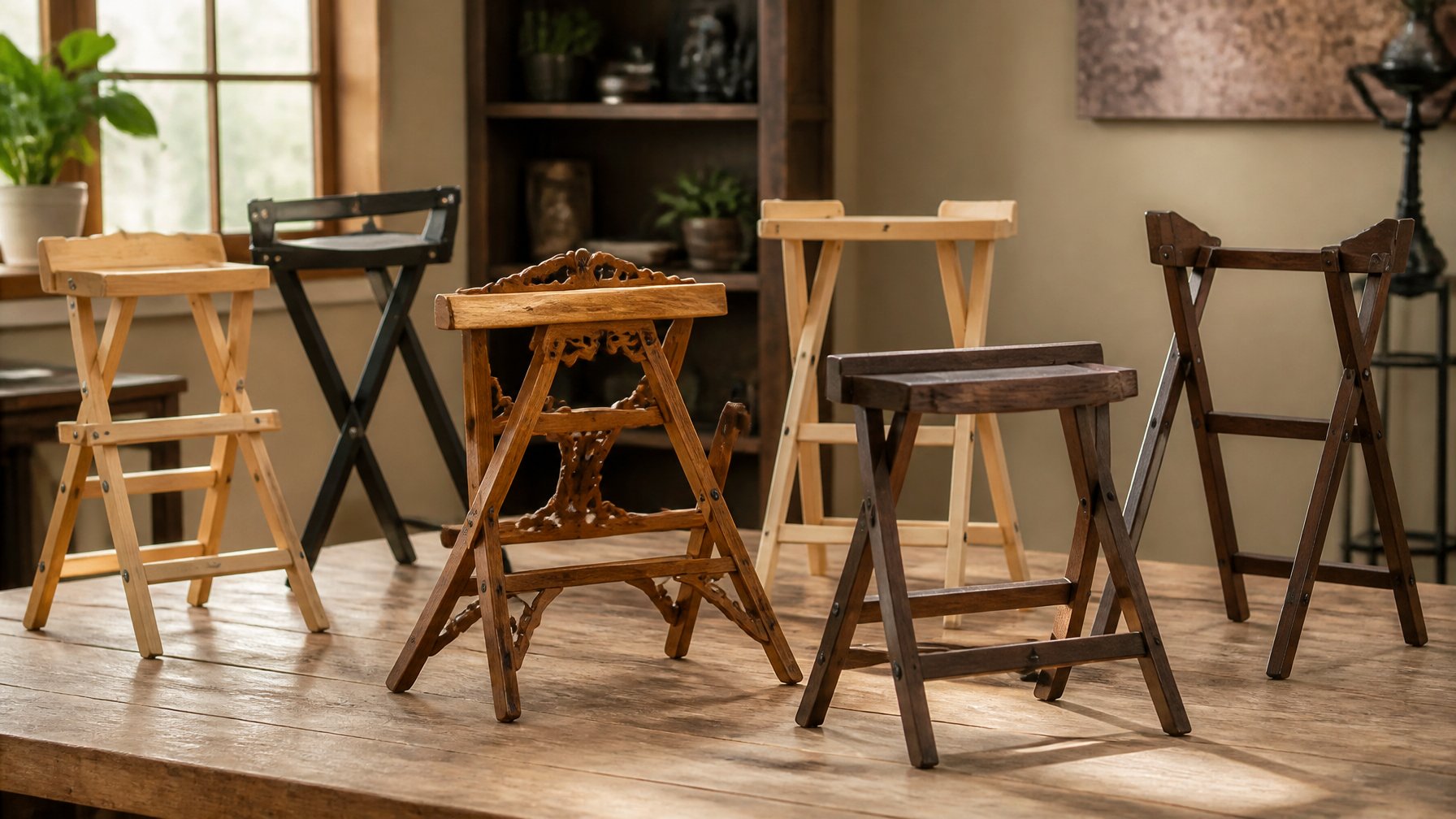
Stand prices range from around $60 for a basic folding model to $250 or more for a premium fully adjustable hardwood stand. Where you land on that range should match how seriously you play, how often you travel, and whether your dulcimer is a beginner instrument or a long-term investment.
What Entry-Level Stands Usually Offer
Entry-level stands in the $60 to $100 range are almost always fixed-height folding designs. They’re lightweight, quick to set up, and good enough for casual home practice.
The main limitation is that they lock you into one playing position, either seated or standing, not both. Build quality at this price point can vary.
Plastic hardware and thin plywood joints are common. For a student instrument used in low-stakes settings, that’s usually fine.
What You Gain From Mid-Range Adjustable Models
Mid-range stands in the $100 to $200 range finally offer real height and angle adjustability. You get solid wood, better hardware, and support for both seated and standing play in a single stand.
The Muzikkon adjustable stand, for example, covers positions from about 22.5 inches in the front for sitting, all the way up to standing heights. At this price, the adjustment mechanism really starts to matter.
Stands with fewer, well-placed knobs are just easier and faster to use. They’re usually more reliable than designs with a bunch of independent adjustment points.
When Premium Systems Are Worth It
Premium stands above $200—like the Songbird Dulcimers fully adjustable poplar stand at $240—bring the widest height range and the most stable construction. The adjustment experience just feels more refined here.
These stands make sense for players who gig a lot, use larger instruments, or just want a setup that won’t hold them back. If you’re still learning on a starter dulcimer, a mid-range stand will probably do the trick for now.
Common Buying Mistakes To Avoid
Most stand regrets come from the same handful of oversights. If you know what to look out for, the decision gets a lot easier—and you won’t end up buying twice.
Choosing Based Only On Price Or Looks
A stand that looks great in photos might be too tall, too wide, or have adjustment hardware that strips out after six months. Price says something about build quality, but it won’t tell you if the stand actually fits your dulcimer or your playing style.
I’ve watched players spend $80 on a stand that never felt right, then shell out $180 on a second one six months later. Running through a fit and adjustment checklist first could’ve saved them a lot of money and frustration.
Ignoring Transport And Storage Needs
If you always play at home, a heavier non-folding stand makes sense. But if you go to jams, festivals, or lessons, the packed size and weight start to matter every single time you leave the house.
Ask yourself honestly how often you’ll move the stand before buying. A stand that folds flat and fits in your dulcimer case is a totally different thing from one that breaks down into loose parts you have to wrap up individually.
Overlooking Future Playing Preferences
Beginners often buy a seated-only stand because that’s what they need right now. But a year later, they’re playing with a band and want to stand—and suddenly that fixed-height stand is a hassle at every gig.
Getting a stand with a full seated-to-standing adjustment range costs a bit more up front, but it adapts as your playing changes. That flexibility is worth more than you might think when you’re just starting out.
Frequently Asked Questions
What stand height works best for comfortable hammered dulcimer playing while seated or standing?
For seated playing, most adults find a front edge height of about 22 to 25 inches comfortable. Standing usually calls for a front edge around 33 inches.
A fully adjustable stand that covers that whole range lets you move between both positions without swapping equipment.
Which stand styles are the most stable and wobble-free for a hammered dulcimer?
Bracket-mounted systems like the Tri-Stander tend to be the most stable since the legs attach directly to the instrument. Among free-standing stands, ones with three independently adjustable legs handle uneven floors better than fixed-frame four-leg models.
How do I make sure a stand will fit my dulcimer’s size and weight safely?
Measure your dulcimer’s width, front-to-back depth, and weight before you look at stand specs. Most listings include a supported instrument size range, so just match your numbers up.
If your dulcimer is at the top end of a stand’s specs, reach out to the maker to confirm it’s a safe fit.
Are folding or portable stands sturdy enough for gigs and travel?
Good folding stands usually handle regular gigging for most small and mid-size dulcimers. The main catch is that most folding stands are fixed at one height, so you’re locked into either seated or standing play—not both.
For heavier instruments or dulcimers with dampers, a bracket-mounted or fully adjustable hardwood stand tends to be more reliable on stage.
What features should I look for in an adjustable hammered dulcimer stand?
Go for a wide height range that covers both seated and standing play. Look for independent front and back leg adjustment for tilt control, rubber feet for uneven floors, and metal hardware at the adjustment points instead of plastic.
Fewer, well-placed adjustment knobs usually mean faster setup and less chance of something slipping during a session.
Should I buy a stand or build one from plans, and what are the trade-offs?
Building from plans can save you some money. You also get to tweak the dimensions and finish, so it matches your instrument.
Kits and plans are out there from several dulcimer suppliers. You can end up with a solid, well-fitting stand if you know what you’re doing.
The catch? It takes time, tools, and a bit of woodworking skill. Mess up the assembly, and you might have an unstable stand—maybe even one that’s unsafe for your instrument.
If you’re not really sure about your building skills, honestly, just buy a tested commercial stand. It’s safer and you won’t have to worry about your handiwork failing you.
Author Profile
- Daniel Johnstone is an English writer and folk musician who has been playing stringed instruments for over twenty years. He started on guitar as a teenager before working his way through cavaco, tenor guitar, autoharp, mountain dulcimer, and harp. He founded Folkstrings.com to provide practical, experience-based buying advice for folk instrument players at every level — the kind of guidance he always wished had existed when he was finding his feet.
Latest entries
 AsianJune 21, 2026What Is the Sarod Instrument?
 ViolinJune 21, 2026How Hard Is It to Learn the Violin?
 ViolinJune 21, 2026Is Violin Harder Than Guitar?
 OudJune 21, 2026How Hard Is It to Play the Oud?