What Is A Kalimba? Origins, Parts, And Playability
Folkstrings.com is reader-supported. When you buy through links on our site, we may earn a small commission.
Last Updated on June 16, 2026 by folkstrings
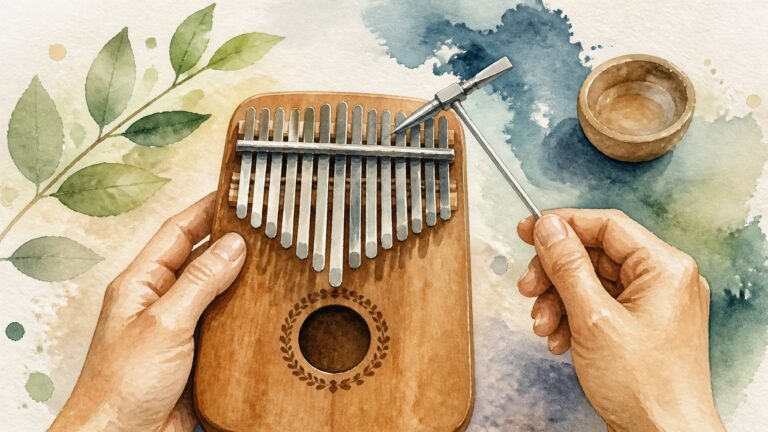
The kalimba is a small handheld instrument with metal tines you pluck with your thumbs to play notes. It fits comfortably in both hands and makes a soft, bell-like sound.
It’s honestly one of the friendliest instruments a beginner can pick up. If you’ve seen one on social media and felt curious, you’re definitely not alone.
The kalimba is a modern version of an ancient African musical instrument with thousands of years of history behind it. It plays just as well in a living room today as it did around a fire centuries ago.
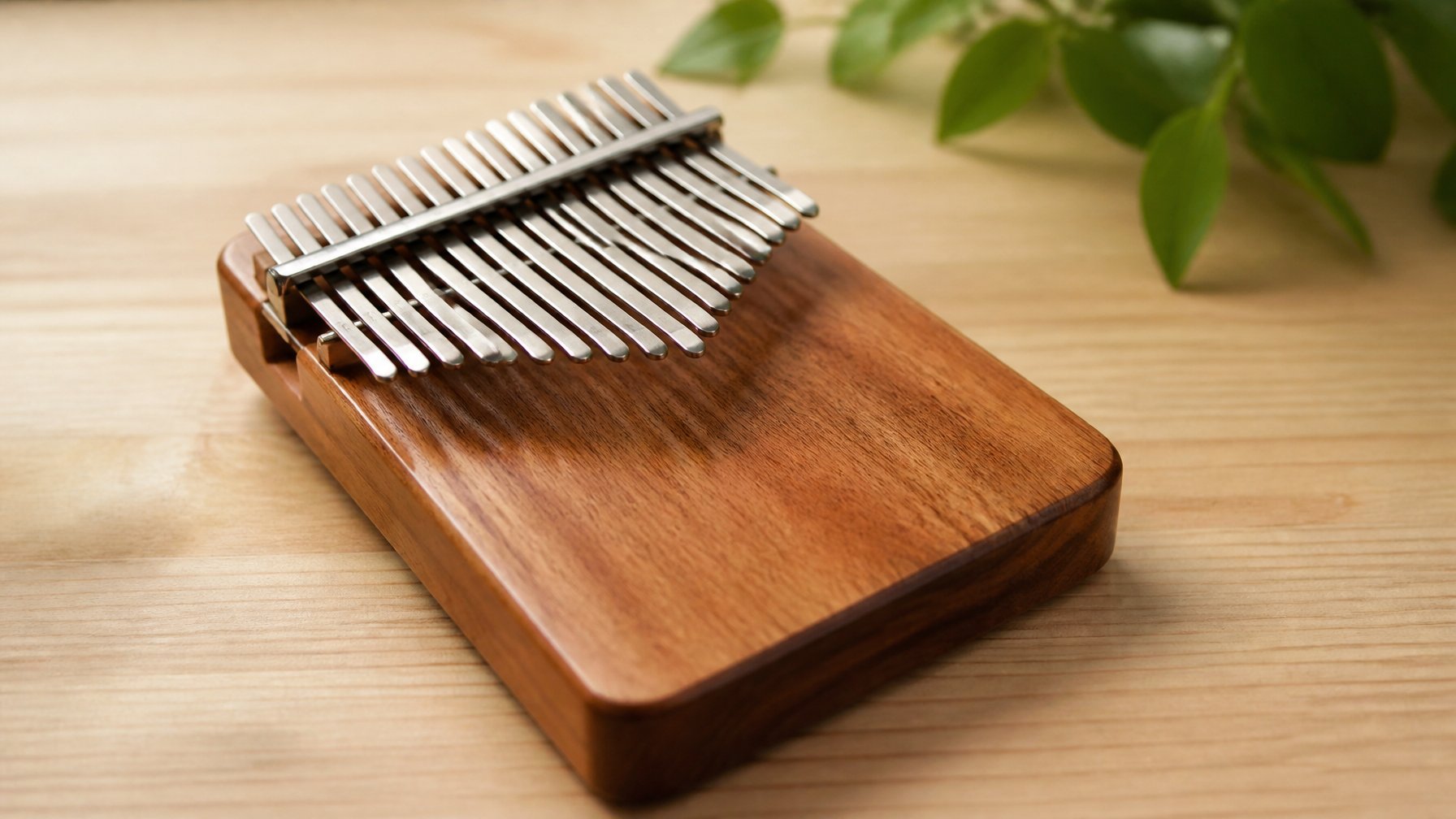
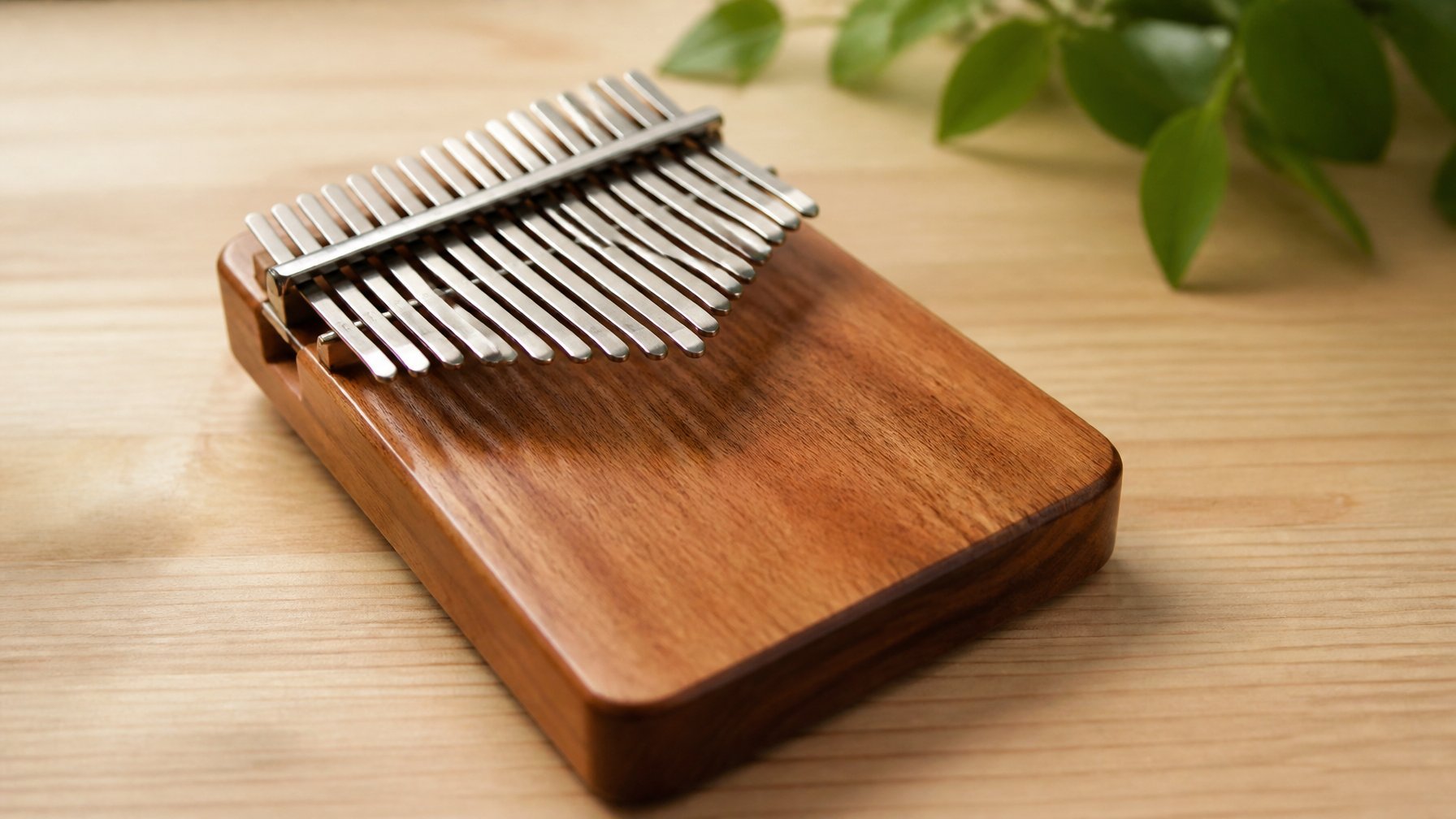
Most people spot it by its rows of metal keys fanned out across a wooden board. Press a key down with your thumb and release it—out comes a clear, ringing tone.
It goes by several names, including thumb piano, and connects directly to African instruments like the mbira and likembe. The modern version most folks buy today took shape in the mid-twentieth century and was tuned to be easy for anyone to learn.
Key Takeaways
- The kalimba is a plucked thumb piano rooted in African musical tradition, now enjoyed worldwide.
- It’s widely considered one of the easiest instruments a beginner can start learning.
- The 17-key model is the most common version and covers a wide enough range to play countless songs.
What It Is And How It Makes Sound
The kalimba belongs to a family of instruments called lamellophones. It creates sound through vibrating metal tines instead of strings, air, or struck surfaces.
Each tine has its own pitch, and the body of the instrument naturally amplifies every note.
Why It Is Called A Thumb Piano
The nickname “thumb piano” comes straight from how you play it. You hold the instrument with both hands, rest your thumbs on the metal keys, and pluck them downward to produce notes.
It earns the “piano” part because each key plays one distinct pitch, kind of like a piano key. The term is informal but helpful, and most beginners find it immediately explains what the instrument does—no music theory needed.
The official name, kalimba, is the one you’ll see most often in the United States these days.
How The Tines Create Notes
Each metal tine is fixed to the body of the instrument at one end and left free to vibrate at the other. When you press a tine down and let go, it springs back and vibrates at a specific frequency.
That vibration travels through the wood beneath it, which amplifies the tone. Longer tines vibrate more slowly and produce lower notes, while shorter tines vibrate faster and give you higher notes.
The center tine is usually the lowest note on a standard layout. The tines get shorter as they fan outward to both sides.
Where It Fits Among Lamellophones And Idiophones
A lamellophone is any instrument that makes sound by plucking flexible strips or plates. A kalimba is also an idiophone, meaning the instrument itself vibrates to create the sound, not a string or air column.
Both terms come from musicology, but the practical bit is simple: the metal tines are the sound source, and the wooden body makes that sound louder. Other lamellophones exist across Africa and beyond, but the kalimba is the most recognized version in the Western world these days.
Roots In African Musical Traditions
The story of the kalimba stretches back thousands of years across Africa, moving through different cultures, names, and forms before reaching the version most people know today. Its journey connects the mbira of Zimbabwe to a British ethnomusicologist who helped bring it to a global audience.
From Mbira To The Modern Kalimba
The mbira is the direct ancestor of the modern kalimba. Archaeological evidence places early lamellophones in Africa as far back as 3,000 years ago, with metal-tined versions showing up around 1,300 years ago.
The instrument spread across the continent and picked up different names along the way—likembe, sanza, karimba—depending on the region and tradition. The nyunga nyunga is another mbira form from Zimbabwe.
Each regional variety had its own number of tines, tuning system, and cultural role. These weren’t interchangeable instruments; each was a distinct voice for its community.
Shona Culture And Traditional Use
The traditional mbira holds a central place in Shona culture in what is now Zimbabwe. People played it at ceremonies, used it in spiritual rituals, and passed it down as a living piece of cultural identity.
The Shona mbira typically had between 22 and 28 tines and often sat inside a resonator gourd called a deze to project its sound. It was far more than entertainment—many believed the mbira could connect the living with ancestral spirits, and skilled players earned deep respect.
Hugh Tracey And Global Popularity
Hugh Tracey, a British ethnomusicologist working in Africa in the mid-twentieth century, became fascinated by the mbira and similar instruments. In the 1950s, he started making a simplified version under the name “kalimba” and promoting it internationally.
He reduced the key count to make it more accessible and tuned it to a diatonic Western scale. His work introduced the instrument to audiences far outside Africa.
The Hugh Tracey brand is still historically significant and remains a benchmark for traditional kalimba sound quality.
Main Parts And Common Designs
A kalimba has just a few key components, and each one plays a role in the tone and volume you get when you play. The material choices and body design make a real difference in how an instrument sounds and feels in your hands.
Soundboard, Resonator, And Sound Hole
The soundboard is the flat wooden surface where the tines rest. When a tine vibrates, the soundboard picks up that energy and amplifies it.
A denser, well-seasoned piece of wood generally produces a warmer and more sustained tone. A resonator refers to a hollow body that traps and amplifies sound.
On a box kalimba, the hollow chamber beneath the soundboard acts as a built-in resonator. Many box models also include a sound hole—an opening in the body that lets sound project outward more clearly.
Covering and uncovering the sound hole with your finger while playing creates a subtle wah effect that a lot of players enjoy.
Pressure Bar And Tuning Layout
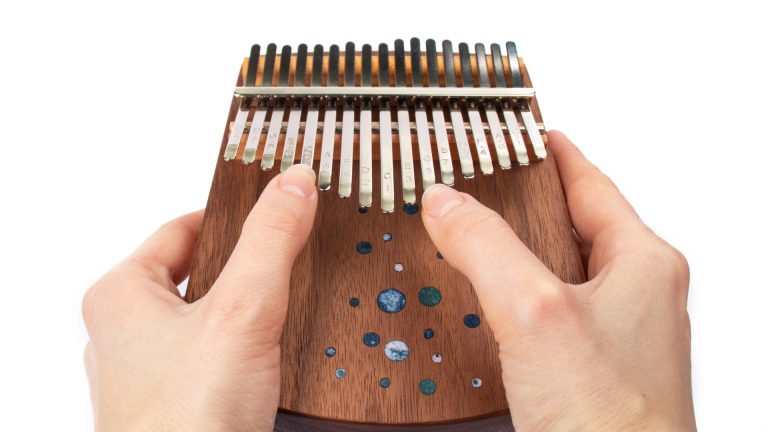
The pressure bar is a metal bridge that holds the tines firmly against the soundboard. It runs across the base of all the tines and keeps them secure so they vibrate cleanly.
Adjusting the tines means sliding them forward or backward under this bar, which changes their length and pitch. The layout of notes on a kalimba isn’t left-to-right like a piano.
On a standard 17-key model, the lowest note sits at the center, and the notes alternate outward, getting higher as they move away from the middle on both sides. This symmetrical layout makes certain chord shapes and melody patterns easy to play with both thumbs at once.
Wooden, Box, And Acrylic Builds
A flat-board kalimba is a solid piece of wood with no hollow body. It produces a quieter, more delicate sound.
A box kalimba has a hollow body that acts as a resonator, giving the sound more volume and depth. Acrylic kalimbas use a transparent synthetic body instead of wood—they look striking and tend to produce a slightly brighter, crisper tone.
Some players prefer acrylic for the visual appeal and tuning stability. Modern kalimbas also include electric versions with built-in pickups, which I’ll touch on in the next section.
Types And Tunings To Know
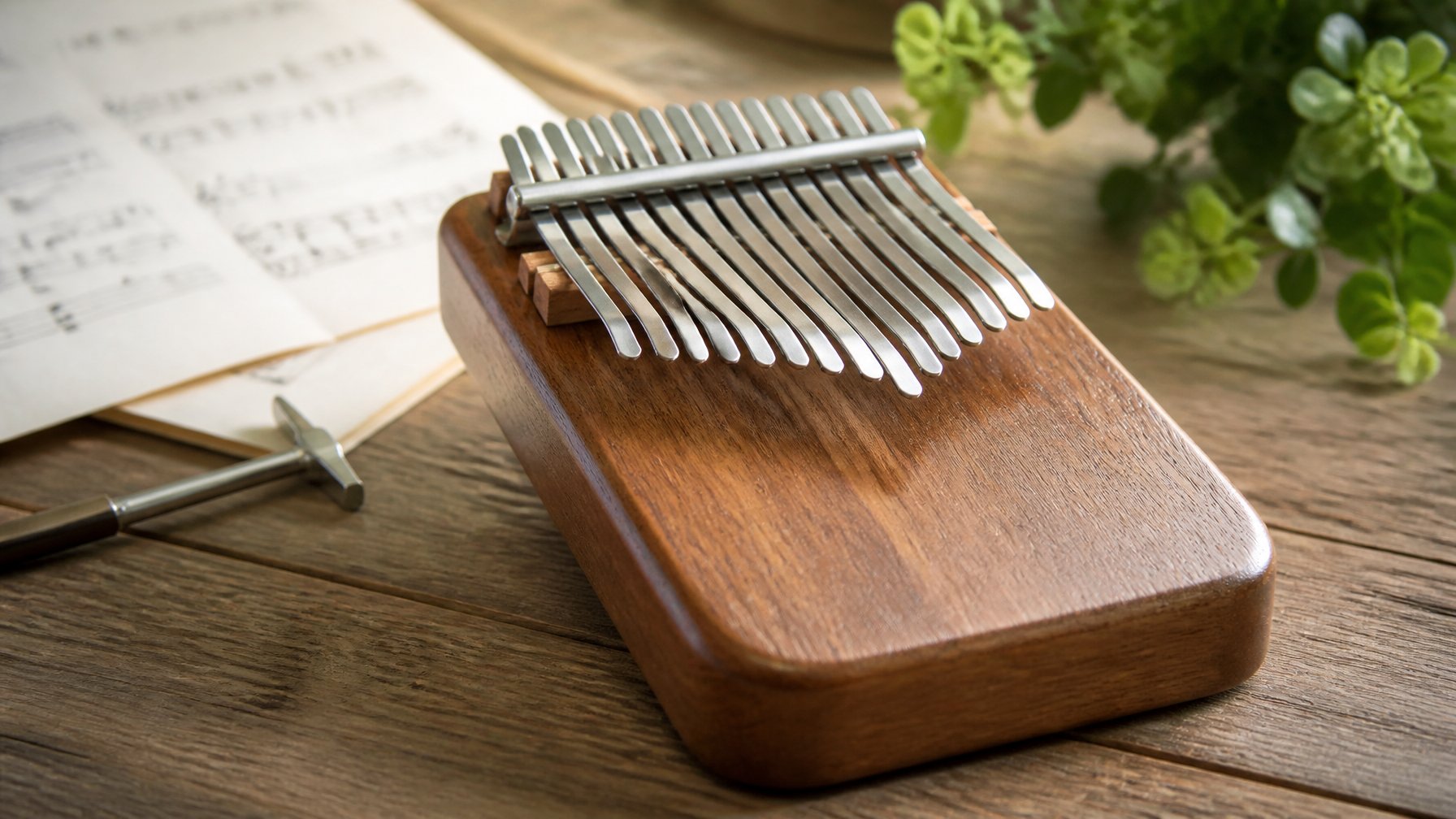
Different types of kalimbas suit different players, skill levels, and musical goals. The number of keys and the tuning system both shape what songs you can play and how much flexibility you have as you improve.
17-Key, 21-Key, And 8-Key Models
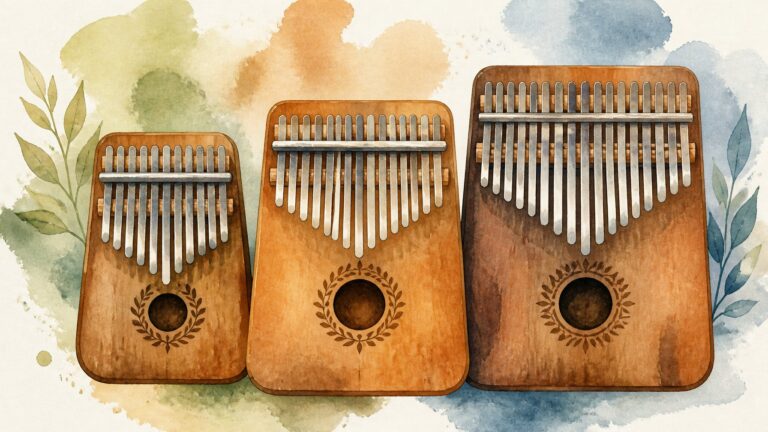
The 17-key kalimba is by far the most popular option. It covers two and a half octaves in a diatonic scale, usually C major, and handles a huge range of songs without being overwhelming.
It’s the model I recommend most for beginners. The 21-key kalimba adds a few extra notes at the lower end, giving more range for complex melodies and harmonies.
Intermediate and advanced players tend to prefer it once they outgrow the 17-key layout. The 8-key kalimba is small, simple, and ideal for young kids or anyone who wants the most stripped-down intro to the instrument.
It limits what you can play, but it removes every barrier to getting started.
Chromatic And Electric Options
A chromatic kalimba includes all 12 notes of the Western scale, not just the seven notes of a major key. This lets you play in any key and tackle more complex music, but the layout takes more time to learn.
It’s worth it if you want to explore jazz, pop, or music in non-standard keys. An electric kalimba has a built-in pickup and a jack for plugging into an amp or audio interface.
It works well for live performance and recording. The sansula is another design worth knowing—it mounts the tines over a membrane-covered frame, giving it a uniquely resonant, almost ethereal tone.
How Layout Affects Songs And Range
Because the notes on a standard kalimba alternate left and right instead of running in one direction, playing a scale means moving your thumbs back and forth in a crossing pattern. This feels odd at first but becomes natural pretty quickly.
Many pleasing chord patterns fall naturally under both thumbs, which makes harmonizing easier than on most instruments. Diatonic tuning means every note you play sounds good together, so it’s honestly hard to hit a note that clashes badly.
This is a big reason why beginners feel successful so quickly.
Is It Easy To Play?
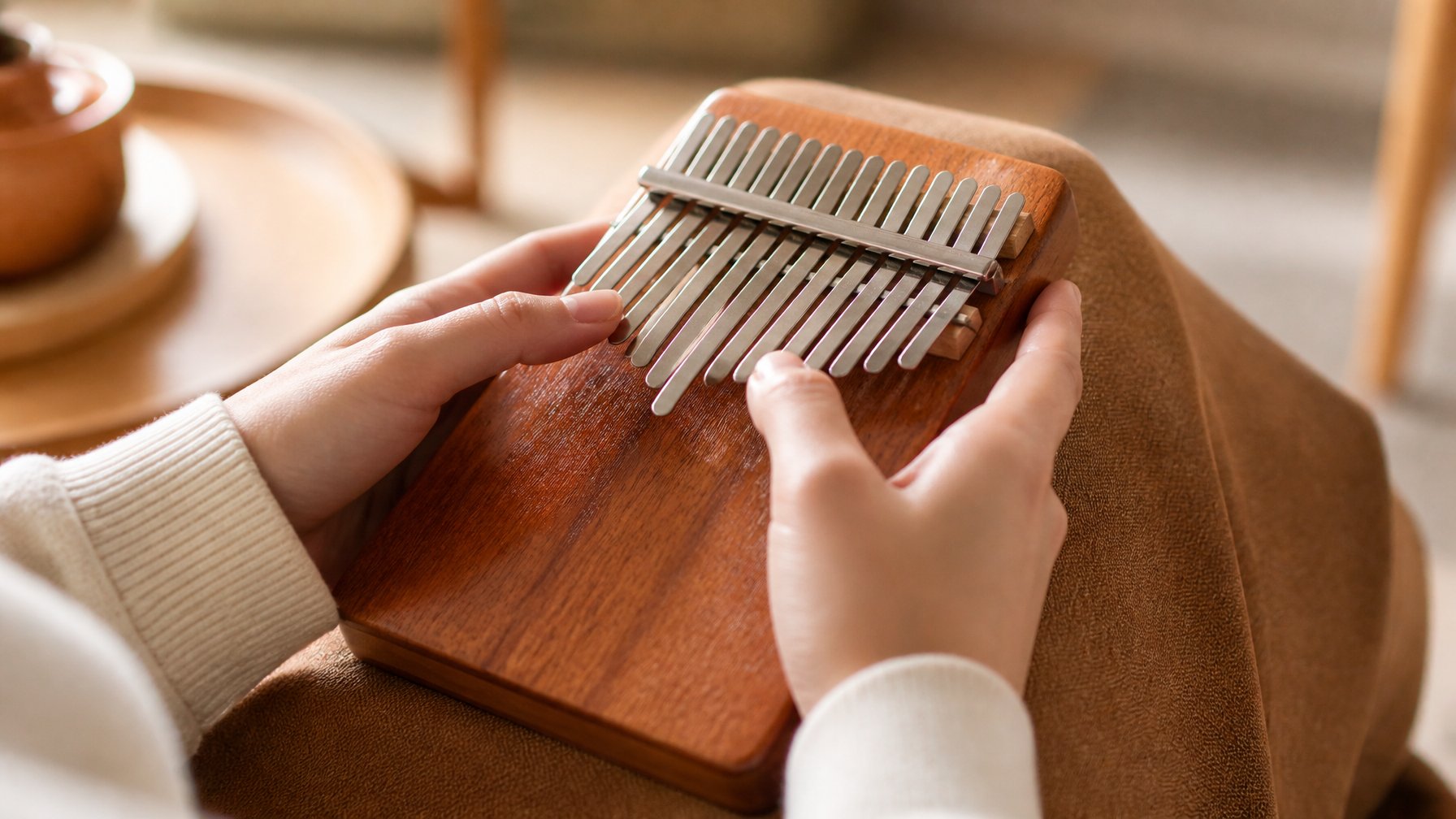
The kalimba has a reputation as one of the easiest melodic instruments to start playing. From what I’ve seen, that reputation is pretty accurate.
Its physical design, tuning, and small size take away a lot of the usual headaches beginners hit with other instruments. You don’t have to develop calluses, learn tricky finger positions, or read sheet music to get started.
Just pluck the tines with your thumbs. Every note on a standard diatonic kalimba sounds pleasant by itself.
You won’t get harsh “wrong” notes the way you might on a guitar if your fingers slip. The instrument is also small enough to hold easily sitting on a couch.
That low barrier means more practice and less frustration, especially early on. Even guitarists usually find that after just a few minutes, something recognizable comes out when they pick up a kalimba.
How To Learn Kalimba Basics
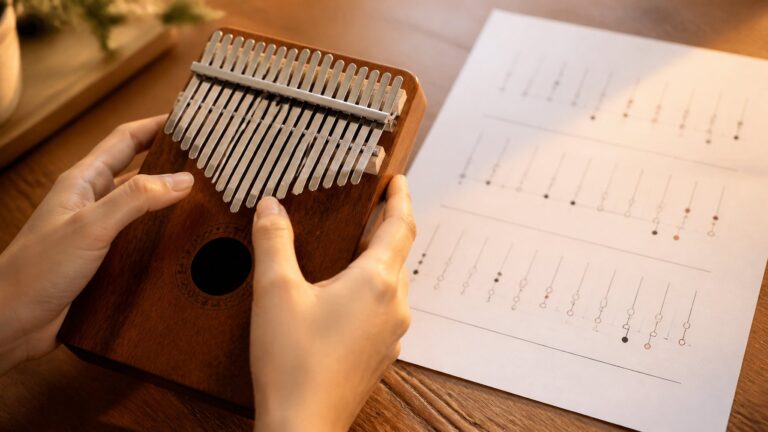
Most people start with a simple melody they already know, like a nursery rhyme or a pop song. Tabs for kalimba use a numbered or labeled tine system, which is much easier to read than standard notation.
There are plenty of free resources online that map out popular songs this way. The basic technique is pretty simple: press a tine gently with your thumb pad and let it snap back.
Don’t press too hard or too fast. Start slow, match the notes to a song you know, and speed will come with a bit of repetition.
Why It Feels Relaxing And Fun
The kalimba’s tone is genuinely soothing. That soft, bell-like sound just has a calming vibe, making playing feel more like meditation than practice.
Lots of players say they pick it up after a long day to decompress, not to “study.” The portable size means you can play anywhere—on the porch, in a park, or quietly at your desk.
That kind of flexibility keeps the habit going in a way bigger instruments just can’t.
Getting Started And Keeping It In Tune
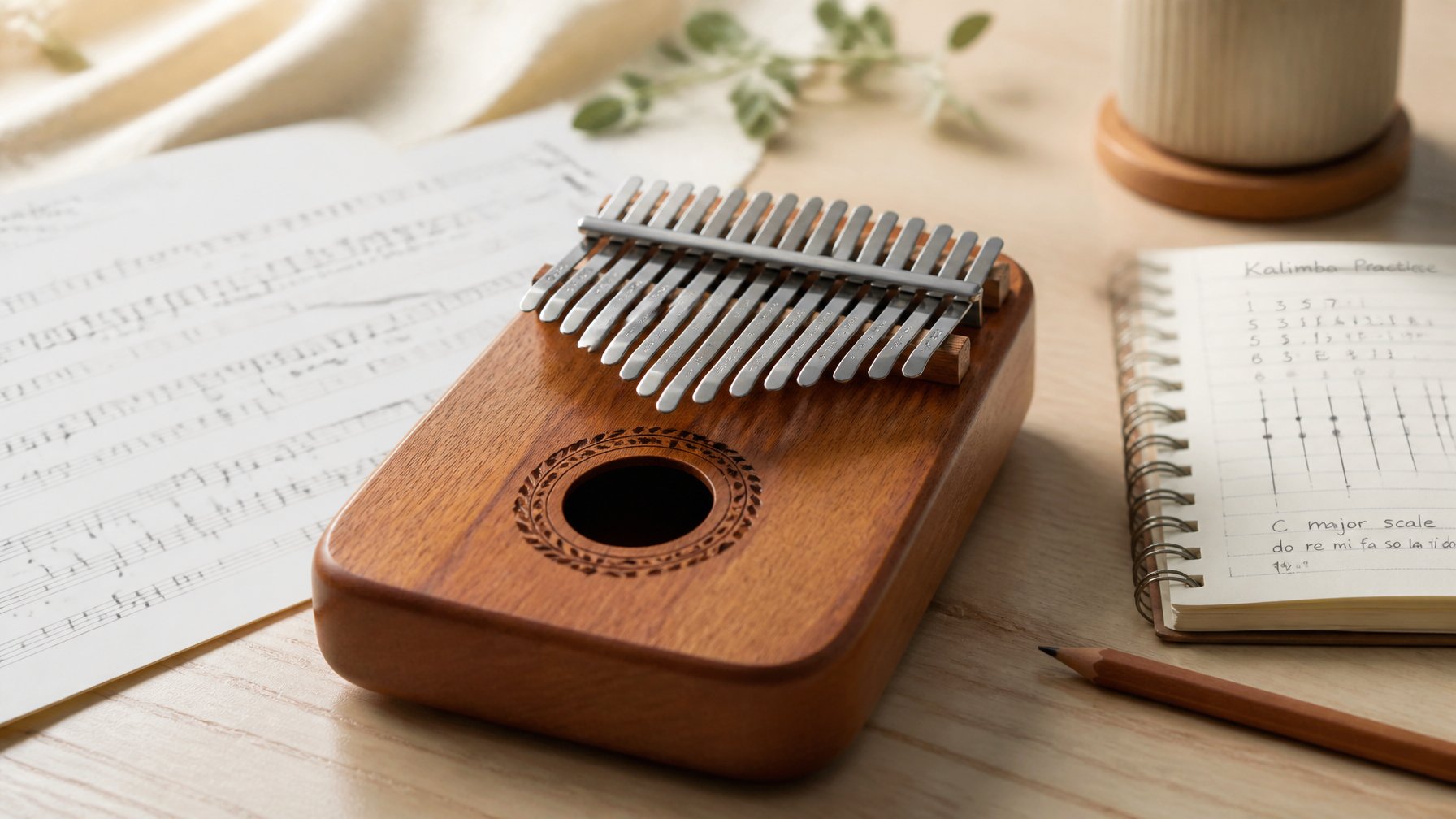
Starting with a decent instrument and knowing a bit about care makes learning smoother from the beginning. A well-tuned kalimba sounds way better than one that’s drifted.
Keeping it in tune only takes a few minutes now and then. A 17-key kalimba in C major is usually the best place to start.
It gives you enough range for lots of songs, and most tutorials and tabs use that layout. Look for one with smooth, evenly spaced tines and a wooden body that feels solid, not hollow or flimsy.
Don’t go for the cheapest option. Really cheap kalimbas often go out of tune fast or sound thin and buzzy.
Spending a little more gets you a better experience and helps you want to keep playing. A tuning hammer comes with most kalimbas—it’s a small mallet you use to tap the tines and adjust pitch.
Tapping a tine toward the pressure bar makes the pitch go up, and tapping it away lowers it. Use a clip-on tuner or a tuning app to check each tine against its note.
Make tiny adjustments and check often. It’s easy to overshoot, so go slow.
Keep your kalimba away from humidity and big temperature changes. Wood expands and contracts with moisture, which can make tines shift or the body warp.
Store it in a case or pouch when you’re not playing. Wipe the tines with a dry cloth sometimes to prevent corrosion from skin oils.
If a tine starts buzzing, check if it’s touching another tine or out of alignment. Usually, a small adjustment with the tuning hammer fixes it right away.
Once you know what a kalimba is, the natural next steps are learning how to play the kalimba and understanding how to read kalimba tabs — both of which I’ve covered in separate guides.
Frequently Asked Questions
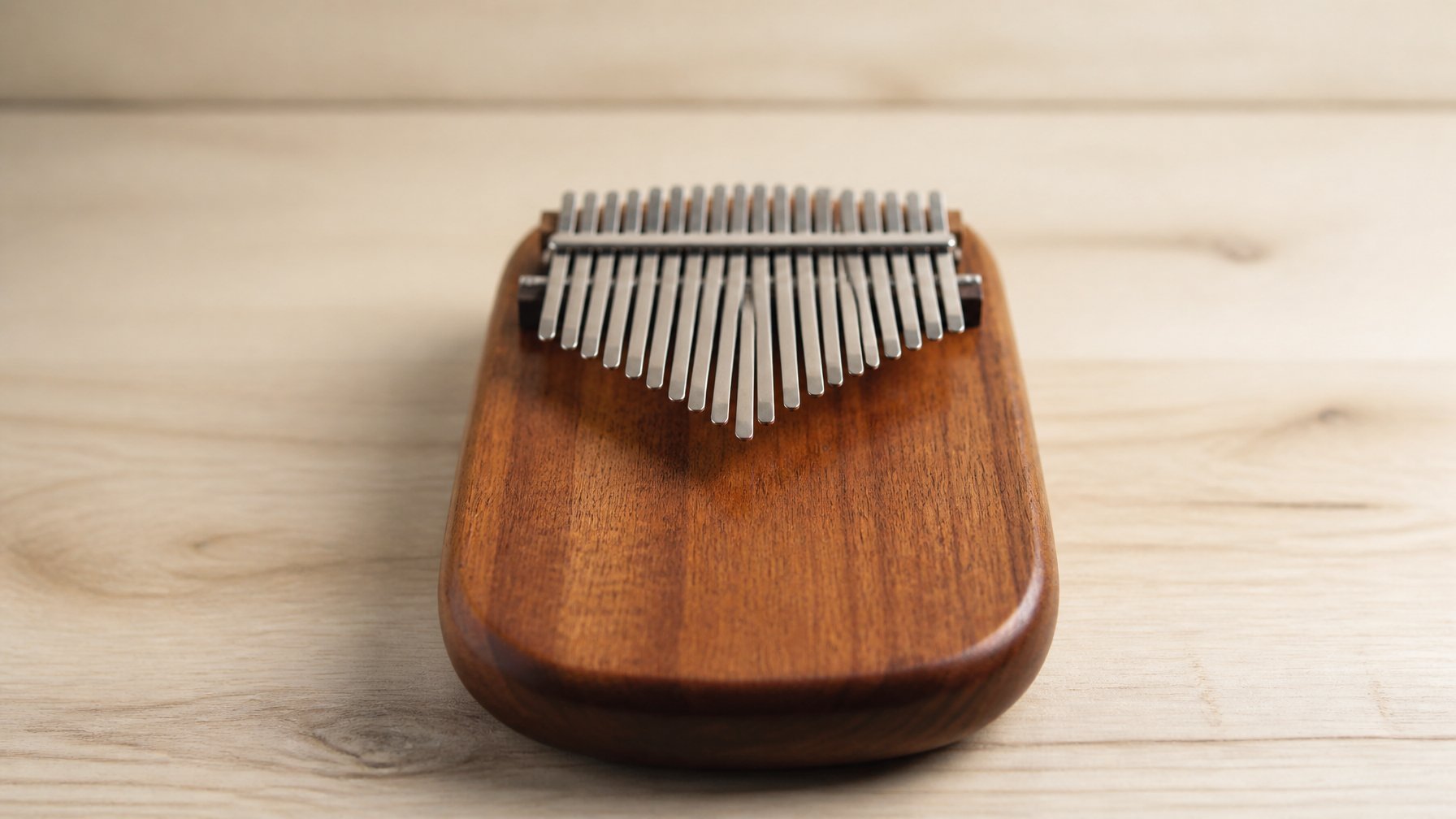
How does a kalimba work, and what makes its sound?
You make sound by pressing down on a metal tine with your thumb and letting it go, which makes it vibrate. That vibration goes through the wooden body and gets amplified into the clear, bell-like tone people know the kalimba for.
Longer tines play lower notes, and shorter ones play higher notes. Simple as that.
What is a kalimba typically used for in music?
Most folks play kalimba for personal enjoyment, relaxation, or learning melodies. It’s also used in folk, ambient, and world music, and some people add it to meditation or sound therapy.
Its small size makes it easy to bring into almost any musical setting. Handy, right?
What materials are kalimbas usually made from?
The body is usually wood—hardwoods like mahogany or koa are common for their warm tone. Tines are almost always steel.
Some new kalimbas use acrylic or bamboo for the body, which gives a slightly different sound.
What does a kalimba sound like compared to other instruments?
The kalimba has a soft, bright, bell-like tone—somewhere between a music box and a xylophone. It’s gentler and more intimate than either, and a lot of people find it instantly calming.
It doesn’t get very loud, so it’s better for quiet, personal playing than filling a big room.
What culture or region does the kalimba come from?
The kalimba’s roots are in Africa. Its closest ancestor is the mbira from Zimbabwe.
Related instruments called likembe or sanza have existed across sub-Saharan Africa for thousands of years. The modern kalimba, as we see it today, was shaped a lot by British ethnomusicologist Hugh Tracey in the 1950s.
What’s the difference between a mbira and a kalimba?
The mbira comes from Shona culture, where it holds deep spiritual and cultural meaning. You’ll usually find it with 22 to 28 tines and its own unique tuning system.
The kalimba, on the other hand, is a more modern take. It typically has 17 keys and uses a Western diatonic tuning.
Both instruments work in a similar way, but they really fill different musical and cultural roles. It’s fascinating how they look so similar, yet carry such different stories.
Author Profile

- Daniel Johnstone — Dániel to his friends back in Miskolc — is a Hungarian folk musician and writer who has been playing stringed instruments for over twenty years. Growing up in northeastern Hungary with a family steeped in folk music, he developed an early obsession with Celtic and Appalachian styles that eventually brought him to the UK. He worked his way through tenor banjo, 5-string banjo, autoharp, mountain dulcimer, mandolin, ukulele, harp and kalimba — most of them acquired through trial, error and more money than he'd like to admit. He founded Folkstrings.com to cut through the noise: practical, experience-based guides to instruments, strings, gear and accessories for folk players at every level.
Latest entries
 BanjoJuly 14, 2026Is Banjo Hard to Learn? Here’s What Nobody Tells You
 MandolinJuly 14, 2026Online Mandolin Lessons — What YouTube Can’t Teach You (And What Can)
 Useful ToolsJuly 13, 2026Recorder Fingering Chart — Complete Guide for Soprano Recorder (Baroque and German)
 UkuleleJuly 12, 2026Gifts For Ukulele Players: 10 Best Picks