Lever Harp Vs Pedal Harp: How To Choose The Right One
Folkstrings.com is reader-supported. When you buy through links on our site, we may earn a small commission.
Last Updated on June 19, 2026 by Daniel Johnstone
Deciding between a lever harp and a pedal harp can feel overwhelming, especially if you’re just starting out or coming back to music after a long break.
Both are beautiful, rewarding instruments. The difference comes down to how they handle pitch changes, what repertoire they open up, and how they fit your daily life.
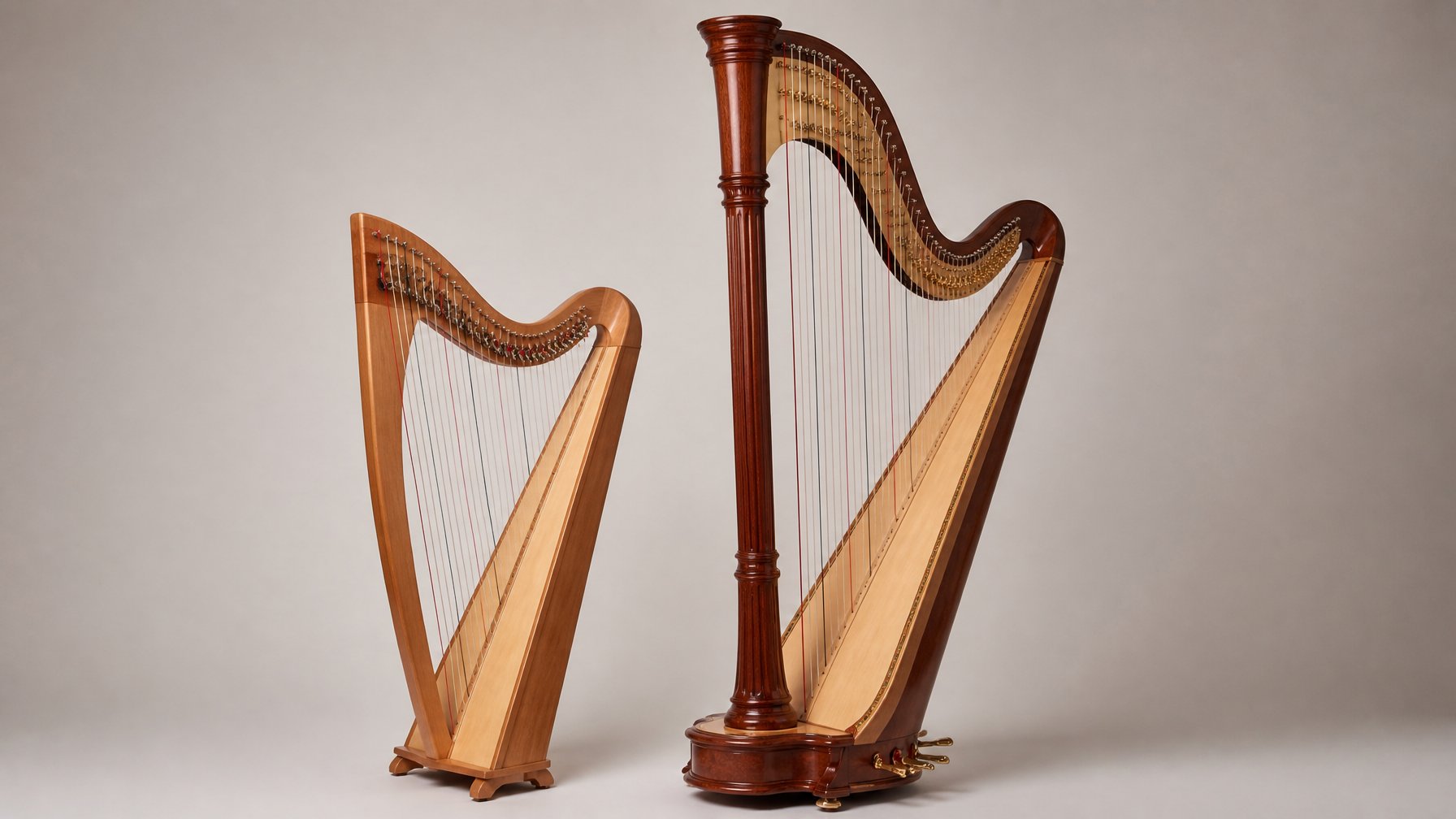
The lever harp is a strong, capable instrument that suits folk, Celtic, and many contemporary styles. The pedal harp is the standard choice for classical and orchestral playing.
Neither is automatically better. They’re built for different musical paths, and the right one depends on what you actually want to play.
I’ve spent time with both instruments and chatted with players at every level, from beginners to seasoned pros.
The most common regret I hear isn’t picking the “wrong” harp, but buying without a clear sense of their goals first. This guide is here to help you avoid that.
Key Takeaways
- Lever harps work well for folk, Celtic, and casual playing. Pedal harps are necessary for full classical and orchestral repertoire.
- Pedal harps cost a lot more to buy and maintain. They also need more space and special transport.
- Many players start on a lever harp and transition later. That’s a totally reasonable path.
The Core Difference In How They Work
Both harp types are tuned diatonically. The open strings give you a major scale.
The difference is in how each instrument raises or lowers individual notes to create sharps and flats.
How Levers Change Pitch
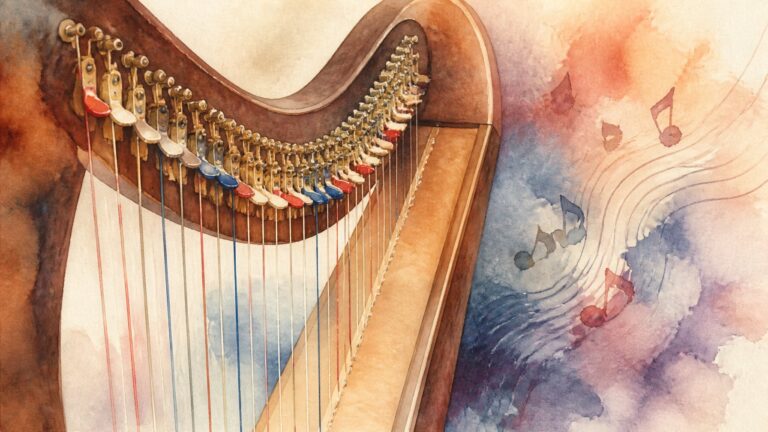
A lever harp has a small mechanical lever at the top of each string. When you flip a lever up, it shortens the vibrating length and raises the pitch by a half step.
You set the levers before you play, or during a rest if you need to change keys mid-piece. Most lever harps are tuned to E-flat major, so engaging all the levers gives you the key of C major.
How Pedals Change Pitch
A pedal harp has seven pedals, one for each note name: C, D, E, F, G, A, and B. Each pedal has three positions: flat, natural, and sharp.
When you move a pedal, it adjusts every string of that note name across all six and a half octaves at once. A single foot movement can change all the C strings from flat to natural instantly, while your hands keep playing.
Why The Pedal Mechanism Changes What You Can Play
The pedal system makes rapid key changes and chromatic passages possible without stopping. A piece by Debussy or Ravel might require several pedal moves in just a few bars.
On a lever harp, those same passages would mean stopping to flip individual levers, which breaks the musical flow. This is why classical and orchestral music is built around the pedal harp.
Which Music Each Instrument Handles Best
Repertoire fit is honestly the clearest guide to which harp belongs in your life. The lever harp shines in traditions that stay close to one or two keys.
The pedal harp handles anything that needs constant chromatic movement.
Classical And Orchestral Playing
If your goal is to play in an orchestra, study at a conservatory, or work through the standard classical harp repertoire, a concert pedal harp is the expected instrument.
Composers like Mozart, Debussy, Ravel, and most 20th-century writers created music with the pedal mechanism in mind. The pedal harp produces a bigger, more projecting sound that carries in large venues and blends with orchestras.
Folk, Celtic, And Traditional Repertoire
The lever harp, often called a Celtic harp or folk harp, is perfect for Irish jigs and reels, Scottish airs, hymns, early music, and singer-songwriter accompaniment.
These styles stick to a comfortable key range, so you rarely need to stop and adjust levers. Many professional folk and Celtic musicians build full careers on lever harps alone.
Chromatic Passages, Key Changes, And Arrangements
When harp music moves quickly through several keys or uses lots of accidentals, the pedal harp handles it far more cleanly.
That said, skilled lever harpists arrange and perform surprisingly complex music by planning lever changes during rests and long notes. The limitation is real but not absolute. It just shapes which pieces work well and which ones need creative editing.
Feel, Technique, And Learning Path
The core hand technique on both instruments is pretty similar, but string tension, instrument response, and coordination demands are meaningfully different.
Getting a feel for these contrasts early helps set realistic expectations for your learning path.
Differences In String Tension And Hand Feel
Pedal harps have noticeably higher string tension than most lever harps. The strings feel firmer under your fingers, and producing a full tone needs more consistent hand engagement.
Many lever harps, especially those with nylon strings, feel softer and more forgiving. That can make early learning more comfortable. If you plan to move to a pedal harp eventually, picking a higher-tension lever harp with nylgut or wire strings can help bridge that gap.
Lever Harp Technique Vs Pedal Harp Approach
On a lever harp, you learn to plan ahead musically, anticipating where you’ll need to flip a lever and building that into your practice.
On a pedal harp, you add foot coordination on top of everything your hands are doing. Pedal changes require muscle memory and split-second timing, and honestly, mastering that takes real practice.
Neither approach is harder in an absolute sense; they just develop different skills.
Starting On One Instrument And Switching Later
Many teachers recommend starting on a lever harp to build solid hand technique before introducing foot work. This isn’t a compromise—it’s practical.
The fundamental skills transfer well, and starting on a more affordable, portable instrument gives you time to see if harp playing is really a long-term interest. Some makers even offer trade-in programs, so you can apply part of your lever harp’s value toward a pedal harp purchase when you’re ready.
Size, Cost, And Everyday Practicality
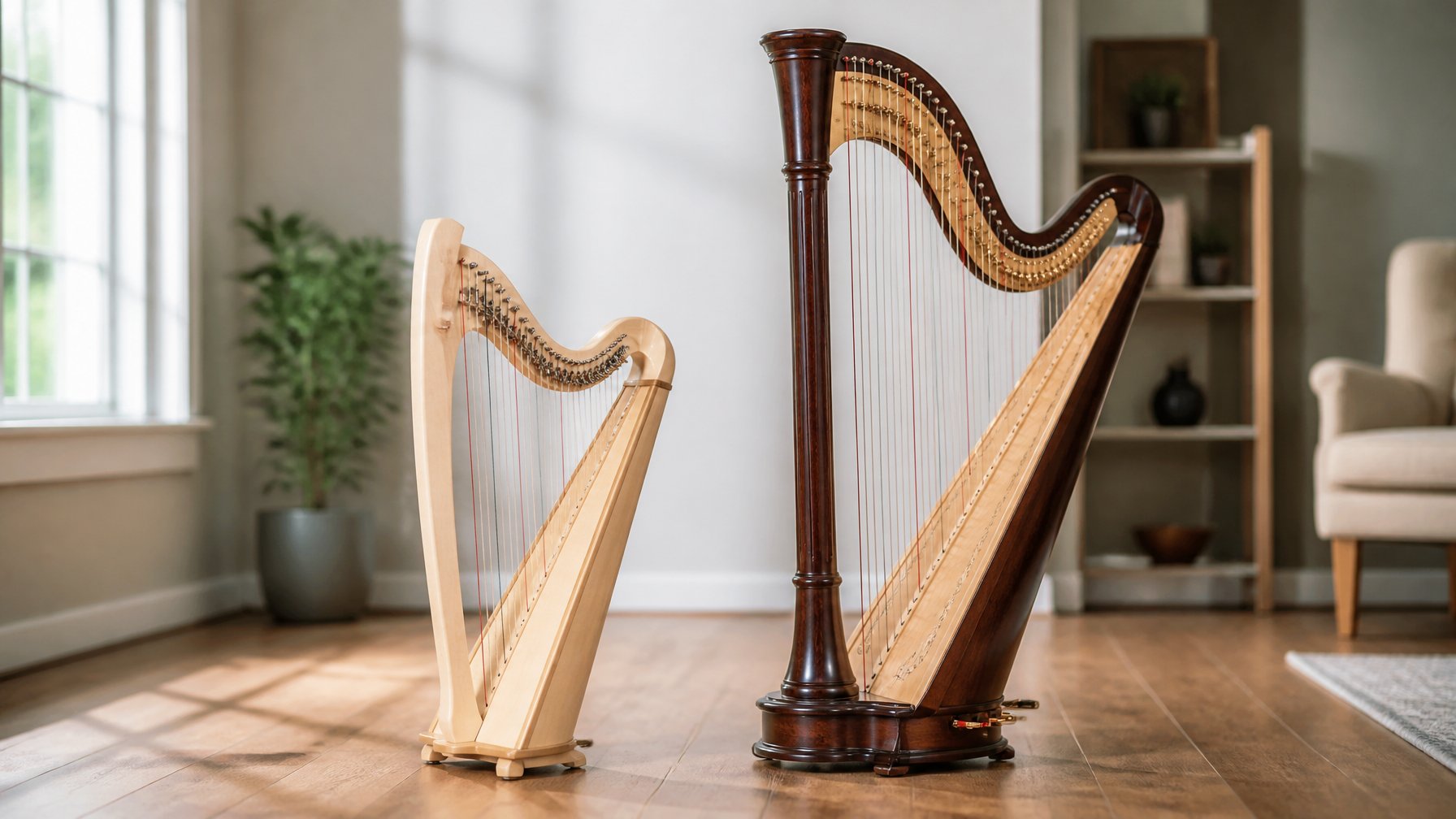
The day-to-day realities of owning a harp matter just as much as the music. Both instruments are physically substantial, but the practical differences between them are significant enough to shape your whole experience.
Budget And Ongoing Maintenance
Quality lever harps start around $1,500 and can reach $10,000 for professional models. Entry-level pedal harps begin near $8,000, with student models often running $12,000 to $20,000 and professional instruments going well above that.
Annual maintenance on a lever harp usually runs $200 to $400. A pedal harp’s more complex mechanism means regulation, string replacement, and repairs can add up to $500 to $1,000 or more per year. Financing and rent-to-own programs exist for both types, which makes the investment a bit more approachable.
Portability For Home, Lessons, And Gigs
Lever harps generally weigh between 50 and 80 pounds and fit in most vehicles with the back seat folded down. I’ve seen players carry them to weekly lessons, folk sessions, and outdoor gigs without much trouble.
Pedal harps weigh 75 to 90 pounds and stand around six feet tall, usually needing a van or truck and a specialized harp cart. Frequent transport takes real planning.
Space, Volume, And Performance Settings
A lever harp fits comfortably in a small apartment or studio. A pedal harp needs a room with enough ceiling height and floor space.
Sound projection also differs: pedal harps are built to fill large halls. Lever harps produce a warmer, more intimate tone that suits smaller rooms and informal settings. For home playing, lessons, or small venue gigs, the lever harp’s scale can be a real advantage.
Who Each Option Makes The Most Sense For
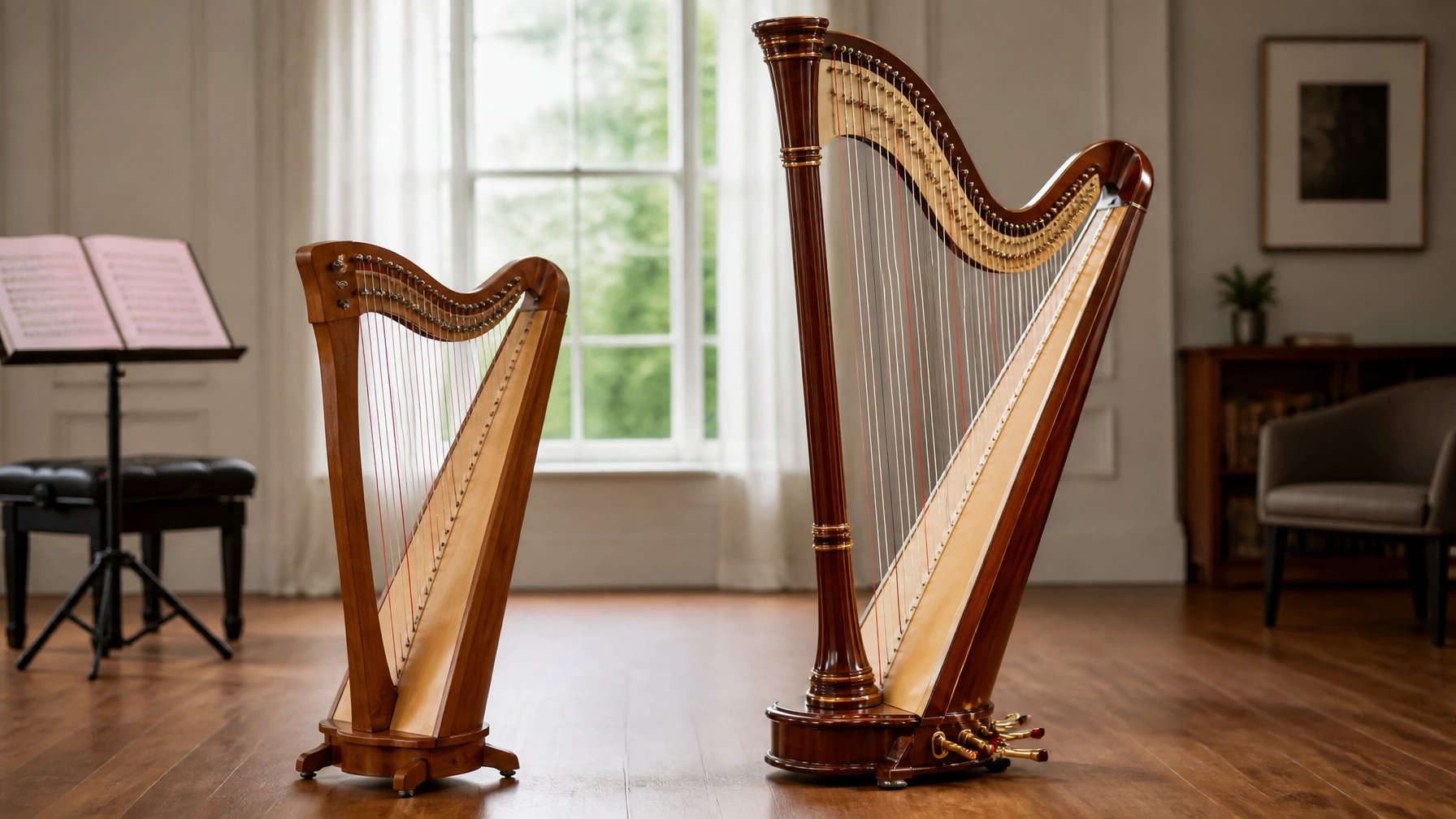
The best way to narrow down your choice is to match the instrument to your actual goals, not to some idea of what a “serious” player should own.
Both lever and pedal harps are valid long-term choices, depending on where you’re headed musically.
Best Fit For Beginners And Casual Players
If you’re new to the harp, drawn to folk or Celtic music, playing mostly at home, or working with a limited budget, a lever harp makes a lot of sense as your starting point.
It lets you develop real technique without the added complexity of foot pedals. The lower cost and easier transport reduce the pressure of the investment. Lever harps aren’t just for beginners; they simply match a wider range of casual and intermediate playing situations well.
Best Fit For Serious Classical Study
If your goal is to study classical music seriously, join an orchestra, or pursue professional harp performance, a pedal harp is basically a requirement.
Most conservatory programs and university harp teachers work primarily on pedal harps, and the full classical and orchestral harp repertoire is written for them. Starting on a professional pedal harp, or a quality student model, puts you on the right path from day one.
When A Lever Harp Can Be Your Long-Term Instrument
A lever harp is not just a stepping stone. Many professional folk, Celtic, and therapeutic harpists build entire careers on lever harps without ever needing a pedal instrument.
If your repertoire stays within folk, traditional, contemporary, or sacred music, a quality lever harp is genuinely all you need. The decision to add a pedal harp later should come from your musical direction, not from outside pressure.
Other Harp Designs Worth Knowing About
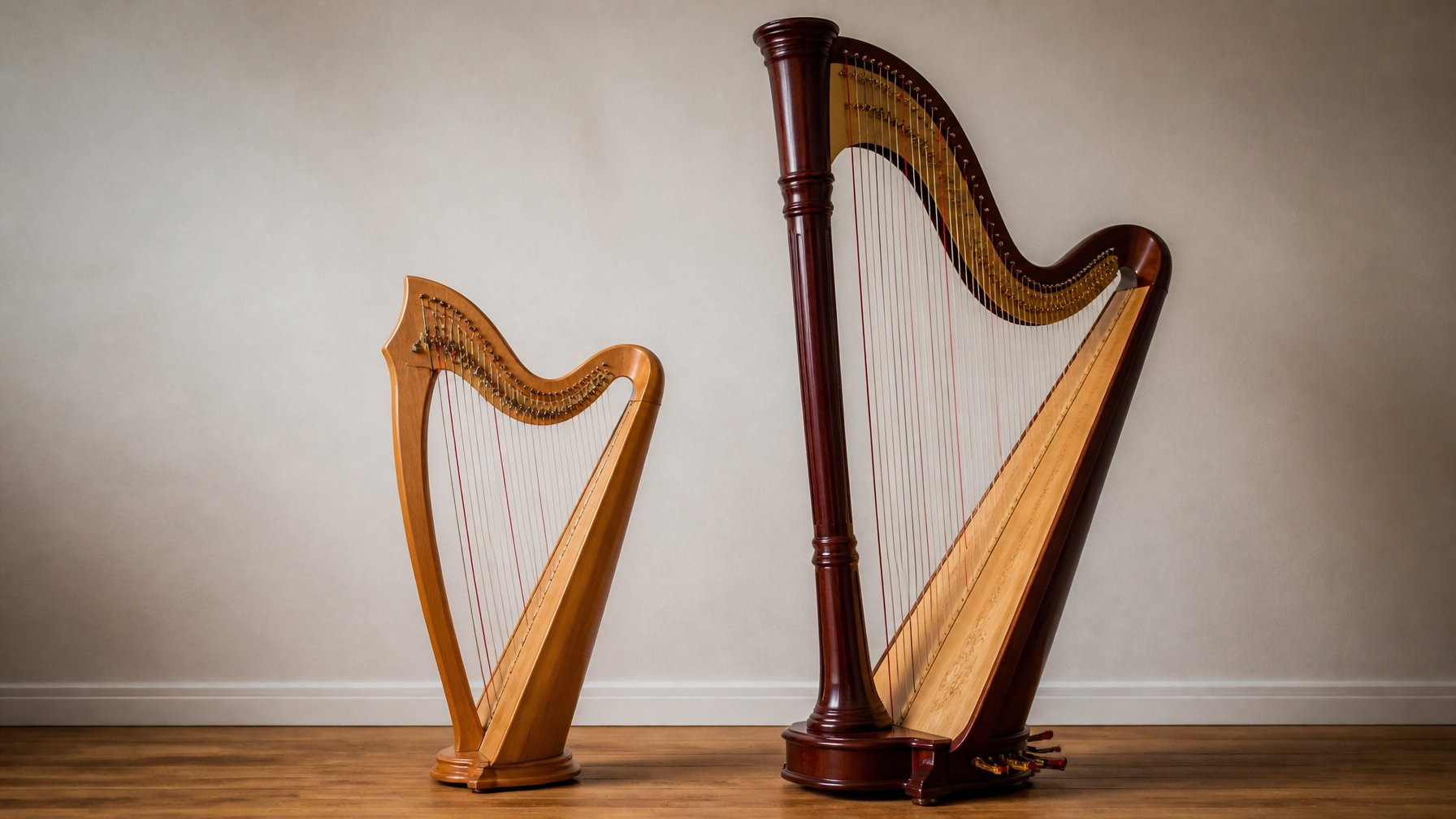
Besides the main lever and pedal harps, there are a handful of other designs out there. Some of these serve pretty specific needs and might just be the answer if you’ve got particular goals or constraints.
Cross-Strung And Triple-Strung Options
Cross-strung harps use two rows of strings that cross each other, so you get chromatic notes without levers or pedals. Triple-strung harps go further, with three parallel rows—the middle row gives you sharps and flats.
These aren’t super common in the U.S., but you’ll spot them in early music circles or with players who want a full chromatic range without pedals. They need a different technique, and honestly, it’s tougher to find teachers or music written just for them.
Small Format Harps For Portability
Travel harps and lap harps are basically compact lever harps built for easy carrying. Lap harps rest on your lap or a table, and they’re light enough for kids or anyone who can’t lug around a full-size harp.
Travel harps usually have fewer strings than a standard lever harp, but they fit in a car trunk or even an airplane overhead. They’re great as a backup or for specific gigs, though if you’re serious about learning, you’ll probably want a bigger harp as your main instrument.
Trying Instruments At A Harp Conference
If you’re not sure what fits, harp conferences are honestly one of the best places to try a bunch of harps side by side. Events like the World Harp Congress or regional gatherings bring together makers, dealers, and players, so you can actually play different models before deciding.
Trying a lever and a pedal harp in person—even for a few minutes—teaches you way more than any article possibly could.
Frequently Asked Questions
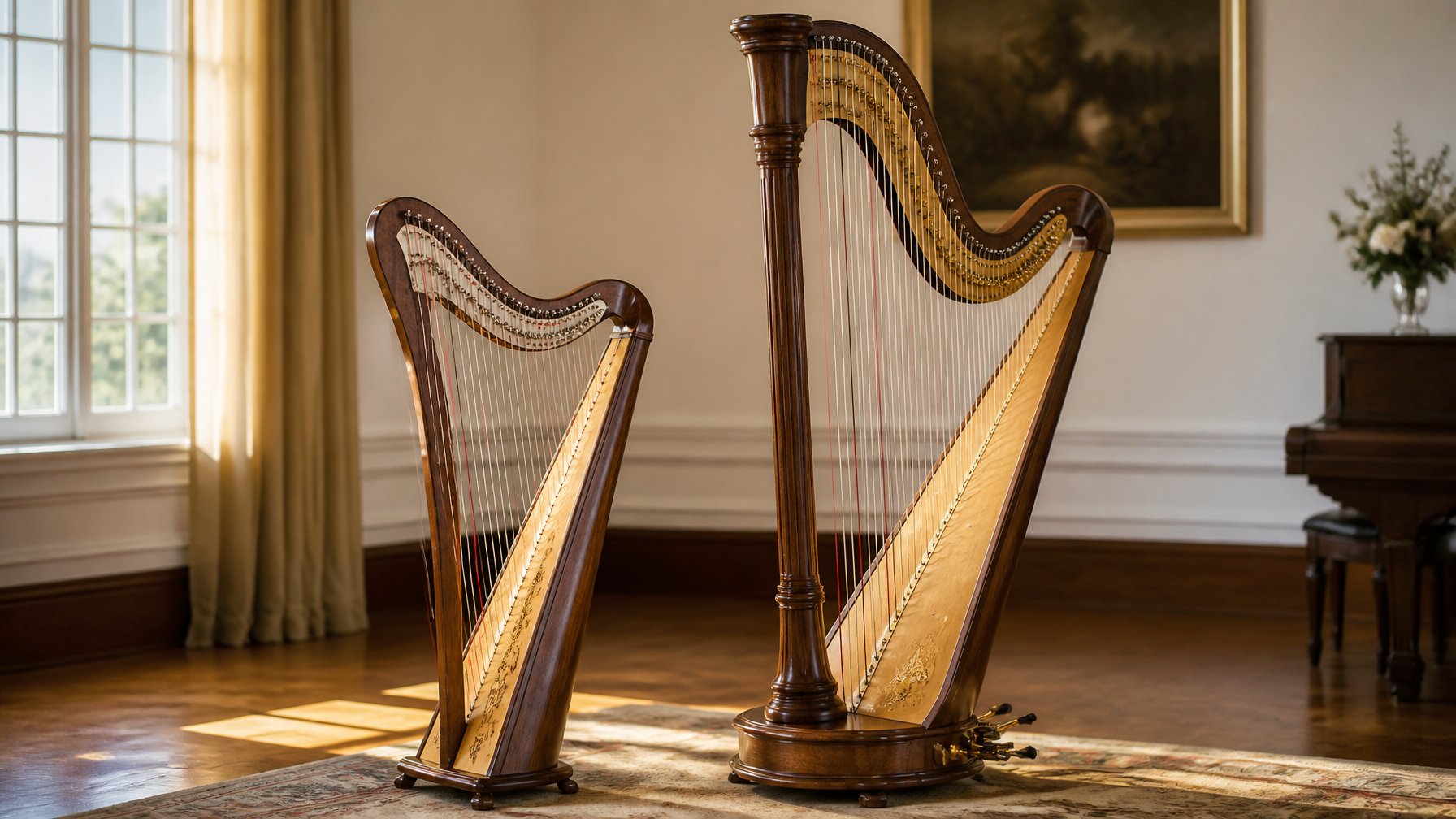
What are the main differences in how a lever harp and a pedal harp change keys and accidentals?
On a lever harp, you flip each string’s lever by hand to raise it a half step, usually before you start playing. Pedal harps have seven foot pedals, one for each note name, and each pedal controls all the strings of that note across every octave.
The pedals have three positions—flat, natural, and sharp—so you can change keys instantly while your hands keep playing. That footwork is honestly what makes fast key changes and chromatic stuff possible on a pedal harp.
How different is the sound and volume between a lever harp and a pedal harp?
Pedal harps are bigger, with more strings and higher tension, so the sound is larger and can fill a concert hall. Lever harps have a warmer, more personal tone that’s perfect for small rooms, folk jams, or quiet spaces.
It’s not really about one being “better”—each sound just fits its own space and vibe.
Which type of harp is better for beginners who want to learn quickly and comfortably?
Most teachers push for starting on a lever harp. The technique is easier to pick up, it’s less expensive, and you can actually carry it to lessons (here’s a quick roundup of beginner-friendly harps).
The hand skills you build will transfer if you switch to pedal harp later. That said, if you’re dead set on classical music, there’s nothing stopping you from jumping straight to pedal harp.
Can you play classical repertoire on a lever harp, and what limitations might come up?
You can play a lot of classical music on lever harp, especially with some arrangement or simplification. Skilled players manage some pretty impressive stuff.
The big challenge is pieces with lots of key changes or fast chromatic runs—you have to pause to flip levers by hand, which isn’t always practical. Full concert pedal harp repertoire (think Debussy, Ravel, big orchestral parts) usually needs heavy editing to work on lever harp.
What should I expect to pay for a new or used harp, and what affects the price most?
Quality lever harps run from about $1,500 up to $10,000, depending on how many strings, what wood, and the maker’s skill. Entry-level pedal harps start around $8,000, and student models are often $12,000 to $20,000—professional ones can go way higher.
The price mostly comes down to how complex the pedal system is, the size, the wood quality, and honestly, the reputation of the maker.
What size harp should I choose for my height, space at home, and portability needs?
Lever harps usually stand about five feet tall. They weigh anywhere from 50 to 80 pounds.
Most folks can fit a lever harp in their home or even in a regular car. Pedal harps, on the other hand, are taller—about six feet—and heavier, often between 75 and 90 pounds.
You’ll probably need a van or a truck to move a pedal harp. Plus, make sure you’ve got enough ceiling height at home, or things could get awkward fast.
If you live in a small apartment or travel a lot, a lever harp or a travel harp just makes more sense. No one wants to wrestle a massive instrument through a tight hallway every week.
Author Profile

- Daniel Johnstone — Dániel to his friends back in Miskolc — is a Hungarian folk musician and writer who has been playing stringed instruments for over twenty years. Growing up in northeastern Hungary with a family steeped in folk music, he developed an early obsession with Celtic and Appalachian styles that eventually brought him to the UK. He worked his way through tenor banjo, 5-string banjo, autoharp, mountain dulcimer, mandolin, ukulele, harp and kalimba — most of them acquired through trial, error and more money than he'd like to admit. He founded Folkstrings.com to cut through the noise: practical, experience-based guides to instruments, strings, gear and accessories for folk players at every level.
Latest entries
 BanjoJuly 14, 2026Is Banjo Hard to Learn? Here’s What Nobody Tells You
 MandolinJuly 14, 2026Online Mandolin Lessons — What YouTube Can’t Teach You (And What Can)
 Useful ToolsJuly 13, 2026Recorder Fingering Chart — Complete Guide for Soprano Recorder (Baroque and German)
 UkuleleJuly 12, 2026Gifts For Ukulele Players: 10 Best Picks