Kalimba Tuning Guide — How to Tune, Retune and Fix Common Problems
Folkstrings.com is reader-supported. When you buy through links on our site, we may earn a small commission.
Last Updated on July 11, 2026 by folkstrings
Kalimba Tuning Guide
How to tune, retune and fix common problems on a 17-key C major kalimba
Sharp vs Flat — Quick Reference
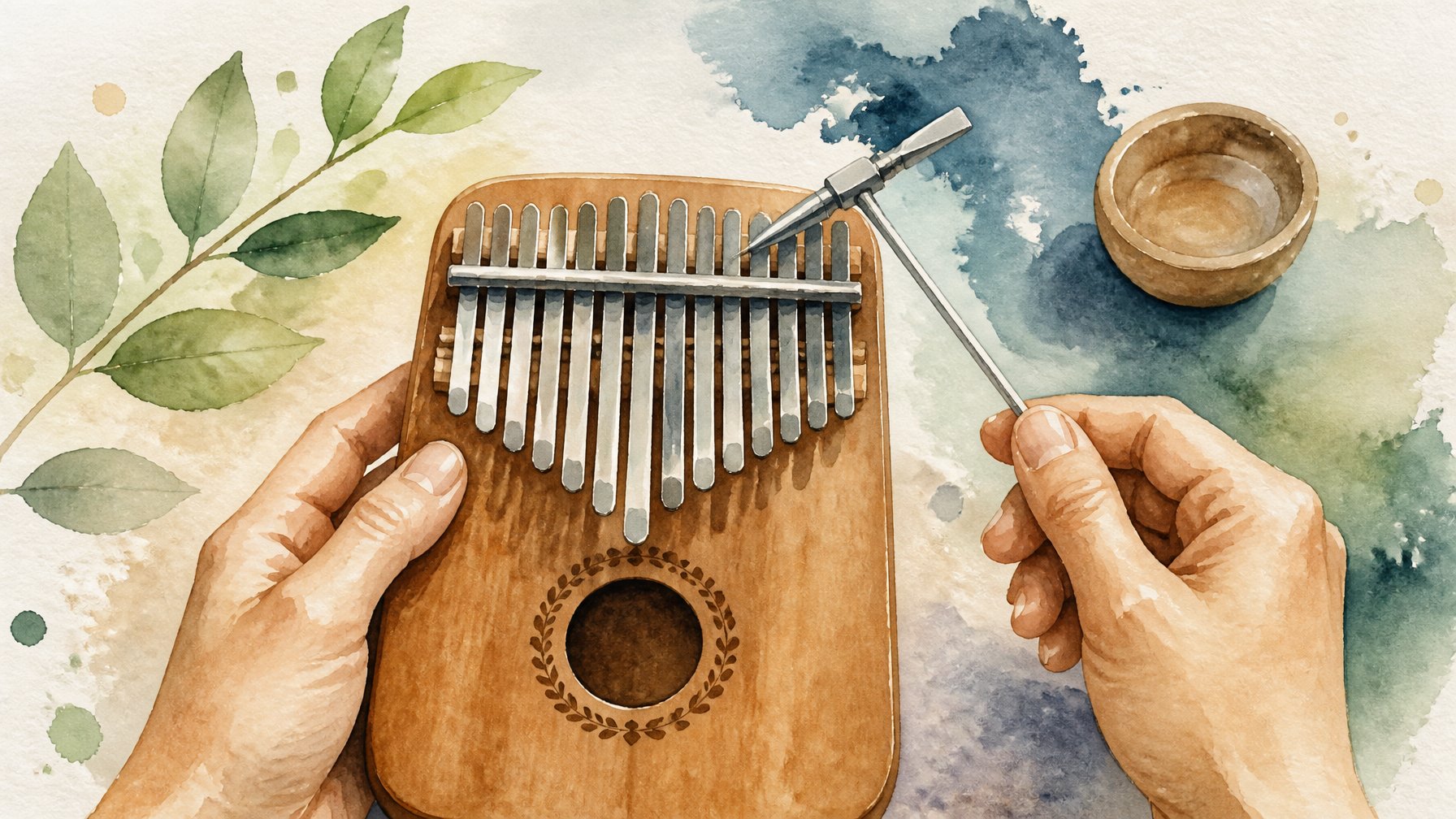
Step by Step
Standard C Major Frequency Reference
| Note | Target Frequency | Notes |
|---|---|---|
| C | 261.6 Hz | |
| D | 293.7 Hz | |
| E | 329.6 Hz | |
| F | 349.2 Hz | |
| G | 392.0 Hz | |
| A | 440.0 Hz | Standard tuning reference |
| B | 493.9 Hz | |
| C (upper) | 523.3 Hz | |
| D (upper) | 587.3 Hz | |
| E (upper) | 659.3 Hz |
Simple Retunings From C Major
| Retuning | What changes | How to do it |
|---|---|---|
| C major to G major (E minor) | Raise all F tines to F# | Push each F tine slightly toward bridge (shorten) |
| C major to F major (D minor) | Lower all B tines to Bb | Pull each B tine slightly away from bridge (lengthen) |
| C major to Natural A minor | No changes needed | A minor uses exactly the same notes as C major |
Common Problems and Fixes
Buzzing tine
Usually caused by the tine vibrating against the bridge unevenly. Try shifting the tine very slightly left or right. If that does not help, slide a thin piece of paper between the tine and bridge to find the vibration point, then readjust the tine seating.
Tuner gives unstable or jumping readings
Background noise is confusing the microphone. Move to a quieter room or cup your hand around the tine as you pluck. Mute adjacent tines with a finger to stop sympathetic vibrations.
Outer tines sound weak or dead
The shortest tines (outer edges) naturally have shorter sustain than the centre tines. This is normal. Plucking them slightly harder helps. Ensure they are firmly seated on the bridge.
Tine drifts out of tune quickly
New kalimbas drift during the break-in period. Normal to need weekly tuning for the first month. After that, most kalimbas hold tune for several months with normal playing.
Overtightened bridge screws
If your kalimba has adjustable screws on the bridge, ensure they are secure but not stripped. Overtightening can warp the bridge and affect tine seating.
How Often Should You Tune Your Kalimba?
New kalimbas need tuning more frequently during a break-in period as the tines settle. After that, most kalimbas hold tune for several months with normal use. Check tuning once a week during regular practice and always before recording or performing. If you drop the instrument, catch a tine on clothing, or store it somewhere with significant temperature or humidity changes, check the tuning before playing.
Why C Major Is the Standard Starting Point
Most 17-key kalimbas are sold and tuned to C major because it is the most widely supported key for tabs, tutorials and method books. If you are using any online kalimba resource, it is almost certainly written for C major. Stay in C major until you have a specific reason to change.
For more on the kalimba, see our kalimba note layout reference covering tine positions and scale patterns for 10, 17 and 21-key instruments.
Author Profile

- Daniel Johnstone is an English writer and folk musician who has been playing stringed instruments for over twenty years. He started on guitar as a teenager before working his way through cavaco, tenor guitar, autoharp, mountain dulcimer, and harp. He founded Folkstrings.com to provide practical, experience-based buying advice for folk instrument players at every level — the kind of guidance he always wished had existed when he was finding his feet.
Latest entries
 Useful ToolsJuly 11, 2026Tin Whistle Fingering Chart — All Notes in Both Octaves (D and C Whistle)
 Useful ToolsJuly 11, 2026Banjo String Gauges — Complete Guide for 5-String, Tenor and Irish Tenor
 Useful ToolsJuly 11, 2026Harp String Chart — How to Identify and Replace Any Harp String
 Useful ToolsJuly 11, 2026Mountain Dulcimer Chord Chart — Key of D in DAD Tuning