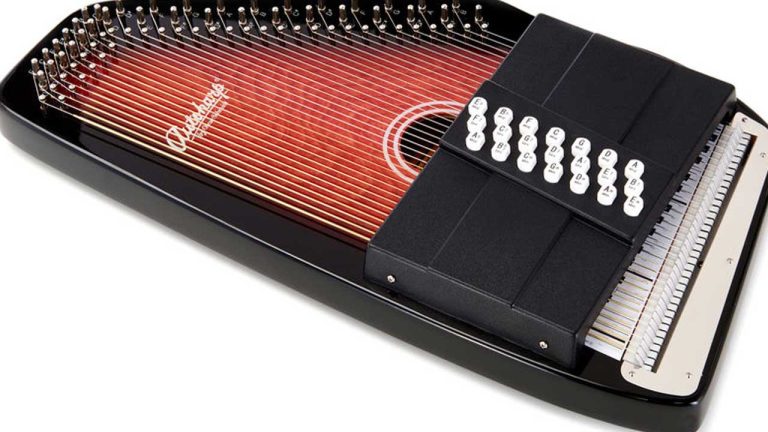
Autoharp Troubleshooter — Common Problems and How to Fix Them
Folkstrings.com is reader-supported. When you buy through links on our site, we may earn a small commission.
Last Updated on July 11, 2026 by folkstrings
Autoharp Troubleshooter
Select the problem you are having to see likely causes and fixes
Won’t stay in tune
Strings go flat or sharp shortly after tuning
Buzzing or rattling
A buzz or rattle when strumming, often on specific strings
Chord bars stick
A bar stays down after pressing or feels stiff
One string sounds dull
A single string lacks resonance — not a pitch problem
Chords sound wrong when tuned
Individual strings are in tune but chords sound off
Strings don’t sound
Strumming produces silence on one or more strings
🎵 Won’t stay in tune
Likely Causes
•New strings not yet stretched
•Tuning pins are loose and slipping
•Temperature or humidity changes causing wood movement
•Strings not properly wound around tuning pins
Fixes to Try
✓New strings: retune daily for one to two weeks until they settle
✓Loose pins: tighten a quarter turn at a time with tuning wrench
✓Store away from direct sunlight, radiators and cold windows
✓Ensure at least three full winds around each tuning pin
When to see a technician: If pins spin freely and will not hold, the pin hole may be stripped. Requires a luthier.
🔊 Buzzing or rattling
Likely Causes
•Worn felt pads under chord bars
•String not seated against its bridge pin
•Loose string end rattling inside the soundbox
•Chord bar spring or mechanism is loose
Fixes to Try
✓Press each bar slowly and listen for which string buzzes
✓Inspect felt pads: if compressed flat or torn, replace them
✓Check inside the soundbox for loose string ends and trim them
✓Ensure all strings are properly seated in their bridge pin grooves
⬇️ Chord bars stick
Likely Causes
•Dust and debris in the bar mechanism
•Worn or misaligned felt pads causing friction
•Spring under the bar has weakened
•Humidity causing wood to swell
Fixes to Try
✓Use a soft dry brush to clean around the bar mechanism
✓Apply powdered graphite to bar guide rails — not oil or WD40
✓Check that felt pads are aligned flat
✓If humidity is the cause, allow to dry in stable environment for 24 hours
🎼 One string sounds dull
Likely Causes
•That string is old and corroded
•String is kinked or damaged
•String is not properly tensioned
•Small crack or separation in the soundboard at that position
Fixes to Try
✓Replace the string
✓Check for visible kinks or bends and replace if found
✓Wound strings: check for discolouration or rough texture indicating corrosion
✓Inspect the soundboard visually around that string for any cracking
♯ Chords sound wrong when tuned
Likely Causes
•Felt pads on bars are uneven, changing string pitch slightly when pressed
•One string in the chord is tuned to wrong octave
•A bar is not pressing all its strings fully down
•Intonation issue across the string range
Fixes to Try
✓Check each string in the chord individually while pressing the bar
✓Inspect felt pads for uneven wear and replace any that are compressed unevenly
✓Press bars firmly with thumb centred — partial pressure causes pitch shift
✓Verify pitch with a chromatic tuner both open and when bar is pressed
🔇 Strings don’t sound
Likely Causes
•Chord bar felt pads not fully muting correct strings
•Bar not making full contact across its width
•String has broken at the hitch pin inside the soundbox
•String caught under an adjacent bar
Fixes to Try
✓Strum open with no bars pressed and check all strings sound
✓Press bars firmly — if a bar does not fully span, felt replacement may be needed
✓Check inside the soundbox at the hitch pins for a broken string end
✓Check string routing to ensure no string is caught under a neighbouring bar
Tool by Folkstrings.com
When to Take It to a Technician
Most autoharp problems are fixable at home. The issues that require a specialist are: stripped tuning pin holes that will not hold tension, cracks in the soundboard or frame, chord bars with broken springs, and any structural damage to the bridge or hitch pin rail. For everything else, work through the troubleshooter above first.
For tuning help: our autoharp tuning guide covers the full process. For strings: our autoharp string gauge guide shows which gauges to use.
Author Profile

- Daniel Johnstone is an English writer and folk musician who has been playing stringed instruments for over twenty years. He started on guitar as a teenager before working his way through cavaco, tenor guitar, autoharp, mountain dulcimer, and harp. He founded Folkstrings.com to provide practical, experience-based buying advice for folk instrument players at every level — the kind of guidance he always wished had existed when he was finding his feet.
Latest entries
 Useful ToolsJuly 11, 2026Tin Whistle Fingering Chart — All Notes in Both Octaves (D and C Whistle)
- BanjoJuly 11, 2026Banjo String Gauges — Complete Guide for 5-String, Tenor and Irish Tenor
- HarpJuly 11, 2026Harp String Chart — How to Identify and Replace Any Harp String
- DulcimerJuly 11, 2026Mountain Dulcimer Chord Chart — Key of D in DAD Tuning