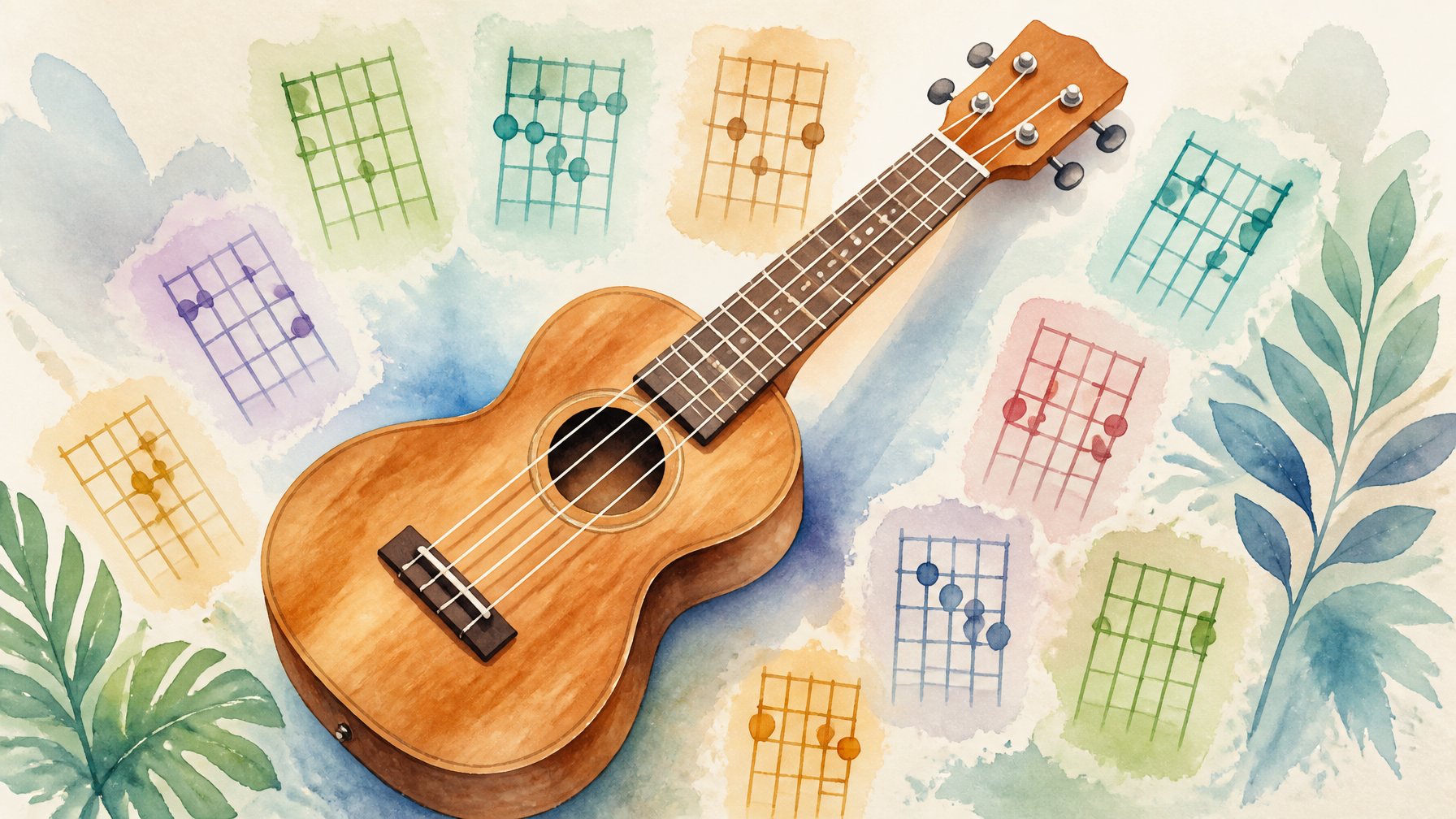
Ukulele Beginner Chord Chart — 12 Essential Chords for Standard GCEA Tuning
Folkstrings.com is reader-supported. When you buy through links on our site, we may earn a small commission.
Last Updated on July 11, 2026 by folkstrings
Ukulele Beginner Chord Chart
Standard GCEA tuning. Verified fingering positions for the 12 essential chords.
The Chords You Need to Play Most Songs
The four most important chords on ukulele are C, G, Am and F. With those four you can play hundreds of folk, pop and rock songs without touching anything else. Learn those first — particularly the transitions between them — before moving on to D, Em or any of the other shapes.
C is the easiest chord on the instrument — one finger, third fret of the A string. Am is almost as easy — one finger on the G string. F requires two fingers and is the first real coordination challenge. G requires three fingers and is typically where beginners spend the most practice time because the shape feels awkward initially but becomes fast with repetition.
Tips for Learning Chord Transitions
The chord itself is not the hard part — the transition between chords is. Practice moving between two chords slowly before trying to play them in time. The most important transitions to master first are C to Am, C to F, and G to C. Once those feel smooth at slow speed, everything else follows more quickly.
A common mistake is lifting all fingers off the fretboard between chords and re-placing them individually. Instead, try to move all fingers simultaneously as a single unit. This drastically reduces transition time once the muscle memory develops.
For tuning and setup, see our ukulele tuning reference. For playing in different keys using a capo, see our ukulele capo chart.
Author Profile

- Daniel Johnstone is an English writer and folk musician who has been playing stringed instruments for over twenty years. He started on guitar as a teenager before working his way through cavaco, tenor guitar, autoharp, mountain dulcimer, and harp. He founded Folkstrings.com to provide practical, experience-based buying advice for folk instrument players at every level — the kind of guidance he always wished had existed when he was finding his feet.
Latest entries
 Useful ToolsJuly 11, 2026Tin Whistle Fingering Chart — All Notes in Both Octaves (D and C Whistle)
- BanjoJuly 11, 2026Banjo String Gauges — Complete Guide for 5-String, Tenor and Irish Tenor
- HarpJuly 11, 2026Harp String Chart — How to Identify and Replace Any Harp String
- DulcimerJuly 11, 2026Mountain Dulcimer Chord Chart — Key of D in DAD Tuning