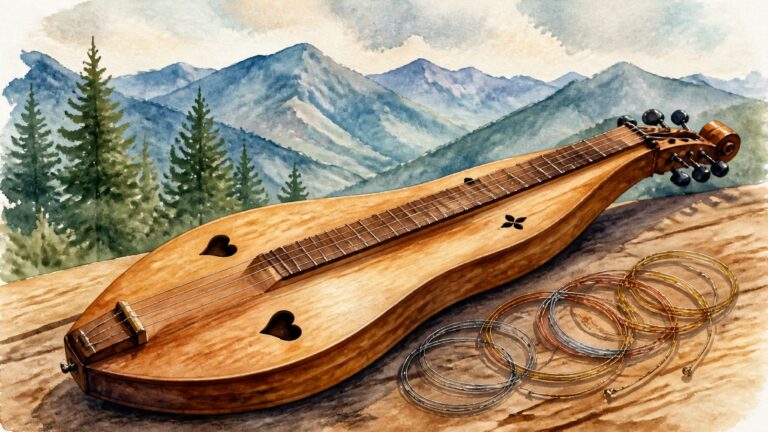
Mountain Dulcimer Tuning Reference — DAD, DGD, DAA and All Common Tunings
Folkstrings.com is reader-supported. When you buy through links on our site, we may earn a small commission.
Last Updated on July 11, 2026 by folkstrings
Mountain Dulcimer Tuning Reference
Click any tuning card for the fretboard map and notes
Quick Reference
| Tuning | Mode | Best For |
|---|
How to Choose the Right Dulcimer Tuning
Most beginners start in DAD and stay there for months — which makes complete sense. DAD is the standard tuning, most method books are written for it, and the Ionian (major) scale it produces works for the majority of folk and traditional songs you’ll want to learn. There’s no reason to explore other tunings until DAD feels comfortable.
When you do start exploring, the most useful next step is usually DGD — the Mixolydian tuning. The flat seventh it produces opens up a whole category of modal Appalachian tunes that sound slightly wrong in DAD and completely natural in DGD. Shady Grove is the classic example: most dulcimer players eventually learn it in DGD because that’s where it belongs.
DAA is useful if you want a stronger drone effect — both the middle and melody strings sitting on A creates a fuller, more sustained sound when you strum across all three strings. Some players find it easier to play accompaniment in DAA because the doubled A strings give a stronger harmonic anchor.
The minor tunings — DAC for Aeolian, EAE (Sawmill) for Dorian — are worth knowing if you want to play in minor keys. The dulcimer’s diatonic fretboard means minor keys aren’t naturally available in DAD without using partial fretting or noter technique, so retuning is often the practical solution.
For more on getting started with dulcimer: our mountain dulcimer tuning guide covers the tuning process in detail, including which tuner to use and how to approach the strings systematically.
Author Profile

- Daniel Johnstone is an English writer and folk musician who has been playing stringed instruments for over twenty years. He started on guitar as a teenager before working his way through cavaco, tenor guitar, autoharp, mountain dulcimer, and harp. He founded Folkstrings.com to provide practical, experience-based buying advice for folk instrument players at every level — the kind of guidance he always wished had existed when he was finding his feet.
Latest entries
 Useful ToolsJuly 11, 2026Tin Whistle Fingering Chart — All Notes in Both Octaves (D and C Whistle)
- BanjoJuly 11, 2026Banjo String Gauges — Complete Guide for 5-String, Tenor and Irish Tenor
- HarpJuly 11, 2026Harp String Chart — How to Identify and Replace Any Harp String
- DulcimerJuly 11, 2026Mountain Dulcimer Chord Chart — Key of D in DAD Tuning