Kalimba Note Layout Reference — 10, 17 and 21-Key Tine Positions
Folkstrings.com is reader-supported. When you buy through links on our site, we may earn a small commission.
Last Updated on July 11, 2026 by folkstrings
Kalimba Note Layout Reference
Tine positions, scale patterns and thumb guidance for C major kalimbas
Range
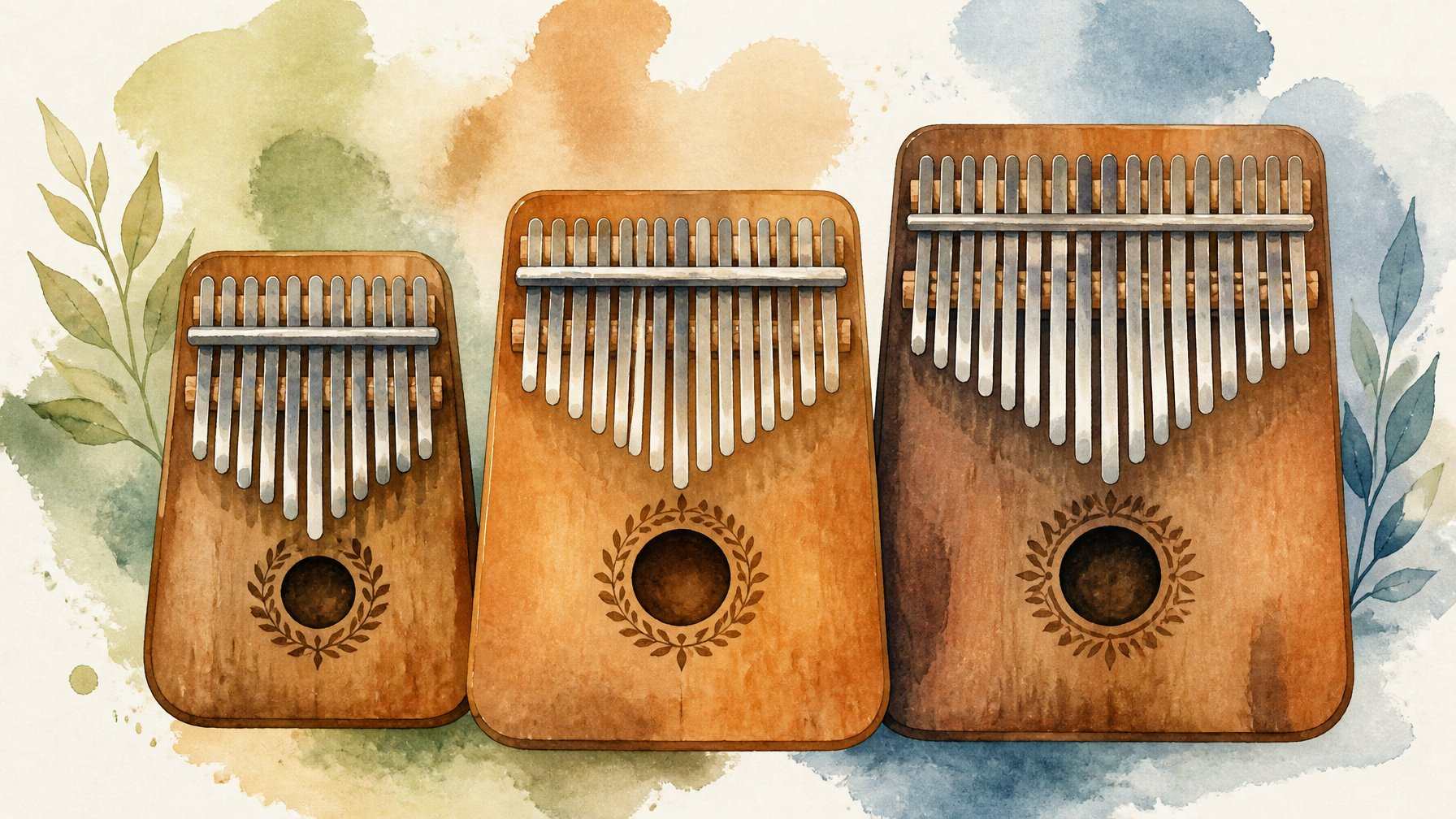
Two full octaves plus a third — low C at center up to high E at the outer tines. Covers the full C major scale twice over.
Playing the scale
Start at center (C, right thumb). Then alternate: D(R), E(L), F(R), G(L), A(R), B(L), C(R). Same pattern continues into upper octave.
C tines as landmarks
There are three C tines on a 17-key kalimba. Most instruments mark them with coloured stickers. Learn to find them by touch before learning any songs.
Adjacent tines
Directly adjacent tines sound bad together — this is intentional. Notes that harmonise well are across from each other on opposite sides, not next to each other.
10-Key Kalimba
The 10-key uses the inner 10 tines of the 17-key layout. The notes are the same — C, D, E, F, G, A, B, C, D, E — without the outer upper tines. Everything you learn on a 10-key transfers directly to a 17-key. If you have a 17-key, you can treat the inner 10 tines as a 10-key for learning.
21-Key Kalimba
The 21-key has the same layout as the 17-key but adds four lower bass tines: F, G, A and B below the lowest C. These extend the bass range and allow richer accompaniment. They appear as the outermost tines on each side.
When to choose 21-key
The 21-key suits players who want more bass accompaniment options or more complex arrangements. For learning songs and basic playing, the 17-key covers most repertoire. The extra tines add navigational complexity without a dramatic increase in musical range for most songs.
Why the Kalimba Layout Feels Weird at First
Unlike a piano where notes run from low on the left to high on the right, the kalimba places its lowest note in the centre with pitch increasing as you move outward toward both edges. Adjacent tines do not play adjacent scale notes — you alternate between left and right thumbs to move up the scale. This takes a short adjustment period but becomes intuitive quickly, and the layout makes chord shapes naturally easy to find by feel.
For more on getting started with kalimba, see our best kalimba buying guide.
Author Profile

- Daniel Johnstone is an English writer and folk musician who has been playing stringed instruments for over twenty years. He started on guitar as a teenager before working his way through cavaco, tenor guitar, autoharp, mountain dulcimer, and harp. He founded Folkstrings.com to provide practical, experience-based buying advice for folk instrument players at every level — the kind of guidance he always wished had existed when he was finding his feet.
Latest entries
 Useful ToolsJuly 11, 2026Tin Whistle Fingering Chart — All Notes in Both Octaves (D and C Whistle)
- BanjoJuly 11, 2026Banjo String Gauges — Complete Guide for 5-String, Tenor and Irish Tenor
- HarpJuly 11, 2026Harp String Chart — How to Identify and Replace Any Harp String
- DulcimerJuly 11, 2026Mountain Dulcimer Chord Chart — Key of D in DAD Tuning