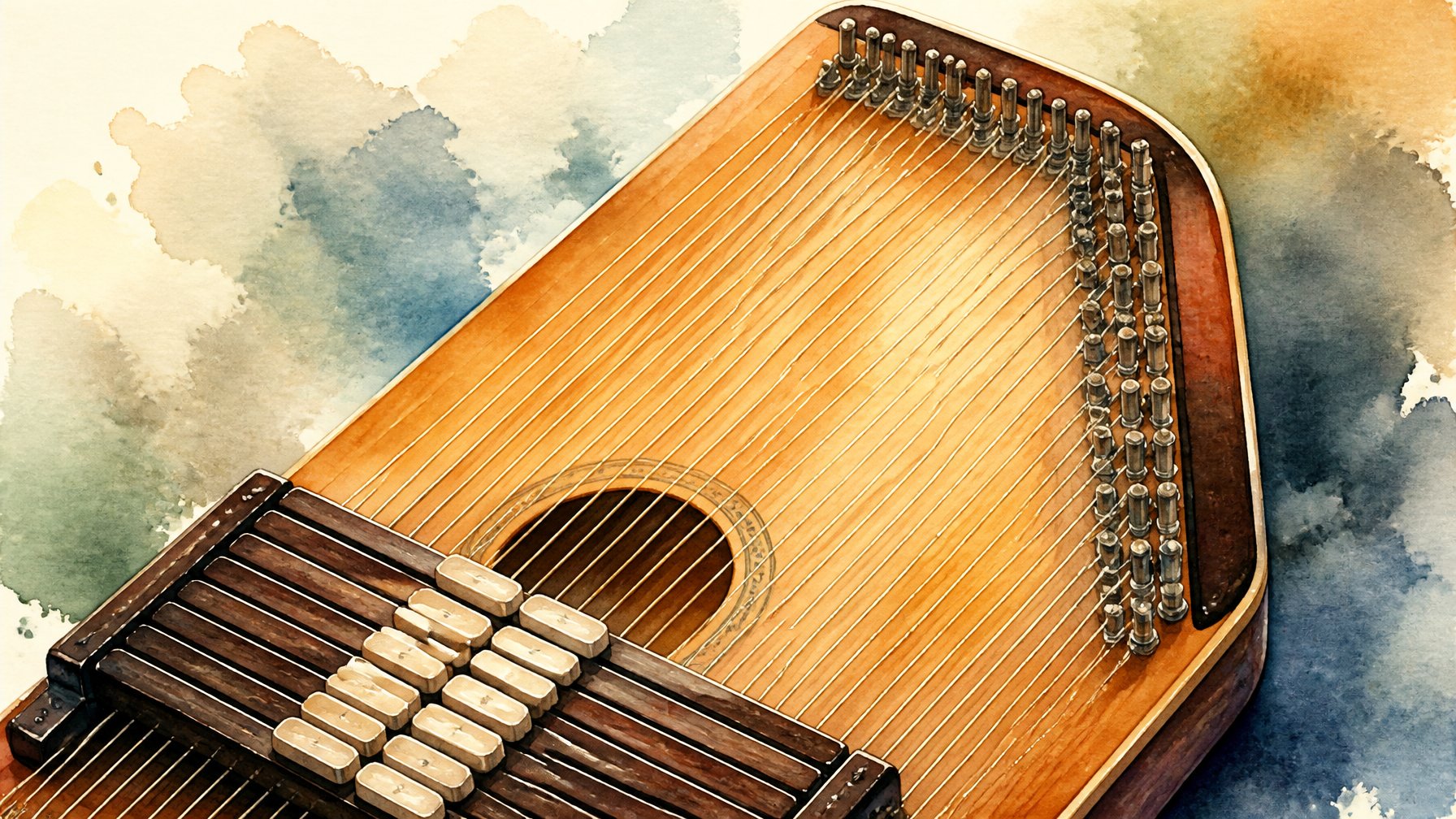
Autoharp Chord Reference Tool — Which Bars to Use in Any Key
Folkstrings.com is reader-supported. When you buy through links on our site, we may earn a small commission.
Last Updated on July 9, 2026 by folkstrings
Autoharp Chord Reference
Select a key to see which chord bars you need
Common Progressions
Which Keys Work Best on a Standard 21-Chord Autoharp?
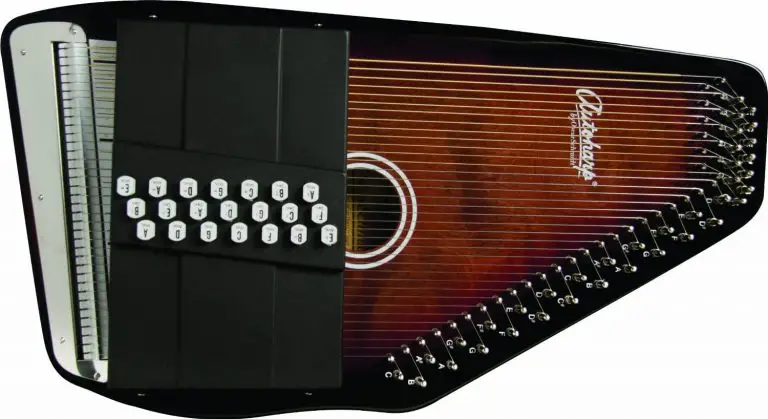
A standard 21-chord autoharp is designed around a specific set of keys — it covers them well but doesn’t cover every possible key. The most comfortable keys are C, F, G, D and A for major playing, and Am, Dm and Em for minor. These keys have all their essential chord bars present and most of their commonly used chords available.
The keys of Bb and E are playable but slightly more limited — Bb lacks an Eb chord (the IV chord in some Bb progressions), and E is missing the B major chord, which means you rely on B7 as the dominant. Both are usable in practice; most folk and country songs work fine within the available bars.
If you’re just starting out, C and G are the best keys to begin with. They have the cleanest bar layouts, the most learning resources written in them, and most beginner folk songs are either in C or G or can easily be adapted to them with a capo on the guitar if you’re playing alongside one.
How to Use This Tool When Learning a Song
When you pick up a new song, the first thing to establish is the key. Most sheet music and chord charts will tell you — if not, the chord the song starts and ends on is usually the tonic (the I chord), which tells you the key. Once you know the key, select it in the tool above and you’ll immediately see which bars are your core three and which others you’re likely to need.
A useful habit: before you start a song, locate all the chord bars you’ll need and run through them in the order the song uses them a few times without strumming. Getting your hand familiar with the bar positions before adding the strumming arm removes one variable from the learning process and speeds things up considerably.
For more on getting started: our complete autoharp beginner’s guide covers technique, instrument choice and what to learn first. Our autoharp tuning guide covers keeping it in tune — essential before any of this makes sense.
Author Profile

- Daniel Johnstone is an English writer and folk musician who has been playing stringed instruments for over twenty years. He started on guitar as a teenager before working his way through cavaco, tenor guitar, autoharp, mountain dulcimer, and harp. He founded Folkstrings.com to provide practical, experience-based buying advice for folk instrument players at every level — the kind of guidance he always wished had existed when he was finding his feet.
Latest entries
 AutoharpJuly 9, 2026Autoharp Chord Reference Tool — Which Bars to Use in Any Key
 Beginners GuidesJuly 9, 2026Which Folk Instrument Should I Learn? — Take the Quiz
 AsianJune 21, 2026What Is the Sarod Instrument?
 ViolinJune 21, 2026How Hard Is It to Learn the Violin?