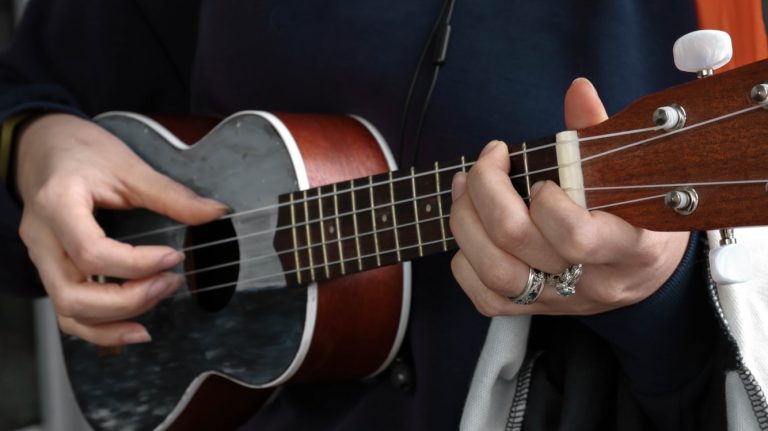
How to Learn the Ukulele Fast -Top 7 Tips
Folkstrings.com is reader-supported. When you buy through links on our site, we may earn a small commission.
Last Updated on June 20, 2026 by folkstrings
I’ll be honest, the ukulele is the fastest I’ve ever picked up an instrument. Within a couple of weeks of getting one, I could strum through a handful of real songs without stopping every few seconds to find the next chord. That’s not a brag — it’s basically the whole point of this instrument. Soft nylon strings, a tiny neck, four strings instead of six. Everything about it is designed to get out of your way.
The catch is that “easy to start” and “easy to actually learn well” aren’t quite the same thing. Plenty of people get the first few chords down fast, then plateau because nobody told them what actually moves the needle after that. These are the things that genuinely made the difference for me.
Why the Ukulele Is Genuinely Quick to Pick Up
If you’ve played guitar before, you’ll notice the difference immediately. The strings are nylon, not steel, so there’s none of the early finger pain that puts a lot of beginner guitarists off. The neck is short enough that you’re not stretching across frets, and with only four strings there are simply fewer things to get wrong at once. None of that means it plays itself — but it does mean the first month is a lot more forgiving than it is on most stringed instruments.
How Long Does It Actually Take to Self-Teach?
If your goal is just to play a handful of songs for friends and family, a few weeks of regular practice gets you there. If you want to actually feel comfortable on the instrument — switching chords cleanly, keeping rhythm without thinking about it — six months of consistent practice is a realistic target for most people. A teacher speeds this up, but plenty of people, myself included, get there fine without one.
The Tips That Actually Made a Difference
1. Tune It Every Single Time
This sounds obvious until you’re the person who’s spent ten minutes confused about why a chord sounds wrong, only to realise the G string had drifted. Get a clip-on tuner, or use a phone app, and make it a genuine habit before every practice session, not just when something sounds off.
2. Get Your Hold Right Before Anything Else
Sit upright, rest the body of the instrument against your forearm just below your chest, and let your other hand do the fretting without gripping the neck for dear life. Bad posture early on turns into bad habits that are genuinely annoying to unlearn later.
3. Learn These Five Chords First
G, C, F, D, and A. That’s it. Between these five you can play a genuinely large chunk of the songs people actually want to learn. I’d rather you get these five solid than spread thin across fifteen chords you can barely switch between.
4. Let Muscle Memory Do the Work
Repetition is doing more of the heavy lifting here than conscious effort. Practice a chord change, take a short break, come back and do it again. It feels slow at first and then, almost without noticing, your hand just knows where to go.
5. Practice With a Metronome
Set it slow and steady. Counterintuitively, deliberately practicing slower is what gets you playing in time faster — rushing through chord changes badly just teaches your hands to do it badly, quickly.
6. Hum the Melody While You Play
This feels a bit silly the first time you try it, but it genuinely helps. Humming the tune while you strum trains your sense of timing and gets you used to coordinating your voice with your hands, which makes the next step a lot less daunting.
7. Move on to Actually Singing While You Play
Start with a simple, steady down-strum pattern and sing along properly. This is where it stops feeling like an exercise and starts feeling like playing music, which, honestly, is the whole reason most people pick the instrument up in the first place.
Easy Songs to Learn on the Ukulele
The easiest songs to start with are the ones built around just three or four chords. A few I’d genuinely recommend for a first attempt:
- “Dreams” by Fleetwood Mac
- “Somebody That I Used to Know” by Gotye
- “Stay With Me” by Sam Smith
- “Three Little Birds” by Bob Marley
- “Just the Way You Are” by Bruno Mars
- “Chasing Cars” by Snow Patrol
Pick one you actually like rather than the technically easiest option — genuinely enjoying the song is what keeps you practicing it past the first frustrating attempts.
Where to Actually Find Good Lessons
YouTube has a huge amount of free ukulele content, and most of it is genuinely useful for the basics. Two channels that consistently show up as genuinely solid teaching resources, not just popular: Ukulele Underground, for structured song tutorials and play-alongs, and Cynthia Lin, for clear, well-paced lessons aimed at real beginners. Both go well beyond “here’s how to play Somewhere Over the Rainbow” and actually build toward proper technique.
If you find a teacher whose style you like and they offer a paid course, it’s often worth it — a bit of structure goes a long way. Just make sure whoever you follow actually slows down to explain the parts that are genuinely difficult, rather than skimming past them to keep the video moving.
Conclusion
Don’t overthink this one. The ukulele is genuinely one of the most forgiving instruments to start on, and a few weeks of honest practice will get you further than you’d expect. If you haven’t picked one up yet, my guide to choosing your first ukulele and my current picks for beginners are good places to start. If you’re not sure which brand to trust, I’ve also written about which ukulele brands are actually worth it, and if you’d rather buy secondhand, here’s what to check before you do. Once you’ve got your five chords down, my list of beginner-friendly songs is the natural next step.
Author Profile

- Daniel Johnstone — Dániel to his friends back in Miskolc — is a Hungarian folk musician and writer who has been playing stringed instruments for over twenty years. Growing up in northeastern Hungary with a family steeped in folk music, he developed an early obsession with Celtic and Appalachian styles that eventually brought him to the UK. He worked his way through tenor banjo, 5-string banjo, autoharp, mountain dulcimer, mandolin, ukulele, harp and kalimba — most of them acquired through trial, error and more money than he'd like to admit. He founded Folkstrings.com to cut through the noise: practical, experience-based guides to instruments, strings, gear and accessories for folk players at every level.
Latest entries
 Useful ToolsJuly 15, 2026Violin Fingering Chart — First Position Notes on All Four Strings
 BanjoJuly 14, 2026Is Banjo Hard to Learn? Here’s What Nobody Tells You
 MandolinJuly 14, 2026Online Mandolin Lessons — What YouTube Can’t Teach You (And What Can)
 Useful ToolsJuly 13, 2026Recorder Fingering Chart — Complete Guide for Soprano Recorder (Baroque and German)