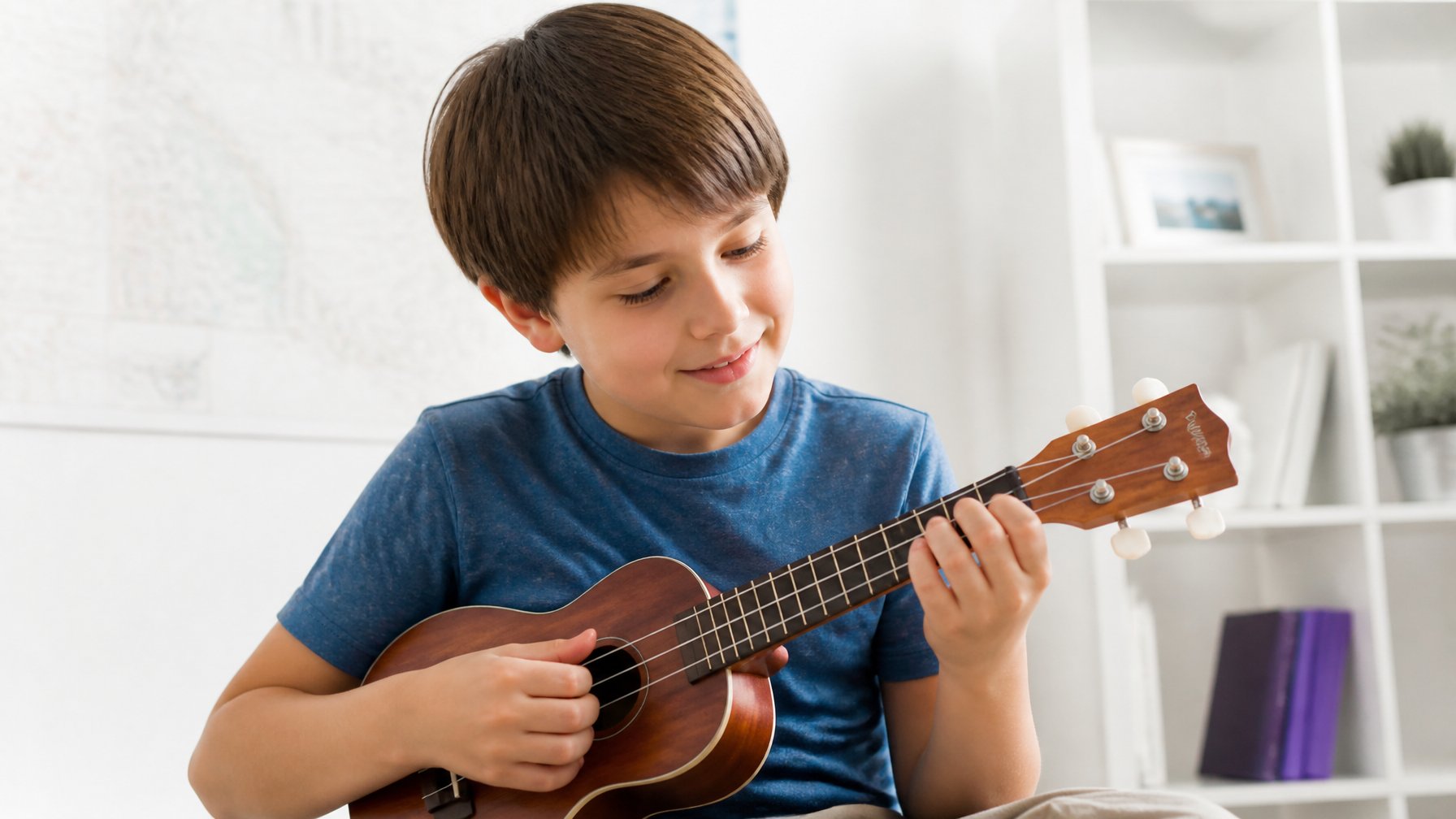
Best Ukulele for Kids: How to Spot a Real Instrument (Not a Toy)
Folkstrings.com is reader-supported. When you buy through links on our site, we may earn a small commission.
Last Updated on June 22, 2026 by folkstrings
If you’re buying a ukulele for a child, your main worry probably isn’t price — it’s whether you’re about to hand over money for something that’s actually playable, or a toy dressed up to look like an instrument. That worry is genuinely well-founded. While researching this guide, I found actual toy ukuleles sitting in the same search results as real instruments, priced similarly, with no obvious indication to a casual shopper which is which.
So before anything else: here’s how to tell the difference, and three real instruments that are genuinely good for kids, not just marketed at them.
How to Spot a Toy Ukulele Before You Buy
A few real warning signs I came across: if the listing calls it a “musical toy” anywhere in the title, it’s a toy. If the price is under about $15-20, it’s almost certainly a toy — a real, playable wooden ukulele simply doesn’t cost that little. And if the strings are plastic rather than nylon, it won’t hold a tune properly, which means your child will get frustrated fast for reasons that have nothing to do with their ability.
None of that means you need to spend a fortune — all three of my picks below are under $80 — just that “cheap toy” and “affordable real instrument” aren’t the same thing, even when they look similar in a search results page.
Quick Comparison
| Model | Best For | Reviews | Price | |
|---|---|---|---|---|
| ADM Beginner Kit | Most proven | 5,639 reviews | $40.99 | Check Price → |
| Kala MK-S Makala Bundle | Most trusted brand | 527 reviews | $79.99 | Check Price → |
| CAHAYA Beginner Kit | Most reassuring | 318 reviews | $41.99 | Check Price → |
1. ADM Ukulele Beginner Kit for Kids — Most Proven
Over 5,600 reviews is a genuinely enormous track record, and what stands out reading through them is how often parents specifically mention their kids by name when describing how it’s gone. That’s a stronger signal than a generic “good quality” review. The kit includes everything needed to get started, which matters if you don’t want a separate trip for a tuner and gig bag.

- 5,639 reviews — by far the most-trusted kids’ ukulele on Amazon
- Reviewers specifically describe it as great for children, not just “suitable for”
- Comes as a full kit — gig bag, tuner, strap, lessons included
- Worth knowing honestly: durability feedback is mixed — most find it holds up fine, a few report issues, so it pays to handle it with at least some care
2. Kala MK-S Makala Soprano Ukulele Bundle — Most Trusted Brand
If brand reassurance matters more to you than raw review count, Kala is one of the most established names in ukuleles, full stop — not just in the budget bracket. Reviewers specifically describe the build as sturdy, which is exactly what you want to hear before handing an instrument to a child.

- 527 reviews, sturdy construction specifically called out by reviewers
- Kala is one of the most established names in ukuleles — genuinely useful if you want brand reassurance
- One reviewer mentioned their child learned a new song in 10 minutes
- Comes with gig bag, tuner, and online lessons
3. CAHAYA 21 Inch Ukulele Beginner Kit — Most Reassuring
This is the one I’d point to if you specifically want the “this is real, not a toy” reassurance — reviewers use almost exactly that language unprompted. The rainbow strap and fretboard stickers add a bit of fun without tipping it into toy territory.

- 318 reviews — reviewers specifically describe it as a “real-wood instrument,” not a toy
- Comes with a fun rainbow strap and fretboard stickers that genuinely help with learning note positions
- A sensible middle ground between a serious instrument and something that still feels fun for a child
What Size Ukulele Does a Kid Actually Need?
Soprano is the right call for almost every child — it’s the smallest standard size, with the shortest neck and the least reach between frets. All three picks above are soprano. A concert or tenor ukulele isn’t dangerous or unusable for a child, it’s just a stretch they don’t need to make when a smaller instrument exists and sounds just as good for learning on.
There isn’t a strict minimum age — it comes down to whether a child can comfortably wrap their hand around the neck and reach the first few frets without strain. Most kids manage that from around 5-6 years old, though it varies.
Once your child has a real instrument in hand, my guide on learning the ukulele quickly covers the same basics that work for adults and kids alike, and my list of easy first songs is a good next stop. If you’re also considering an adult-sized instrument for yourself at the same time, my general buying guide covers that separately.
Frequently Asked Questions
What is the best ukulele for kids?
How do I know if a ukulele is a real instrument or a toy?
What size ukulele is right for a child?
What age can a child start learning the ukulele?
Conclusion
All three of these are genuine, playable instruments backed by real reviews from other parents, not marketing claims. If you want the safest bet, go with the ADM kit — the review history alone makes it hard to argue with. If brand name matters more to you, Kala is the more established name. Either way, your child is starting on something real, which matters more for keeping their interest than almost anything else.
Author Profile

- Daniel Johnstone — Dániel to his friends back in Miskolc — is a Hungarian folk musician and writer who has been playing stringed instruments for over twenty years. Growing up in northeastern Hungary with a family steeped in folk music, he developed an early obsession with Celtic and Appalachian styles that eventually brought him to the UK. He worked his way through tenor banjo, 5-string banjo, autoharp, mountain dulcimer, mandolin, ukulele, harp and kalimba — most of them acquired through trial, error and more money than he'd like to admit. He founded Folkstrings.com to cut through the noise: practical, experience-based guides to instruments, strings, gear and accessories for folk players at every level.
Latest entries
 Useful ToolsJuly 15, 2026Violin Fingering Chart — First Position Notes on All Four Strings
 BanjoJuly 14, 2026Is Banjo Hard to Learn? Here’s What Nobody Tells You
 MandolinJuly 14, 2026Online Mandolin Lessons — What YouTube Can’t Teach You (And What Can)
 Useful ToolsJuly 13, 2026Recorder Fingering Chart — Complete Guide for Soprano Recorder (Baroque and German)