6 Annoying Aches and Pains From Playing Guitar and How to Avoid Them
Folkstrings.com is reader-supported. When you buy through links on our site, we may earn a small commission.
Last Updated on July 2, 2026 by folkstrings
I’ve played stringed instruments long enough to have dealt with most of what’s on this list personally, or at least heard about it from players I know. Most guitar aches and pains are not inevitable — they’re the result of specific habits that can be identified and fixed. But a few are worth taking seriously, and knowing which is which matters.
Table of Contents
- Finger Pain and Numbness
- Forearm Pain (Tennis Elbow)
- Shoulder and Neck Pain
- Pinched Nerve
- Chest Pain
- The Injury That Causes All the Others: Playing Through Pain
Finger Pain and Numbness
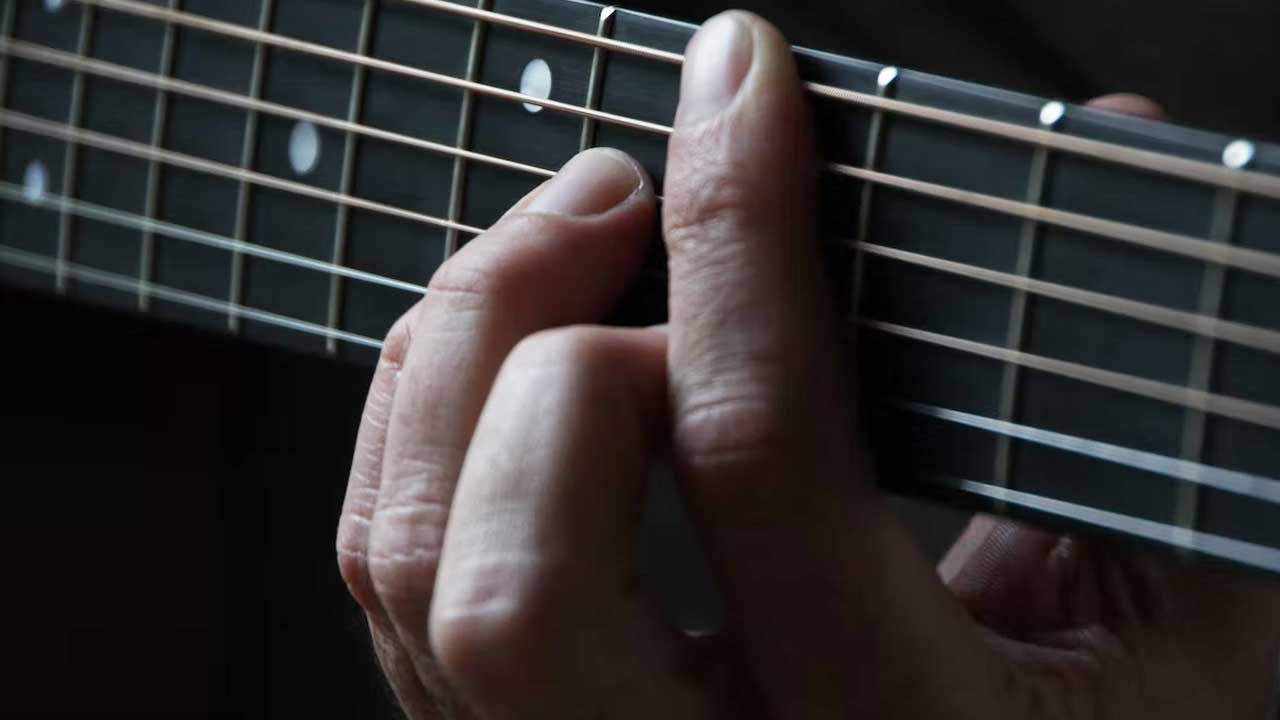
Finger pain in new players is almost always one of two things: the fingertips haven’t built calluses yet, or you’re pressing the strings much harder than you need to. Both are fixable. Fretting a string only requires enough pressure to stop it buzzing — most beginners use two or three times that, which tires the hand out fast and puts strain on the joints.
If your fingers feel numb rather than sore, that’s usually a sign of sustained pressure on the fingertip cutting off circulation temporarily — again, most common in new players who grip too hard. It goes away with rest and usually resolves permanently once your technique loosens up.
On calluses: they’re not something to try to get rid of. They’re the natural fix. The fingertip skin hardens with use and the soreness stops. That process takes a few weeks of regular playing. If you stop playing for a month or two they soften again, but they come back faster the second time. The main thing you can do in the meantime is keep sessions short and let the skin recover between them — don’t sand them down or moisturise heavily right after playing.
If you’re in the early stages and want something to get through practice sessions while your fingertips are still tender, silicone finger protectors are a practical short-term solution:

Silicone Guitar Finger Protectors (40 pcs, 5 sizes)
- Soft silicone caps that slip over fingertips — no taping, no waiting
- 5 sizes so they stay on properly while you play
- Under $9 — useful while your fingertips are still toughening up
Forearm Pain (Tennis Elbow)
Lateral epicondylitis — more commonly called tennis elbow — shows up in guitar players who practise too long without rest, or who play with excessive tension in the forearm. The pain is on the outside of the elbow and typically gets worse when you try to lift or twist your arm. It’s caused by overuse of the tendons that attach the forearm muscles to the bone.
The honest fix is rest, and most players don’t want to hear that. But continuing to play through it makes it significantly worse and can turn a two-week problem into a three-month one. The immediate steps are: stop or heavily reduce playing, apply ice for 15–20 minutes a few times a day, and check whether your technique is causing excess tension — a bent wrist when fretting, white-knuckle grip on the pick, hunching over the guitar.
A counterforce brace worn just below the elbow can help manage the pain if you need to keep playing at a reduced level, by redirecting the load away from the inflamed tendon. It doesn’t fix the injury but it reduces day-to-day aggravation:

FREETOO Tennis Elbow Counterforce Brace
- Counterforce design puts targeted pressure on the forearm tendon, reducing strain during use
- Gel pad and adjustable fit — worn just below the elbow while playing
- Around $20 — manages pain while you recover, but rest is still the real fix
If the pain doesn’t improve meaningfully within 2–3 weeks of rest, see a physiotherapist. This is one injury where ignoring it tends to compound the problem.
Shoulder and Neck Pain
Shoulder pain from playing standing up is one of the most common complaints and one of the most directly fixable. Nine times out of ten it’s caused by a strap that’s either too narrow, worn too low, or both — meaning the full weight of the guitar is hanging off one point on your shoulder rather than being distributed across it.
A wider, properly padded strap worn at the right height makes a significant difference. The guitar should sit at roughly the same height whether you’re standing or sitting — if it drops several inches when you stand up, the strap is too long. Levy’s Right Height strap was designed specifically around this: the quick-adjust system lets you dial in the right position and lock it:

Levy’s Right Height Padded Guitar Strap
- 3″ wide padded leather — distributes weight properly across the shoulder
- Quick-adjust RipChord system so you can find and lock the right height easily
- 4.7 stars — one of the most recommended straps for shoulder pain specifically
The other common cause is guitar weight. A Les Paul-style solid body can weigh 9–10 lbs; a Stratocaster-style guitar is typically 6–7 lbs. If you’re doing long standing sets and your shoulder is suffering, switching to a lighter instrument is a legitimate fix — not just a compromise.
For sitting players, the main culprits are crossing your legs (which rotates the pelvis and throws the spine out of alignment), holding the guitar on the wrong leg, and slouching to see the fretboard. Keep your back straight, use a footrest if needed, and try to feel the fretboard by touch rather than by craning your neck to look at it.
Pinched Nerve
A pinched nerve from guitar playing is usually a cervical nerve issue — pressure on a nerve root in the neck caused by sustained poor posture. Symptoms are tingling or numbness that radiates down the arm, sometimes into specific fingers. It’s different from finger numbness caused by direct pressure, which is localised to the fingertip; nerve radiation runs along the full length of the arm or hand.
Most cases resolve with posture correction and rest. If the tingling is persistent, wakes you up at night, or you notice any weakness in the hand, see a doctor — this is one where playing through it and hoping it resolves is not a good strategy.
Chest Pain
Chest tightness or pain from playing is usually postural — the ribcage being compressed by a hunched playing position for extended periods. Stretching the chest and shoulder muscles, sitting up straight, and taking regular breaks typically resolves it. It can also come from repeatedly tensing the chest muscles while playing under the guitar.
That said: if you experience chest pain that feels unusual, comes with shortness of breath or radiates into the arm or jaw, stop playing and get medical advice immediately. Don’t assume it’s posture. Chest pain has too many possible causes to self-diagnose.
The Injury That Causes All the Others: Playing Through Pain
Most serious guitar injuries get serious because the player ignored early warning signs and kept going. Soreness is normal. Pain is not — pain is your body flagging that something is wrong. The habit of stopping when something hurts, resting properly, and returning gradually is what separates players who stay healthy for decades from those who end up with chronic issues at 35.
Warm up before playing — a few minutes of gentle hand stretches and slow scales before jumping into something technically demanding. Keep sessions to a sensible length, especially if you’re returning after a break. And if something hurts, don’t push through it to finish the song.
Author Profile

- Daniel Johnstone — Dániel to his friends back in Miskolc — is a Hungarian folk musician and writer who has been playing stringed instruments for over twenty years. Growing up in northeastern Hungary with a family steeped in folk music, he developed an early obsession with Celtic and Appalachian styles that eventually brought him to the UK. He worked his way through tenor banjo, 5-string banjo, autoharp, mountain dulcimer, mandolin, ukulele, harp and kalimba — most of them acquired through trial, error and more money than he'd like to admit. He founded Folkstrings.com to cut through the noise: practical, experience-based guides to instruments, strings, gear and accessories for folk players at every level.
Latest entries
 MandolinJuly 14, 2026Online Mandolin Lessons — What YouTube Can’t Teach You (And What Can)
 Useful ToolsJuly 13, 2026Recorder Fingering Chart — Complete Guide for Soprano Recorder (Baroque and German)
 UkuleleJuly 12, 2026Gifts For Ukulele Players: 10 Best Picks
 MandolinJuly 12, 2026Gifts For Mandolin Players: 10 Best Picks