Learning the Hammered Dulcimer: What Beginners Should Know
Folkstrings.com is reader-supported. When you buy through links on our site, we may earn a small commission.
Last Updated on June 18, 2026 by folkstrings
Disclosure: Some links in this article are affiliate links. If you buy through them I earn a small commission at no extra cost to you.
The hammered dulcimer is one of those instruments that stops people in their tracks at folk festivals. The shimmer of the strings, the speed of a skilled player’s mallets, the way it fills a room — it’s a genuinely captivating sound. If you’ve found yourself wondering whether you could actually learn to play it, this is my honest account of what that journey looks like.
I’m Daniel Johnstone, and I’ve spent years playing folk string instruments including guitar, cavaco, and harp. The hammered dulcimer is one of the more demanding instruments I’ve studied, but also one of the most rewarding. Let me walk you through what to expect.
Key Points
- The hammered dulcimer is harder to learn than the mountain dulcimer but very much achievable for adult beginners
- The main challenge is internalising the layout — where notes sit on the bridge system takes time
- Mallet technique is critical and often overlooked by beginners
- Most players feel genuinely comfortable within three to six months of consistent practice
- The right hammers make a significant difference to both ease of playing and tone quality
What Makes the Hammered Dulcimer Challenging?
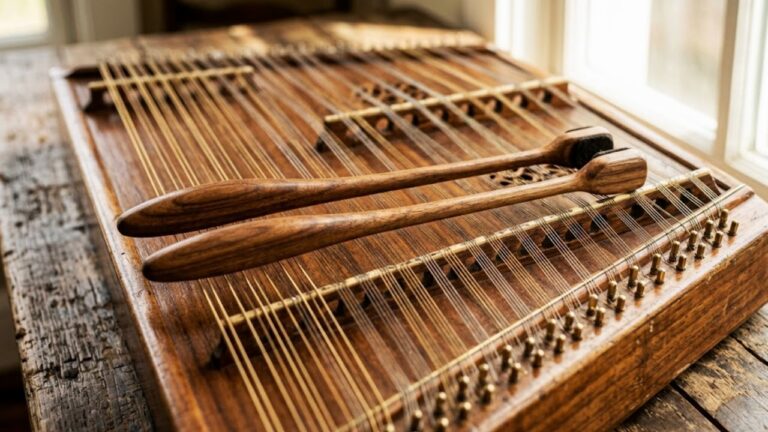
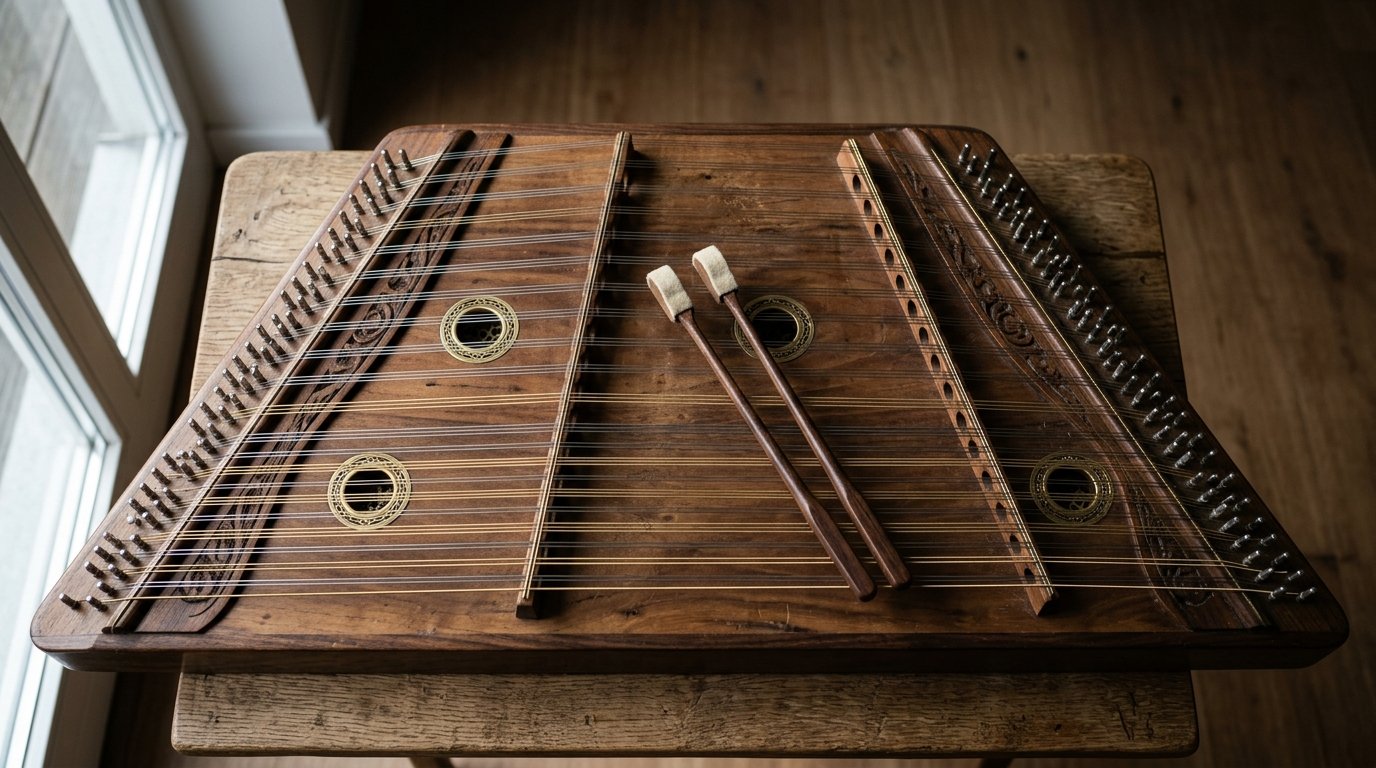
Unlike the mountain dulcimer, which uses a familiar fretted layout similar in concept to a guitar, the hammered dulcimer presents you with a trapezoidal soundboard covered in courses of strings arranged around two bridges. The layout is chromatic and follows a pattern that feels logical once you know it — but it takes a while to internalise.
The other challenge is bilateral independence. Both hands hold mallets and must work together rhythmically, alternating strikes in ways that feel natural on percussion but unfamiliar if you come from a purely melodic instrument background. Your dominant hand tends to lead; getting the non-dominant hand to carry equal weight takes focused practice.
That said, these are learnable challenges. They’re not the kind of thing that separates talented people from the rest — they’re the kind of thing that separates people who practise consistently from those who don’t.
Getting Started: What You Actually Need
A Decent Instrument
You don’t need to spend a fortune as a beginner, but you do need an instrument that stays in tune and has a playable action. A poorly made dulcimer that won’t hold tune will actively impede your learning because you’ll spend every session fighting the instrument rather than making music. Look for something from a reputable builder or a quality import brand — secondhand is often excellent value.
The Right Hammers
This is where many beginners make a costly mistake. The hammers that come bundled with entry-level dulcimers are often too stiff, too heavy, or poorly balanced. Good hammers give you control over dynamics — the difference between a soft passage and a driving rhythm — and they dramatically reduce the fatigue of a long practice session.
I’ve written a full guide to hammered dulcimer hammers covering materials, weight, and what different hammer heads do to your tone. It’s one of the most practically useful things you can read before you start, or when you’re frustrated with your current set.
A Tuner and Stand
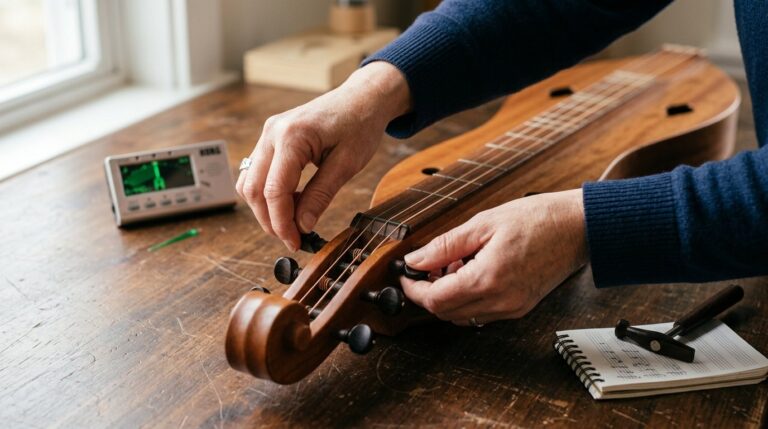
A clip-on chromatic tuner is essential. Hammered dulcimers go out of tune more readily than fretted instruments, especially in the early weeks when strings are still stretching. Tune at the start of every session — no exceptions. A good stand or legs also matters for playing posture; hunching over a dulcimer on a table is a fast route to back pain and inconsistent striking angle.
How to Structure Your Practice
The biggest mistake beginners make is irregular practice. Twenty minutes daily will advance you faster than two hours on a Sunday. The hammered dulcimer rewards repetition and muscle memory above all else — the layout has to become automatic, and that only happens through frequency, not duration.
A useful beginner practice structure looks something like this:
- Five minutes: Tune, warm up with simple scale runs across both bridges at a slow tempo
- Ten minutes: Work on your current tune — slowly, hands together, focusing on note placement
- Five minutes: Play something you already know, just for enjoyment
The last five minutes matters more than people think. Ending on something you can actually play builds positive association with the instrument and keeps you coming back.
Good Tunes for Beginners
Start with tunes that stay largely on one side of the bridges — crossing bridges is a more advanced skill. Simple modal tunes from the Irish and American old-time traditions work well: Scarborough Fair, Shady Grove, Old Joe Clark. These give you something musical to work with while you’re still mapping the layout.
Avoid the temptation to tackle complex Celtic jigs or bluegrass runs in the first month. They’re coming — but the foundations have to be solid first.
How the Hammered Dulcimer Relates to the Mountain Dulcimer
They share a name and a folk music heritage, but they’re quite different instruments to play. The mountain dulcimer is fretted, played on the lap, and significantly easier for complete beginners. If you’re undecided between the two, the mountain dulcimer is a lower-stakes entry point — and the string choices and accessories that come with it are less specialised and easier to source.
Some players learn mountain dulcimer first and then move to hammered later. It’s not necessary — plenty of people start directly on hammered — but if you’re genuinely uncertain which suits you, the mountain dulcimer gives you a faster win while you decide.
Frequently Asked Questions
How hard is it to learn hammered dulcimer?
Moderately challenging — harder than the mountain dulcimer, easier than fiddle or piano. The main hurdles are memorising the note layout and developing bilateral coordination with the mallets. Most dedicated beginners feel genuinely comfortable within three to six months.
Can I teach myself hammered dulcimer?
Yes, though a few lessons or workshops early on will save you a lot of time fixing bad habits. YouTube has good tutorial content, and there are excellent method books. The dulcimer community is active and helpful — online forums and local groups are worth finding.
Do I need to read music to play hammered dulcimer?
No. The hammered dulcimer tradition relies heavily on tablature, letter notation, and learning by ear. Standard notation is useful to have eventually, but it’s not a prerequisite for getting started.
How long does it take to learn to play hammered dulcimer?
Expect a few weeks before simple tunes feel consistent, three months before you’re playing with reasonable fluency, and six months to a year before you can tackle more complex repertoire. Progress is faster with regular daily practice than with occasional longer sessions.
What size hammered dulcimer is best for beginners?
A 15/14 or 16/15 (courses per bridge) is a good starting size — large enough to cover useful range, small enough to be manageable. Very large instruments can feel overwhelming when you’re still learning where everything is.
When it comes to buying your first hammered dulcimer, Reverb is worth checking alongside new options. The secondhand market for hammered dulcimers is active — instruments from makers like Dusty Strings and McSpadden do come up used, and that’s often how players end up with a better instrument earlier than they otherwise would.
Browse on Reverb →Author Profile

- Daniel Johnstone is an English writer and folk musician who has been playing stringed instruments for over twenty years. He started on guitar as a teenager before working his way through cavaco, tenor guitar, autoharp, mountain dulcimer, and harp. He founded Folkstrings.com to provide practical, experience-based buying advice for folk instrument players at every level — the kind of guidance he always wished had existed when he was finding his feet.
Latest entries
 Useful ToolsJuly 11, 2026Tin Whistle Fingering Chart — All Notes in Both Octaves (D and C Whistle)
 Useful ToolsJuly 11, 2026Banjo String Gauges — Complete Guide for 5-String, Tenor and Irish Tenor
 Useful ToolsJuly 11, 2026Harp String Chart — How to Identify and Replace Any Harp String
 Useful ToolsJuly 11, 2026Mountain Dulcimer Chord Chart — Key of D in DAD Tuning