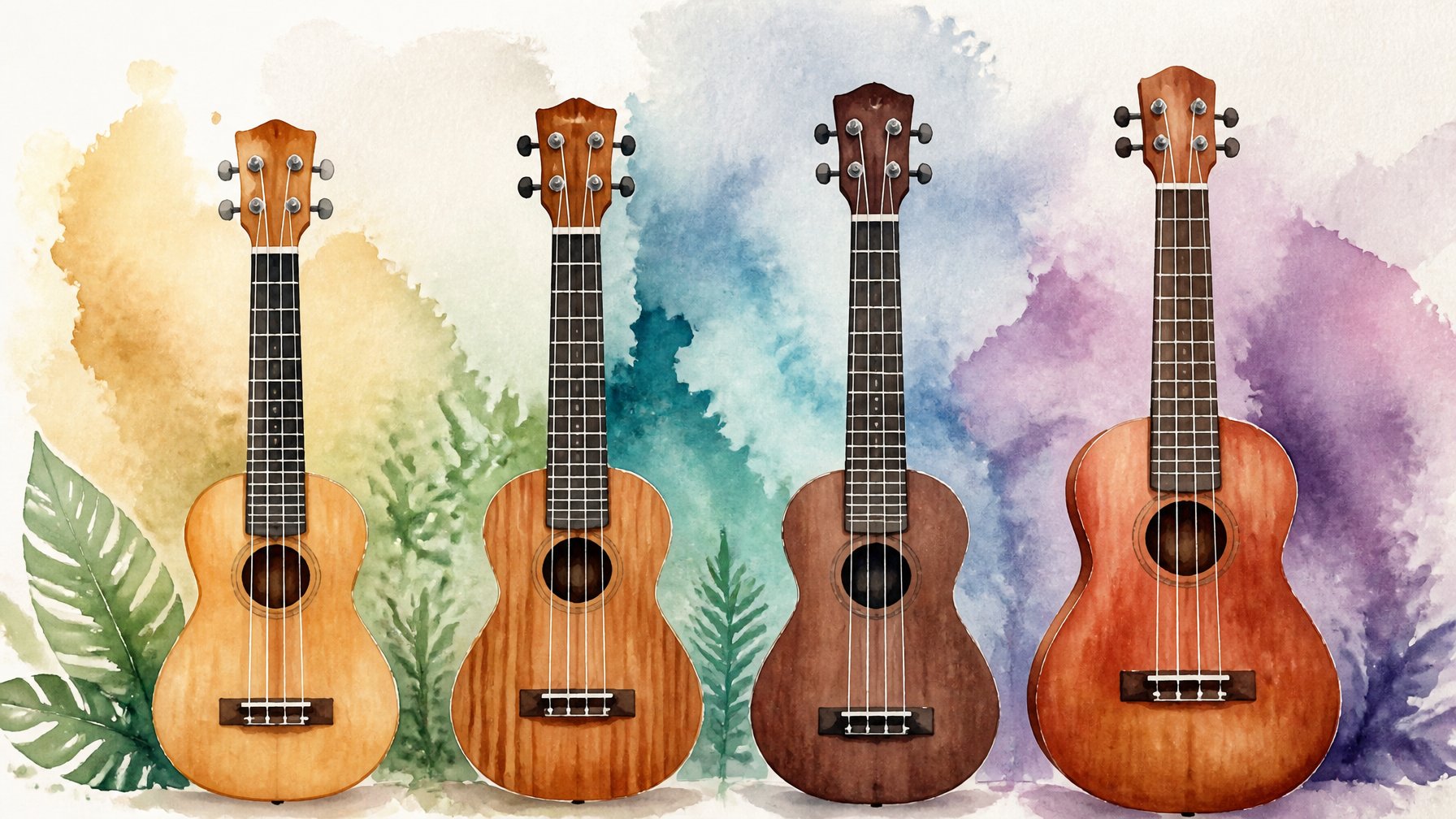
Ukulele Tuning Reference — Standard, Low-G, Baritone and D-Tuning Explained
Folkstrings.com is reader-supported. When you buy through links on our site, we may earn a small commission.
Last Updated on July 11, 2026 by folkstrings
Ukulele Tuning Reference
Standard, low-G, baritone and D-tuning — what each one sounds like and who it suits
Which Tuning Should You Use?
For the vast majority of players — and for anyone just starting out — standard GCEA is the right tuning. All chord charts, tabs, YouTube tutorials and method books assume GCEA unless they explicitly state otherwise.
The one exception is the baritone ukulele, which uses DGBE tuning — the same as the top four strings of a guitar. Standard GCEA chord charts do not work on baritone.
The Re-Entrant Tuning Explained
In standard GCEA the G4 string is higher in pitch than the C4 string — so the pitch goes high, low, medium, high rather than low to high. This is called re-entrant tuning and is what produces the classic ukulele sound. Low-G tuning drops that G string down an octave so the strings run from low to high in the conventional way, adding bass range but losing the re-entrant character.
For more on getting started, see our beginner ukulele guide.
Author Profile

- Daniel Johnstone is an English writer and folk musician who has been playing stringed instruments for over twenty years. He started on guitar as a teenager before working his way through cavaco, tenor guitar, autoharp, mountain dulcimer, and harp. He founded Folkstrings.com to provide practical, experience-based buying advice for folk instrument players at every level — the kind of guidance he always wished had existed when he was finding his feet.
Latest entries
 Useful ToolsJuly 11, 2026Tin Whistle Fingering Chart — All Notes in Both Octaves (D and C Whistle)
 Useful ToolsJuly 11, 2026Banjo String Gauges — Complete Guide for 5-String, Tenor and Irish Tenor
 Useful ToolsJuly 11, 2026Harp String Chart — How to Identify and Replace Any Harp String
 Useful ToolsJuly 11, 2026Mountain Dulcimer Chord Chart — Key of D in DAD Tuning