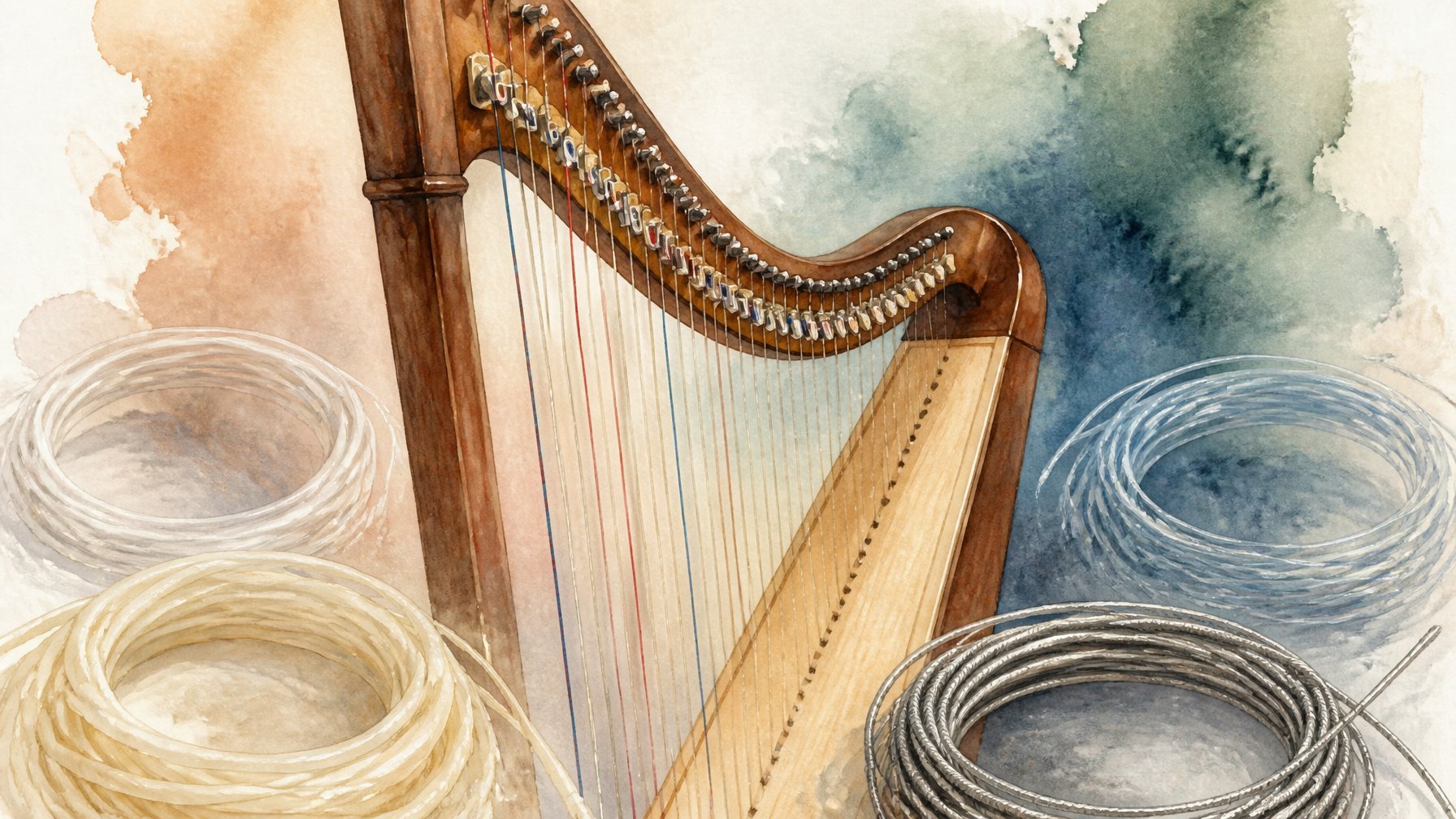
Lever Harp String Materials Guide — Nylon, Gut, Fluorocarbon and Wire Compared
Folkstrings.com is reader-supported. When you buy through links on our site, we may earn a small commission.
Last Updated on July 11, 2026 by folkstrings
Lever Harp String Materials Guide
Click any material to see the full breakdown — tone, feel, stability and who it suits
The Most Important Rule About Harp Strings
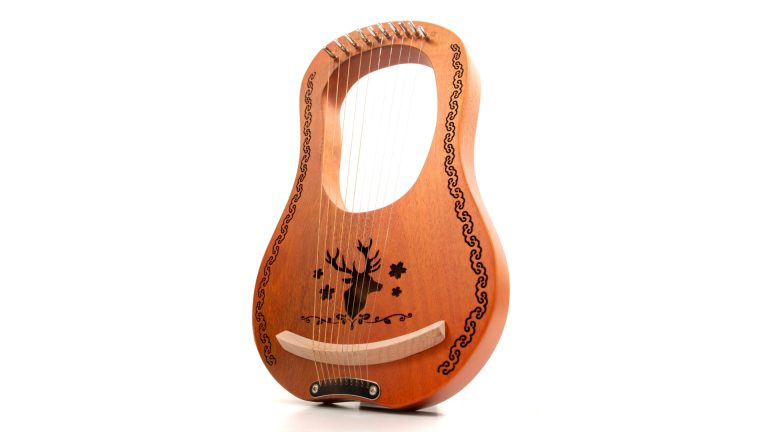
Unlike guitars, violins, or dulcimers, there is no universal standard string set for lever harps. Every maker designs their instrument for a specific string type and tension, and using the wrong strings can damage the harp or void the warranty. Before changing string material on any lever harp, check with the maker. This is not a precaution unique to one brand — Dusty Strings, Rees Harps, and virtually every reputable lever harp maker says the same thing.
With that said, understanding the differences between string materials helps you make sense of the choice your harp maker has already made for you, and helps you make an informed decision if you are choosing a new instrument.
What the C and F Strings Looking Different Means
On every lever harp you will notice that the C strings are red and the F strings are a dark colour, usually dark blue or black. This is a convention that goes back thousands of years in harp history and applies across all string materials. The coloured strings are a navigation aid — they allow players to orientate quickly across the many strings without having to count from the bottom. If you replace a C or F string, always replace it with a string of the correct colour, not a clear or plain one.
Bass Strings Are Always Different
Regardless of which string material your harp uses in the mid and treble range, the lowest bass strings will always be wound — a core string wrapped in a secondary material to add mass without becoming impractically thick. Bass wires (steel or bronze wound) are common on lever harps regardless of whether the upper strings are nylon or gut. These wound bass strings have even more variation between makes and models than the plain strings, and should always be ordered from the maker or a specialist harp string supplier rather than guessed at.
For more on getting started with the harp: our guide to choosing a small lever harp covers the main instrument options for beginners, and our lever harp key settings tool shows which levers to engage in any key.
Author Profile

- Daniel Johnstone is an English writer and folk musician who has been playing stringed instruments for over twenty years. He started on guitar as a teenager before working his way through cavaco, tenor guitar, autoharp, mountain dulcimer, and harp. He founded Folkstrings.com to provide practical, experience-based buying advice for folk instrument players at every level — the kind of guidance he always wished had existed when he was finding his feet.
Latest entries
 Useful ToolsJuly 11, 2026Tin Whistle Fingering Chart — All Notes in Both Octaves (D and C Whistle)
 Useful ToolsJuly 11, 2026Banjo String Gauges — Complete Guide for 5-String, Tenor and Irish Tenor
 Useful ToolsJuly 11, 2026Harp String Chart — How to Identify and Replace Any Harp String
 Useful ToolsJuly 11, 2026Mountain Dulcimer Chord Chart — Key of D in DAD Tuning