Autoharp String Gauge Guide — Gauges, Types and When to Replace
Folkstrings.com is reader-supported. When you buy through links on our site, we may earn a small commission.
Last Updated on July 11, 2026 by folkstrings
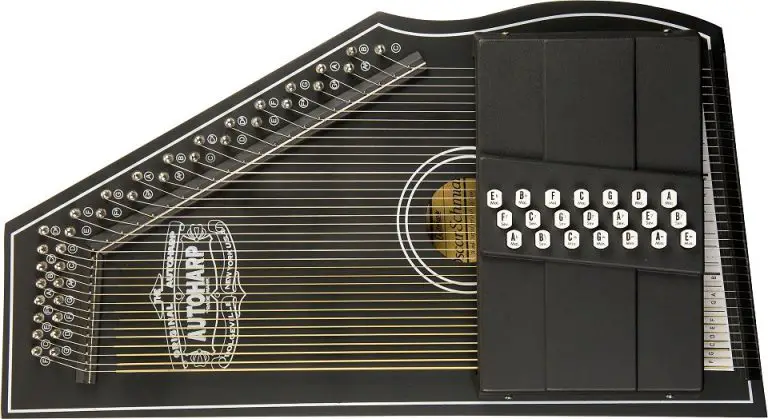
Autoharp String Gauge Guide
String gauges, types and replacement priority for a standard 36-string autoharp
| # | Note | Gauge | Type | Range | Breaks First? |
|---|
When to Replace Autoharp Strings
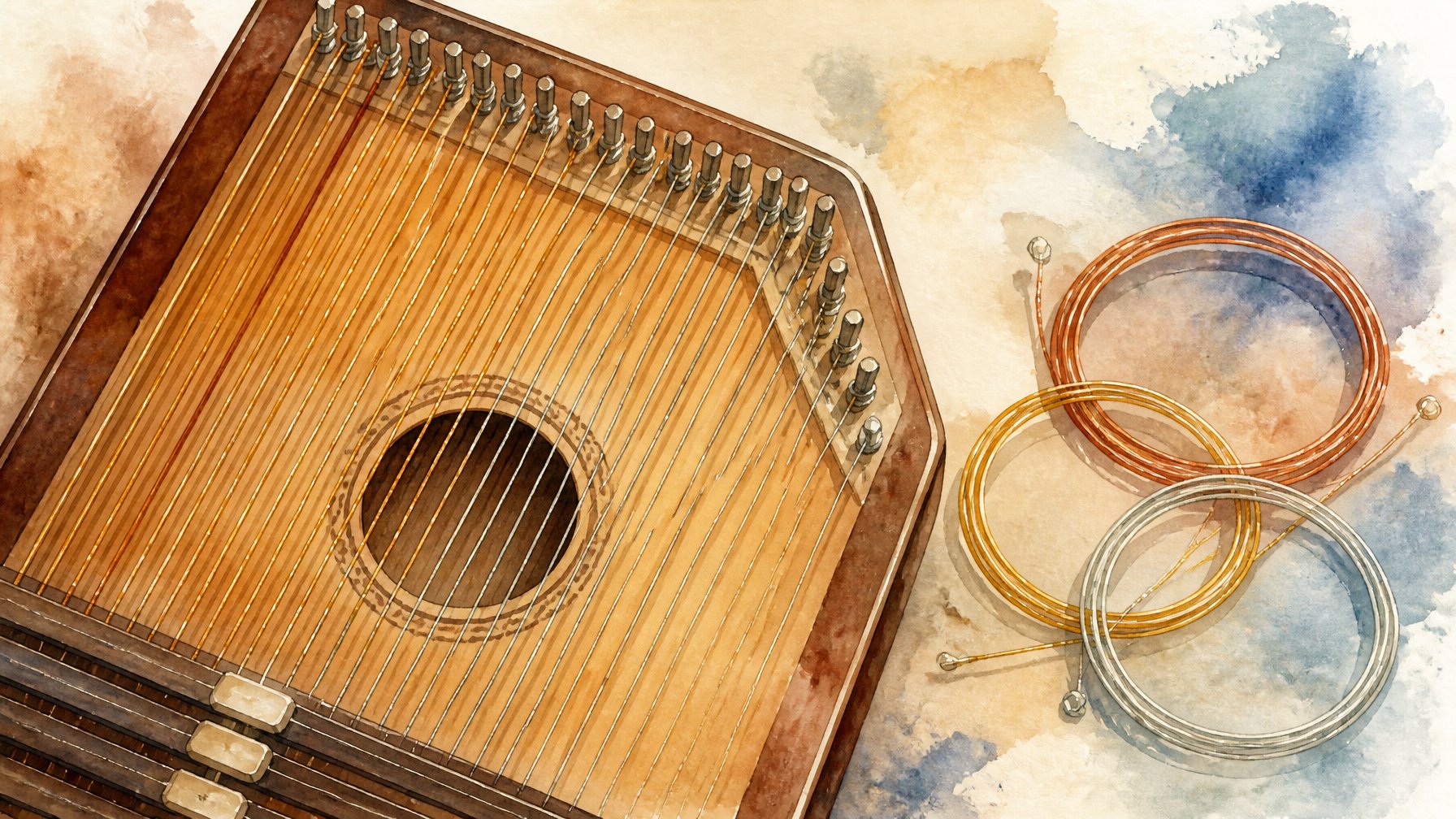
Autoharp strings last a long time compared to guitar strings — most players replace them every one to three years depending on how frequently they play and how much the instrument is exposed to humidity changes. The signs that strings need replacing are consistent: a dull, lifeless tone that doesn’t respond to tuning, visible corrosion or discolouration on wound strings, kinks or bends from where strings have been pressed against hitch pins, or an actual break.
Treble strings (roughly strings 23–36 in the chart above) break most frequently because they’re the thinnest and under the most tension relative to their diameter. If you’re regularly breaking treble strings, check that your tuning is accurate — strings tuned above their correct pitch are significantly more likely to break. Bass wound strings rarely break but do corrode, especially in humid environments. Corroded bass strings produce a buzzy, uneven tone and should be replaced even if they haven’t broken.
Where to Buy Autoharp Strings
Oscar Schmidt sells official replacement string sets for their instruments — these are the most straightforward option if you have an OS15 or OS21 model. D’Addario and Orchestral Tools also make autoharp string sets. For individual string replacement, the gauge chart above gives you the specifications to match at any music string supplier. Many players keep a small stock of spare treble strings (strings 28–36) since these are the ones most likely to break mid-session.
For more on autoharp maintenance and setup: our autoharp tuning guide covers the full tuning process including wrench technique and using your ear alongside a chromatic tuner.
Author Profile

- Daniel Johnstone is an English writer and folk musician who has been playing stringed instruments for over twenty years. He started on guitar as a teenager before working his way through cavaco, tenor guitar, autoharp, mountain dulcimer, and harp. He founded Folkstrings.com to provide practical, experience-based buying advice for folk instrument players at every level — the kind of guidance he always wished had existed when he was finding his feet.
Latest entries
 Useful ToolsJuly 11, 2026Tin Whistle Fingering Chart — All Notes in Both Octaves (D and C Whistle)
 Useful ToolsJuly 11, 2026Banjo String Gauges — Complete Guide for 5-String, Tenor and Irish Tenor
 Useful ToolsJuly 11, 2026Harp String Chart — How to Identify and Replace Any Harp String
 Useful ToolsJuly 11, 2026Mountain Dulcimer Chord Chart — Key of D in DAD Tuning