Tenor Banjo String Gauge Guide — GDAE and CGDA Sets by Scale Length
Folkstrings.com is reader-supported. When you buy through links on our site, we may earn a small commission.
Last Updated on July 10, 2026 by folkstrings
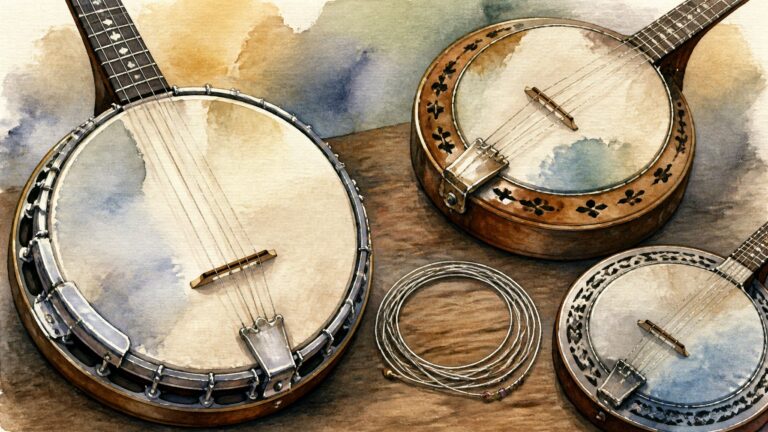
Tenor Banjo String Gauge Guide
Recommended gauges by tuning and scale length — with verified sets from major manufacturers
Why GDAE Needs Different Strings from CGDA
This is the single most common mistake new Irish tenor banjo players make. The CGDA standard tuning is lower than GDAE — each string is tuned a fourth lower. Standard CGDA tenor string sets are designed for that lower pitch, which means their gauges are too light for GDAE. If you tune a standard CGDA set up to GDAE the strings feel loose and floppy, intonation suffers, and the G string in particular tends to buzz. You need strings specifically designed for GDAE, or a custom set built to the gauges in this tool.
Nickel Wound vs Phosphor Bronze
The wound strings on a tenor banjo (typically the lower two or three strings depending on the set) come in two main winding materials. Nickel wound strings are brighter, more durable, and the most popular choice for Irish session playing where projection and clarity matter. Phosphor bronze strings are warmer and rounder in tone — some players prefer them for recording or for a less aggressive sound. The key rule is: don’t mix the two materials in the same set. Nickel wound and phosphor bronze have different tonal characters that don’t blend well.
For more on the tenor banjo in folk and traditional music, see our Irish string instruments guide and our tenor banjo capo chart.
Author Profile

- Daniel Johnstone is an English writer and folk musician who has been playing stringed instruments for over twenty years. He started on guitar as a teenager before working his way through cavaco, tenor guitar, autoharp, mountain dulcimer, and harp. He founded Folkstrings.com to provide practical, experience-based buying advice for folk instrument players at every level — the kind of guidance he always wished had existed when he was finding his feet.
Latest entries
 Useful ToolsJuly 11, 2026Tin Whistle Fingering Chart — All Notes in Both Octaves (D and C Whistle)
 Useful ToolsJuly 11, 2026Banjo String Gauges — Complete Guide for 5-String, Tenor and Irish Tenor
 Useful ToolsJuly 11, 2026Harp String Chart — How to Identify and Replace Any Harp String
 Useful ToolsJuly 11, 2026Mountain Dulcimer Chord Chart — Key of D in DAD Tuning