What Are the Best Mandolin Brands?
Folkstrings.com is reader-supported. When you buy through links on our site, we may earn a small commission.
Last Updated on July 2, 2026 by folkstrings
Ask ten folk musicians which mandolin brand to buy and you’ll get ten different answers — usually with a lengthy explanation of why everyone else is wrong. After spending a good while digging into this for Folkstrings readers, here’s where I’ve landed: there are really only a handful of brands worth your time, and the choice between them mostly comes down to budget and how seriously you’re planning to take this.
The Brands I’d Actually Recommend
Ibanez — Best Entry-Level Pick

Ibanez M510OVS Acoustic Mandolin
- Amazon’s top-rated mandolin in the entry-level category — 4.5 stars from 130+ reviews
- Spruce top, mahogany back and sides, well-finished neck — good setup straight out of the box
- Around $200 — the honest best starting point if you’re not yet sure how serious you’ll get
Ibanez gets overlooked in mandolin conversations because they’re not a specialist brand — they make everything from electric guitars to basses. But that scale is actually a strength: they have the quality control to consistently produce a solid instrument at an accessible price. The M510 is an A-style acoustic with a spruce top and mahogany back and sides, and it plays cleanly. At $200 it’s genuinely the right buy for anyone starting out.
The Loar — Best Mid-Range Pick

The Loar LM-110 Honey Creek A-Style Mandolin
- Hand-carved solid spruce top — a real step up from laminate at this price point
- Inspired by the classic Gibson A-style mandolins of the 1920s, with Grover tuners
- Around $400 — consistently overdelivers for what you spend
The Loar is probably the brand I recommend most when someone tells me they’re serious about the mandolin but not ready to spend big. They make carved, solid-top instruments inspired by the Gibson mandolins of the 1920s — which is exactly the sound players are after. The LM-110 is their A-style entry point, and the hand-carved spruce top makes a real difference in resonance compared to the laminate tops you find at lower price points. At $400, this is the sweet spot of the market.
Gold Tone — Best for Folk and Old-Time Players

Gold Tone GM-50+ A-Style Mandolin
- Made by a company with deep roots in bluegrass and old-time folk music
- Solid spruce top with maple back and sides — warm, clear tone
- Around $440 — well regarded in the folk community for quality at the price
Gold Tone is a Florida-based company that’s been building folk and roots instruments for decades, and they have a strong following in the bluegrass and old-time communities. These aren’t mass-market instruments — you can tell they’re designed by people who actually play this music. The GM-50+ is a quality A-style with a solid spruce top and maple body. If you’re coming at the mandolin from a folk or old-time angle specifically, Gold Tone deserves serious consideration alongside The Loar.
Kentucky — For Players Getting Serious
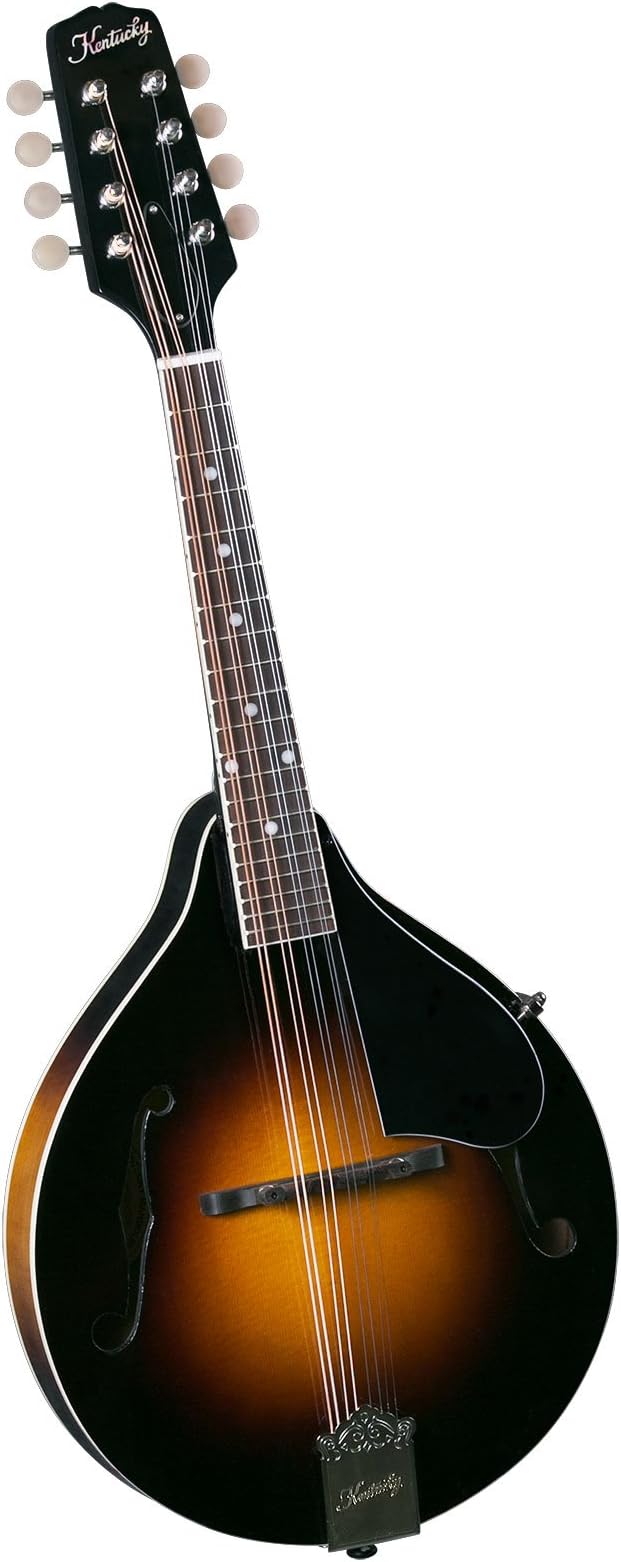
Kentucky KM-150 Standard A-Model Mandolin
- Solid German spruce top and alpine maple body — traditional construction, not a shortcut
- Traditional dovetail neck joint, built to last a lifetime of playing
- Around $595 — the mandolin many players end up keeping for good
Kentucky mandolins have a reputation that’s hard to argue with. They’ve been making traditional instruments since the 1970s under the Saga family, and their Standard Series uses solid German spruce tops with alpine maple for the body and traditional dovetail neck joints. These aren’t beginner instruments with premium branding — they’re the real thing. At around $600 for the KM-150, they sit between budget and boutique, and for a lot of players this ends up being the mandolin they keep for life.
Brands I’d Skip
A few brands that appear constantly in mandolin roundups but that I’d personally steer you away from: Rogue mandolins are cheap for a reason — poor intonation, rough fret ends, and build quality that won’t hold up. Stagg makes generic instruments at very low prices, but their mandolin range has too many reported setup and tuning stability problems to recommend. Morgan Monroe and Savannah appear in older buying guides but have largely faded from relevance and are hard to find supported or reviewed with any confidence. If budget is tight, save a little longer and start with the Ibanez M510 at $200 rather than going cheaper with something you’ll end up replacing.
The One Thing That Matters Most: Solid vs Laminate Top
If you only take one thing from this article, make it this: check whether the top is solid wood or laminate. Solid tops produce a noticeably richer, more resonant sound and improve with age as the wood opens up. Laminate tops are cheaper to produce but don’t develop in the same way — the sound you get on day one is roughly the sound you’ll have in ten years. Under $200 you’re almost always looking at laminate; from around $350–400 upwards you start seeing hand-carved solid tops, and that’s where the sound genuinely changes.
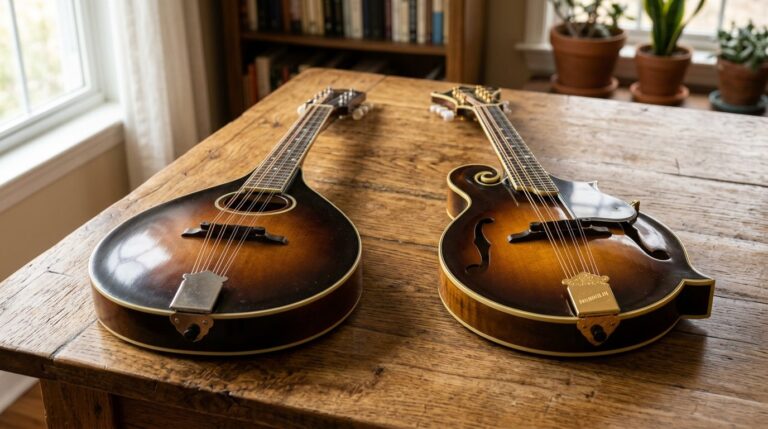
On the A-style vs F-style question: the scroll on an F-style looks striking, but at this price range it doesn’t meaningfully affect the sound. Choose whichever appeals to you visually — you’ll be looking at it for a long time.
Author Profile
- Daniel Johnstone is an English writer and folk musician who has been playing stringed instruments for over twenty years. He started on guitar as a teenager before working his way through cavaco, tenor guitar, autoharp, mountain dulcimer, and harp. He founded Folkstrings.com to provide practical, experience-based buying advice for folk instrument players at every level — the kind of guidance he always wished had existed when he was finding his feet.
Latest entries
 AsianJune 21, 2026What Is the Sarod Instrument?
 ViolinJune 21, 2026How Hard Is It to Learn the Violin?
 ViolinJune 21, 2026Is Violin Harder Than Guitar?
 OudJune 21, 2026How Hard Is It to Play the Oud?