What is the Best Guitar for Funk? – Expert Opinion
Folkstrings.com is reader-supported. When you buy through links on our site, we may earn a small commission.
Last Updated on June 22, 2026 by folkstrings
No one can deny the power of funk. It’s a genre that evokes emotion and gets people moving. But whether you’re new to funk or just curious about these cool-sounding instruments, you’re in the right place.
In this post, we’ll take a look at some of the most common questions about funk instruments and answer them as best we can.
Let’s get started!
Table of Contents
- What Makes Music Funk?
- What Instruments Are Used in Funk Music?
- What Is the Best Guitar for Funk?
- 1. Squier Debut Series Stratocaster — Best Overall
- 2. Squier Debut Series Telecaster — Best for That Tele Bite
- 3. Squier Classic Vibe 60s Stratocaster — Best Premium Step-Up
- How Do You Get a Funk Tone on a Guitar?
- Can You Play Funk on a Les Paul?
- Conclusion
What Makes Music Funk?

Music is often categorized by genre, but this can be a difficult task when it comes to funk.
After all, what exactly is funk? Is it a style of music, or is it a feeling? Perhaps it’s a little bit of both.
Funk is often described as a mix of soul, R&B, and jazz, with a healthy dose of groove thrown in for good measure. This mix of genres creates a sound that is both unique and distinctive.
But what really sets funk apart is its focus on the groove.
This can be achieved through heavy bass lines, syncopated rhythms, and catchy melodies. When all of these elements come together, the result is a sound that is both infectious and unforgettable.
What Instruments Are Used in Funk Music?
Funk music is known for its groove-based sound, which is often created by interactive improvisation between different instruments.
While the funk genre is fairly broad, there are certain instruments that are commonly used in funk songs.
These include the bass guitar, drums, and horns.
- The bass guitar typically plays a driving, syncopated rhythm that helps to create the signature funk sound.
- The drums usually keep a steady beat, with occasional fills to help propel the rhythm forward.
- And finally, horns are often used to add punctuation and punctuality jazz-like melodies.
While these are the most common instruments used in funk music, there are no hard and fast rules when it comes to creating a funk song.
Ultimately, it’s up to the artist to choose which instruments will best help them convey their unique vision for the song.
What Is the Best Guitar for Funk?
The honest answer is a Stratocaster or Telecaster, and it’s not particularly close. Funk guitar is fundamentally a rhythm style — think “chicken scratch” muted 16th-note chords, not sustained lead lines — and single-coil pickups are what give you the bright, snappy, percussive tone that style actually wants. Nile Rodgers built an entire career on a Stratocaster. Prince played a Telecaster. That’s not a coincidence.
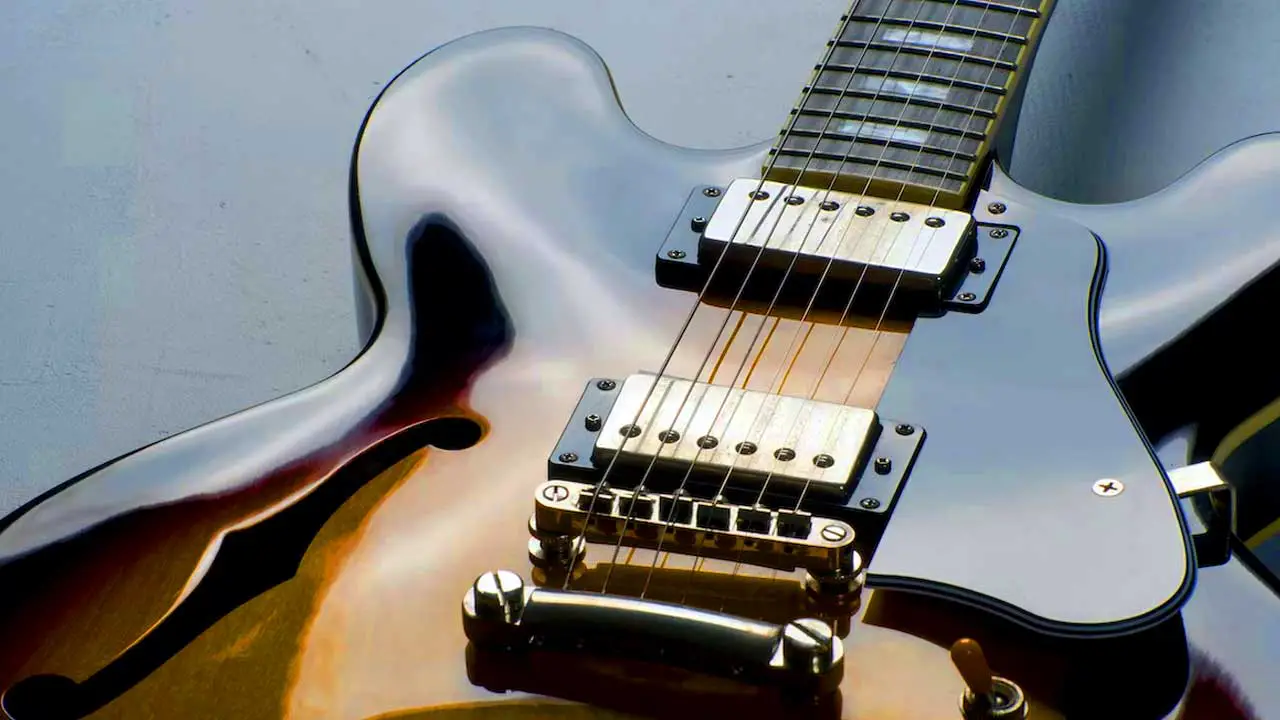
This runs against what a lot of people assume, since Les Pauls and SGs are often the first guitars people picture as “serious” electric guitars. But their humbucker pickups are built for sustain and warmth, which is exactly what funk rhythm playing doesn’t need — less sustain is actually the point, since it keeps the rhythm tight and percussive rather than washing out into a wall of sound.
Here are three real, well-reviewed options if you’re picking one up specifically for funk.
| Model | Best For | Reviews | Price | |
|---|---|---|---|---|
| Squier Debut Stratocaster | Best overall | 2,357 reviews | $149.99 | Check Price → |
| Squier Debut Telecaster | Best for that Tele bite | 652 reviews | $149.99 | Check Price → |
| Squier Classic Vibe 60s Strat | Best premium step-up | 1,007 reviews | $499.99 | Check Price → |
1. Squier Debut Series Stratocaster — Best Overall
Over 2,300 reviews makes this one of the most-proven beginner guitars on Amazon, not just for funk. Reviewers consistently say it sounds and plays well right out of the box, and the single-coil pickups give you that bright, articulate rhythm tone funk is built on.

- 2,357 reviews — a genuinely massive track record for an entry-level guitar
- Single-coil pickups give the bright, cutting tone funk rhythm playing actually wants
- Reviewers describe it as sounding excellent right out of the box
2. Squier Debut Series Telecaster — Best for That Tele Bite
Same price, same build quality, slightly different flavor of bright. The Telecaster’s tone is a touch sharper and twangier than the Strat’s — think Prince more than Nile Rodgers. Genuinely comes down to personal preference rather than one being objectively better for funk.
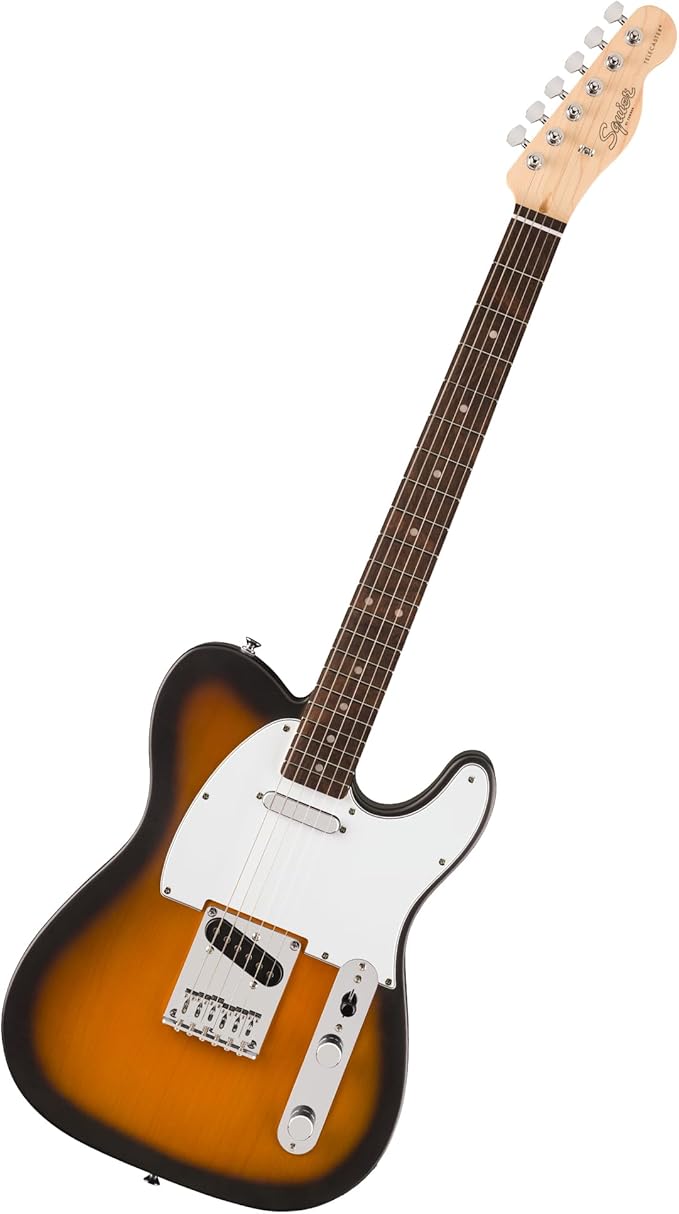
- 652 reviews, consistently positive on playability straight out of the box
- The Telecaster’s slightly sharper, twangier tone is the other classic funk sound, alongside the Strat
- Same price point as the Stratocaster above — genuinely comes down to which tone and feel you prefer
3. Squier Classic Vibe 60s Stratocaster — Best Premium Step-Up
Over 1,000 reviews, and reviewers consistently say it plays and sounds like a genuine Fender rather than a budget alternative. Worth the jump in price once you know funk rhythm guitar is something you’re sticking with.

- 1,007 reviews — reviewers consistently say it plays and sounds like a genuine Fender
- A real step up in build quality once you know funk rhythm guitar is something you’re sticking with
- Vintage-style tremolo and classic Strat looks
How Do You Get a Funk Tone on a Guitar?
If you’re looking to add a little bit of funk to your guitar playing, there are a few things you can do to achieve the perfect tone:
First, start with a clean slate – make sure your guitar is in good condition and has fresh strings. This will ensure that your guitar is able to produce the cleanest possible sound.
Second, you’ll need to get the right pickups. They are basically mini-microphones that pick up the vibrations of the strings and convert them into an electrical signal.
The type of pickups you use can have a big impact on your tone. For a funk sound, many players prefer single-coil pickups, which are known for their bright, cutting tone. However, P90 pickups are also a popular choice for funk guitarists.
These pickups have a bit more output than single-coils, giving the guitar a fuller sound that is well-suited for funk. Of course, there are other factors that go into achieving the perfect funk tone, but choosing the right pickups is a good place to start.
Third, the best way to get the funk tone on a guitar is to play around with rhythms and chord progressions. By incorporating different techniques, you can create a sound that is both unique and indicative of the genre.
Can You Play Funk on a Les Paul?
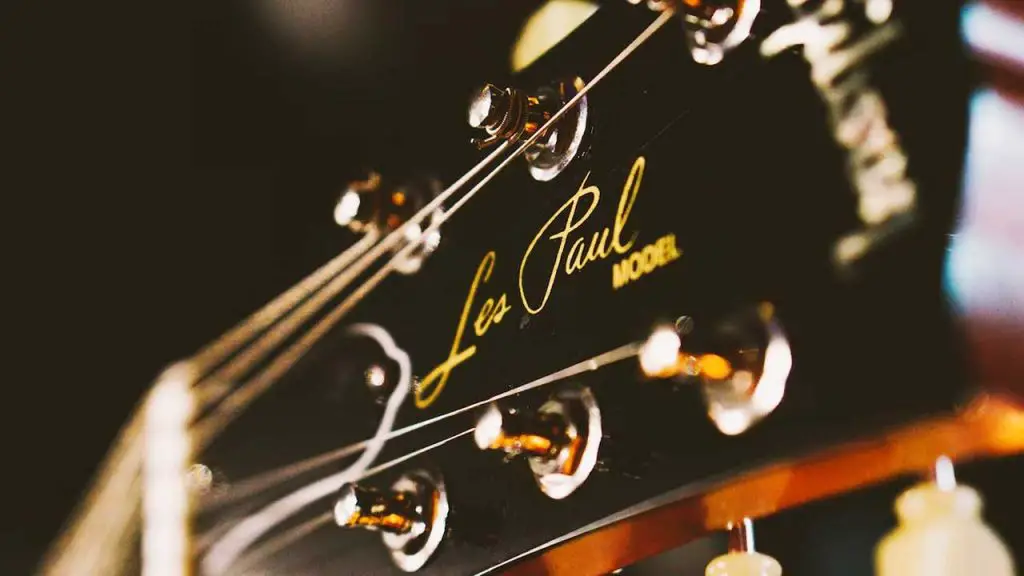
Of course you can play funk on a Les Paul!
After all, the guitar is just a tool, and it’s the player that makes the music. However, you’ll definitely need to get a few things straight first.
First and foremost, you’ll need to have the right attitude.
Funk is all about being laid- back and cool, so you’ll need to be able to project that vibe if you want to make your Les Paul work for funk.
Secondly, you’ll need to understand that a Les Paul isn’t going to give you the same snap and crackle that a Fender Stratocaster will.
This isn’t necessarily a bad thing – in fact, it can actually add a bit of depth and richness to your funk playing – but it’s something you’ll need to be aware of.
Finally, you’ll need to invest in a good wah pedal; there’s just no getting around it.
With the right attitude, understanding, and equipment, though, you can definitely play some killer funk on a Les Paul.
Conclusion
Funk is all about having fun, and what’s more fun than answering some questions about the instruments that make funk so funky? We hope this article has answered your burning questions and given you a little insight into the world of funk. Now go get your groove on!
If you’re after a different genre angle, I’ve also put together a guide on the best Fender guitars for blues.
Author Profile

- Daniel Johnstone — Dániel to his friends back in Miskolc — is a Hungarian folk musician and writer who has been playing stringed instruments for over twenty years. Growing up in northeastern Hungary with a family steeped in folk music, he developed an early obsession with Celtic and Appalachian styles that eventually brought him to the UK. He worked his way through tenor banjo, 5-string banjo, autoharp, mountain dulcimer, mandolin, ukulele, harp and kalimba — most of them acquired through trial, error and more money than he'd like to admit. He founded Folkstrings.com to cut through the noise: practical, experience-based guides to instruments, strings, gear and accessories for folk players at every level.