Best Four String Banjo: Banjolele, Tenor & Plectrum — What You Actually Need
Folkstrings.com is reader-supported. When you buy through links on our site, we may earn a small commission.
Last Updated on June 30, 2026 by folkstrings
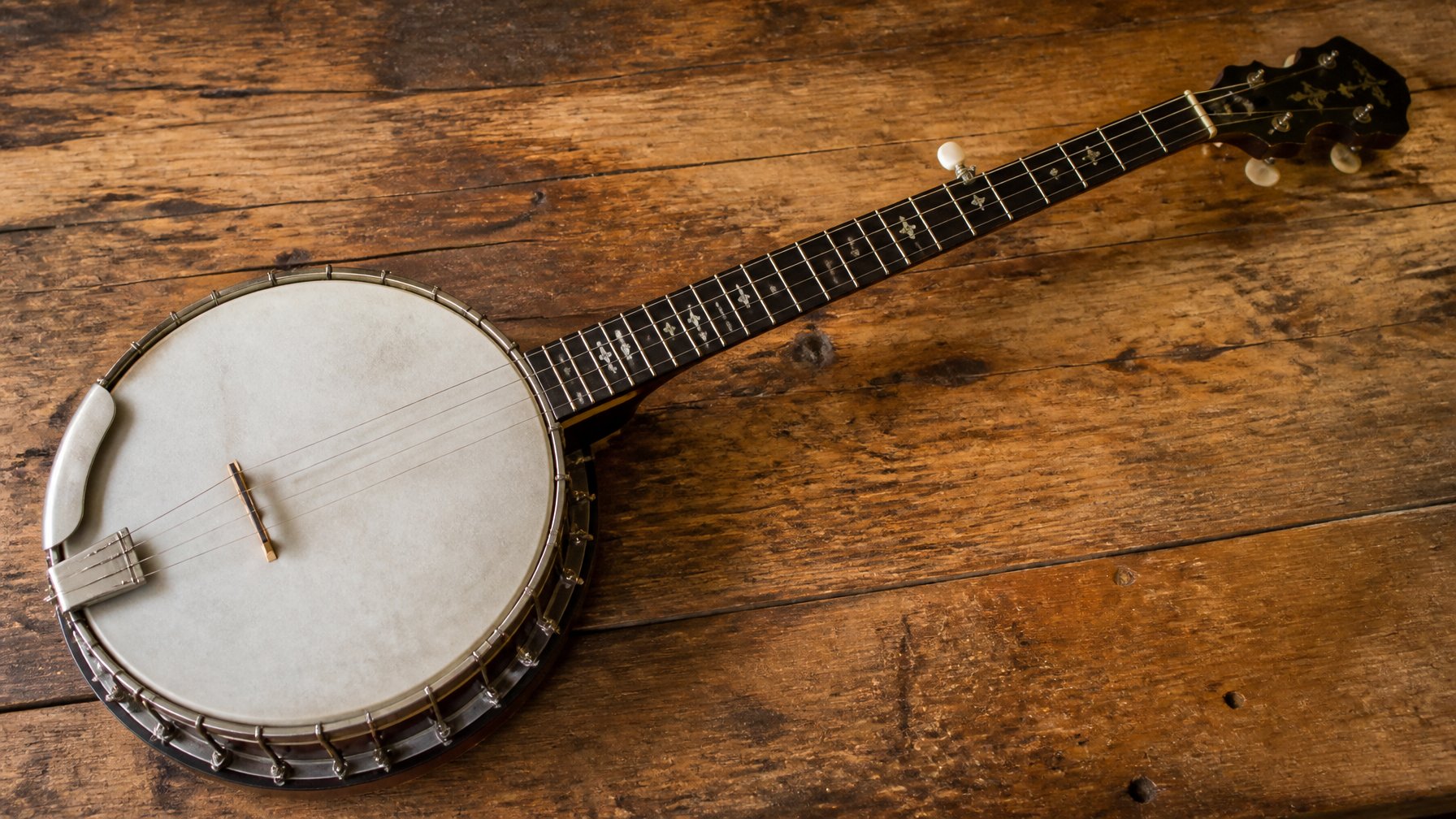
The four-string banjo is a family of related instruments, not one thing — get the type wrong and you’ll end up with something that doesn’t suit the music you actually want to play. Here are the three I’d point you toward, one for each real type.
1. Mulucky Banjolele — Best for Folk and Casual Playing
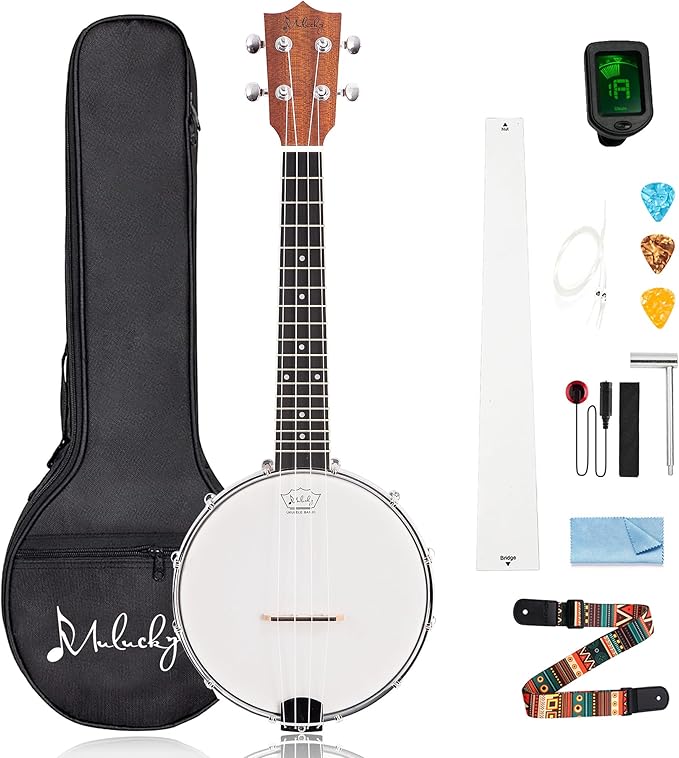
Mulucky Banjolele
- 4.4 stars across 486 reviews — the most validated budget banjolele on Amazon
- Comes with bag, tuner and picks included
- If you already play ukulele, the chord shapes transfer directly
The Mulucky banjolele is a 23-inch concert-scale instrument with a Remo drumhead — the same head brand used on professional banjos — and nylon strings in GCEA tuning. The sapele wood construction gives a warm, bright tone that’s distinctly banjo-like without the volume and projection of a full-size instrument. It comes with a bag, tuner and picks, so you have everything needed to start.
The instrument is genuinely playable out of the box, which isn’t guaranteed at this price point. If you play ukulele already, the learning curve is minimal — the chord shapes are identical, the banjo head just changes the tonal character significantly.
For ukulele players: The GCEA tuning means every chord shape you already know transfers directly. The banjolele gives you the percussive attack of a banjo with the familiar layout of a uke.
For folk and Celtic strumming: The banjolele works well for open tuning folk styles and simple chord-based playing. It’s not the right instrument for fast Irish trad melody lines — for that, you need the tenor banjo below.
2. Gold Tone AC-4 — Best Tenor Banjo for Irish Trad

Gold Tone AC-4
- Composite construction — won’t warp in damp session environments, unlike solid wood
- A genuine specialist instrument, not a budget novelty experienced players will wince at
- Around $315 — a real investment, but the right one for serious Irish trad playing
The Gold Tone AC-4 is an acoustic composite tenor banjo — the composite construction means the rim and resonator are made from a synthetic material that’s acoustically tuned to behave like wood but doesn’t warp with humidity changes. For a folk instrument that might be in and out of sessions in damp Irish pub environments, this is a practical advantage over solid wood instruments at this price point.
Gold Tone is a serious American folk instrument brand and the AC-4 is their entry-level 4-string tenor. Tuned GDAE it sits naturally in Irish traditional music contexts. The 19-inch scale length is standard Irish tenor banjo, giving the tight, fast response that suits the playing style. At $314 it’s a proper investment, but it’s a real instrument rather than a budget novelty — one that experienced players in a session won’t visibly wince at.
For Irish trad sessions: Tune to GDAE and it maps directly onto fiddle and mandolin melody lines. The composite construction handles humidity variation better than solid wood at this price range — relevant if you’re playing in venues where conditions vary.
For jazz and early popular music: Tenor banjo also works well in CGDA tuning for jazz chord melody playing. The Gold Tone’s bright tone and clear articulation suits this style, though you’ll want heavier strings than the standard setup.
3. Gold Tone AC-4P — Best Plectrum Banjo for Jazz & Early Trad
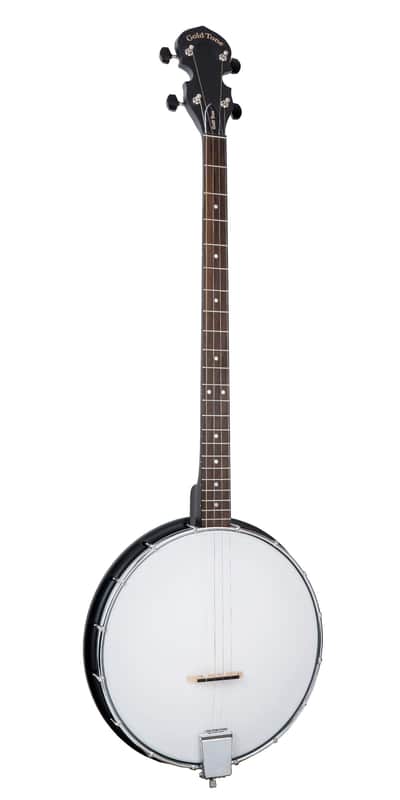
Gold Tone AC-4P
- Sold directly by the Official Gold Tone Reverb Store — 215 reviews, not a third-party reseller
- Genuine plectrum tuning (CGBD) and longer scale — this isn’t a tenor banjo with a different name
- Worth knowing: I genuinely couldn’t find a real plectrum banjo anywhere on Amazon at a sensible price, which is exactly why this one’s on Reverb instead
The AC-4P is the plectrum-tuned (CGBD) sibling of the AC-4 above — same composite construction, same Florida-based Gold Tone quality, just built for the longer scale and tuning that early jazz and classic banjo playing actually calls for. Worth being upfront: this one’s on Reverb rather than Amazon because a genuine plectrum banjo simply isn’t something Amazon stocks at a sensible price — I checked, and what comes up under that search is 5-string banjos and banjoleles mislabeled, not the real thing.
For Dixieland jazz and classic banjo repertoire: The CGBD tuning and longer scale are what plectrum players actually need — a tenor banjo tuned differently won’t give you the same chord voicings.
What to Think About When Buying a Four-String Banjo
Decide on the type first. Banjolele and tenor banjo are not interchangeable. They have different scale lengths, different tunings, and are used in entirely different musical contexts. Buying the wrong one is a waste of money regardless of the price.
For Irish sessions, buy a proper tenor. A banjolele will not work in an Irish traditional music session. The tuning, scale and tone are wrong for the context. If Irish trad is your goal, the Gold Tone AC-4 is the right starting point and the minimum instrument you’d want to bring to a session.
Setup matters. Four-string banjos at the budget end can have high action that makes them physically difficult to play. Both instruments listed above ship in playable condition, but if you buy elsewhere, have a setup done by a luthier before committing to learning on it.
Frequently Asked Questions
What is a four-string banjo called?
It depends on the type. A short-scale four-string banjo tuned like a ukulele is called a banjolele or banjo ukulele. A medium-scale four-string tuned GDAE or CGDA is a tenor banjo. A long-scale four-string used in jazz is a plectrum banjo. Each is a distinct instrument with different tunings and uses.
Is a four-string banjo easier to learn than a five-string?
It depends on your background. A banjolele is very accessible if you already play ukulele — the tuning is identical. A tenor banjo is comparable in difficulty to a five-string, though the absence of the drone fifth string simplifies the tuning setup. Neither is dramatically easier or harder; the right choice is determined by the music you want to play, not by ease.
Can I play Irish music on a four-string banjo?
Yes — but you need a tenor banjo, not a banjolele. The tenor banjo tuned GDAE is a standard Irish traditional music instrument. Many of the most celebrated Irish banjo players have used tenor banjos throughout the tradition. A banjolele in GCEA tuning is not suitable for trad session playing.
What is the difference between tenor and plectrum banjo?
Scale length and tuning primarily. Tenor banjos have a shorter scale (around 19–23 inches) and are typically tuned in fifths like a cello or mandola — GDAE or CGDA. Plectrum banjos have a longer scale (26–27 inches, similar to a five-string) and are tuned CGBD — sometimes called “C tuning,” since it’s the same as a 5-string banjo’s standard tuning minus the 5th drone string. Tenor banjos are more common in Celtic music; plectrum banjos are associated with early jazz and Dixieland.
Author Profile

- Daniel Johnstone — Dániel to his friends back in Miskolc — is a Hungarian folk musician and writer who has been playing stringed instruments for over twenty years. Growing up in northeastern Hungary with a family steeped in folk music, he developed an early obsession with Celtic and Appalachian styles that eventually brought him to the UK. He worked his way through tenor banjo, 5-string banjo, autoharp, mountain dulcimer, mandolin, ukulele, harp and kalimba — most of them acquired through trial, error and more money than he'd like to admit. He founded Folkstrings.com to cut through the noise: practical, experience-based guides to instruments, strings, gear and accessories for folk players at every level.
Latest entries
 MandolinJuly 14, 2026Online Mandolin Lessons — What YouTube Can’t Teach You (And What Can)
 Useful ToolsJuly 13, 2026Recorder Fingering Chart — Complete Guide for Soprano Recorder (Baroque and German)
 UkuleleJuly 12, 2026Gifts For Ukulele Players: 10 Best Picks
 MandolinJuly 12, 2026Gifts For Mandolin Players: 10 Best Picks