Best Banjo Pickup: Piezo, Magnetic and Condenser Options Compared
Folkstrings.com is reader-supported. When you buy through links on our site, we may earn a small commission.
Last Updated on July 2, 2026 by folkstrings
Amplifying a banjo is a different problem from amplifying a guitar. The head — the drum skin — is the primary resonating surface, and how you attach a pickup to it determines everything about how the amplified sound behaves. Get it wrong and you get a thin, harsh signal or constant feedback. Get it right and the amplified tone is surprisingly close to the acoustic instrument.
There are three main pickup approaches worth knowing about: piezo pickups (clip to the head or bridge), magnetic pickups (slide onto the coordinator rod inside the pot), and condenser mic pickups (a small microphone positioned near the head). Each has a different tonal character and a different feedback tolerance — which matters a lot if you’re playing in loud environments.
- Best overall: KNA BP-1 — passive piezo, natural tone, no battery, the most practical choice for most players
- Best for feedback-prone venues: Gold Tone SMP+ — sliding magnetic humbucker, significantly more feedback resistant than piezo
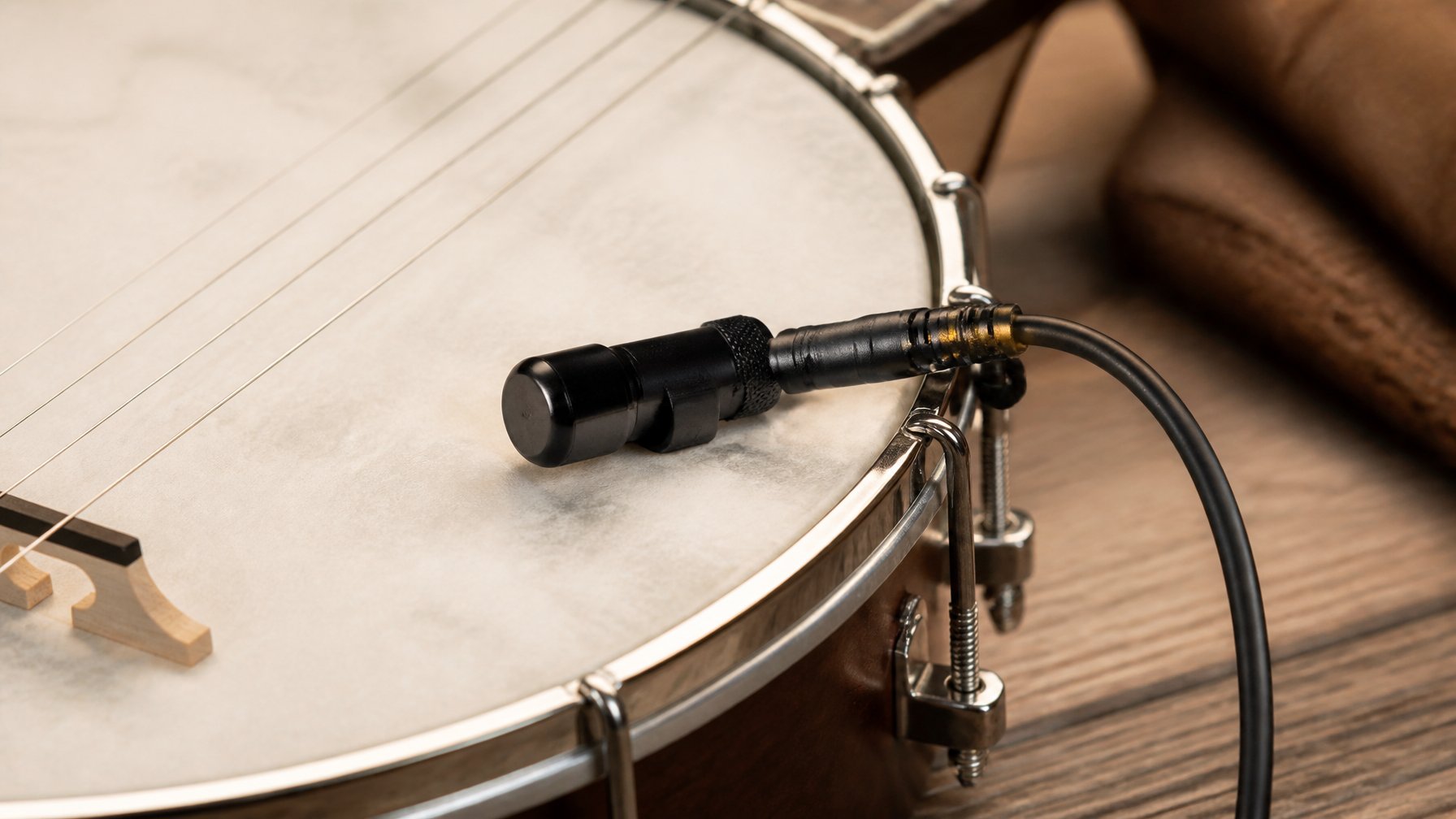
- Best acoustic tone: Myers Pickups Feather — condenser mic approach, closest to the natural acoustic sound but needs battery and careful positioning
| KNA BP-1 | Gold Tone SMP+ | Myers Feather | |
|---|---|---|---|
| Pickup Type | Piezo | Magnetic humbucker | Condenser mic |
| Installation | Clip to head | Slide onto coordinator rod | Gooseneck clip |
| Battery Required | No (passive) | No (passive) | Yes |
| Best For | Sessions, natural tone | Feedback-prone venues | Acoustic tone, recording |
| Buy | Check Price | Check Price | Check Price |
Piezo, Magnetic or Condenser — What’s the Difference?
A piezo pickup converts the physical vibration of the banjo head directly into an electrical signal. The result is a direct, present tone that captures the attack of the picks well. The downside is that piezo pickups can be bright or harsh in the high frequencies, and they’re moderately susceptible to feedback at high volumes or in small rooms with loud PA systems.
A magnetic pickup works like an electric guitar pickup — it senses the movement of the metal strings in a magnetic field. The Gold Tone SMP+ slides into the coordinator rod inside the banjo pot, which means no modification to the instrument. Magnetic pickups are significantly more feedback-resistant than piezo pickups, making them more practical for loud stage environments. The tonal character is different — less of the head resonance, more of the string character.
A condenser mic pickup (like the Myers Feather) positions a small microphone close to the banjo head using a flexible gooseneck. This is the closest approach to miking the instrument naturally, and the acoustic tone is the most convincing of the three options. The drawbacks are battery dependency, more care needed in positioning, and less feedback resistance than a magnetic pickup.
1. KNA BP-1 — Best Overall Banjo Pickup

KNA BP-1 Portable Piezo Banjo Pickup
- Passive piezo — no battery needed, nothing to charge or forget
- Clamp-mount attaches to the head rim without modification or drilling
- Around $99 — the most practical starting point for most players
The KNA BP-1 is a passive piezo pickup that clips onto the banjo head using an adjustable clamp. No solder, no modification, no battery — it plugs directly into a standard quarter-inch cable. KNA (Korean National Acoustics) make respected pickups for folk instruments and the BP-1 is their banjo-specific model. The piezo element is positioned to capture the fundamental tone of the head rather than the brighter edge frequencies.
193 reviews at 4.2 stars is a decent result for a banjo pickup, which is a niche product with a smaller buyer pool than general guitar accessories. The passive design means the signal level is lower than active pickups — you’ll need a decent preamp or a DI box with gain to drive it cleanly into a PA system. Suitable for sessions, open mics, and moderate volume situations.
For sessions and folk gigs: The passive piezo gives a natural-sounding result in lower-volume settings. The clip-on design means you can move it between instruments and adjust positioning quickly to find the best tone.
For loud stages: In high-volume environments or small rooms with loud monitoring, the KNA can produce feedback before you get to a usable volume. If that’s your situation, the Gold Tone magnetic pickup below will serve you better.
2. Gold Tone SMP+ — Best for Feedback-Prone Venues

Gold Tone SMP+ Sliding Magnetic Banjo Pickup
- Humbucker design — significantly more feedback-resistant than piezo pickups
- Slides onto the coordinator rod inside the pot — no soldering, no permanent modification
- Around $140 — the right pick for regular gigging in noisy environments
The Gold Tone SMP+ is a sliding magnetic humbucker that installs inside the banjo pot by sliding onto the coordinator rod — no drilling, no soldering. The humbucker design cancels hum and is significantly more resistant to feedback than piezo pickups, which makes it the practical choice for louder live settings where stage volume is high or monitoring is in front of the instrument.
The tonal character is different from a piezo — more of the string and less of the head. Players coming from electric guitar backgrounds often find the magnetic pickup result more familiar. It’s a deliberate trade: you get more feedback resistance and more control at volume, but the acoustic character of the banjo head resonance is less present in the signal. At $139.95 it’s a meaningful step up from the KNA, but the installation simplicity and stage reliability justify the price for regular gigging players.
For gigging in noisy venues: The feedback resistance of the humbucker design means you can push the volume much further than with a piezo before problems start. If you’re playing bars or festivals, this is the more practical tool.
On tone: The magnetic pickup captures the string rather than the head — the result is clear and balanced but tonally different from the acoustic instrument. Some players equalise some of the warmth back in; others prefer the more direct character.
3. Myers Pickups Feather — Best for Natural Acoustic Tone

Myers Pickups Feather Banjo Pickup
- Flexible gooseneck microphone — captures the actual acoustic sound of the head
- Closest result to the live acoustic tone; strong choice for recording and studio work
- Around $168 — requires positioning care and a watch battery, but the sound quality justifies both
The Myers Feather positions a small condenser microphone near the banjo head using a flexible gooseneck arm that clips to the rim. Because you’re using an actual microphone rather than a contact transducer or magnetic sensor, the captured sound is the closest of these three options to how the banjo actually sounds acoustically. The gooseneck allows careful positioning to find the best spot on your specific instrument.
The trade-offs are real: it requires a battery (a watch battery type, not alkaline), it’s more sensitive to positioning than contact pickups, and it has less feedback resistance than both the KNA and Gold Tone options. But for players who prioritise acoustic tone above stage volume — recording to a DAW, playing at moderate live volumes, or session work where a natural-sounding signal matters — the Feather produces a noticeably more convincing result than the alternatives. 123 reviews at 4.4 stars reflects that when it works well, it works very well.
For recording: The condenser approach gives the most accurate representation of the acoustic instrument on record. If you’re recording direct rather than miking a room, the Feather is the closest substitute for a proper microphone setup.
For live use: Position the gooseneck carefully and test feedback tolerance at rehearsal before committing to a venue. In controlled environments it works well live; in louder or more reflective spaces, feedback management becomes an active concern.
What to Consider When Buying a Banjo Pickup
Your playing environment. This is the primary decision driver. For quiet folk sessions and home recording, the KNA or Myers Feather will serve you well. For loud bars, festivals or any situation with high stage volume, the Gold Tone magnetic pickup is the more practical tool.
Passive vs active. Passive pickups (KNA, Gold Tone) plug straight into a DI box or amp without needing power. Active pickups and condenser mics (Myers Feather) need a battery. Passive is simpler; active can offer more control over the output level and tone.
Installation. All three options here are non-permanent — no modification to the instrument required. That matters for players who want to preserve the pure acoustic character when not amplified, and for anyone who might want to resell the instrument later.
Frequently Asked Questions
Can I plug a banjo directly into a PA or amp?
With a pickup, yes — you’ll need a standard quarter-inch instrument cable and a DI box or direct input on the mixing desk. Without a preamp, passive piezo pickups in particular can sound thin; running through a preamp or a DI with a gain control significantly improves the result.
Will a banjo pickup damage the instrument?
None of the pickups listed here require any permanent modification. They clip, clamp or slide onto the instrument and are fully removable. There is no risk of damage to the banjo from using these options.
What’s the best banjo pickup for Irish trad sessions?
For a typical Irish session — moderate volume, acoustic or lightly amplified — the KNA BP-1 is the most practical choice. It’s lightweight, unobtrusive, requires no battery, and produces a natural-sounding result at session volumes. The magnetic pickup is more relevant if the session is unusually loud or the venue has significant stage monitoring.
Author Profile

- Daniel Johnstone — Dániel to his friends back in Miskolc — is a Hungarian folk musician and writer who has been playing stringed instruments for over twenty years. Growing up in northeastern Hungary with a family steeped in folk music, he developed an early obsession with Celtic and Appalachian styles that eventually brought him to the UK. He worked his way through tenor banjo, 5-string banjo, autoharp, mountain dulcimer, mandolin, ukulele, harp and kalimba — most of them acquired through trial, error and more money than he'd like to admit. He founded Folkstrings.com to cut through the noise: practical, experience-based guides to instruments, strings, gear and accessories for folk players at every level.
Latest entries
 MandolinJuly 14, 2026Online Mandolin Lessons — What YouTube Can’t Teach You (And What Can)
 Useful ToolsJuly 13, 2026Recorder Fingering Chart — Complete Guide for Soprano Recorder (Baroque and German)
 UkuleleJuly 12, 2026Gifts For Ukulele Players: 10 Best Picks
 MandolinJuly 12, 2026Gifts For Mandolin Players: 10 Best Picks